The Odyssey
Find the movies with rewatch gravity, live dossiers, and unfinished cases worth deepening.
Movie dossier
The Odyssey
Nolan turns Homer into a live event-cinema file: gods, monsters, homecoming, IMAX scale, and an opening weekend that made authored spectacle public culture.
Latest video signal
Nolan links The Odyssey to the appetite behind superhero mythology
Nolan positions Homer less as homework than as popular myth architecture: gods, heroes, danger, spectacle, and belief systems that still feed modern blockbusters. That framing makes The Odyssey feel like a source code for pop cinema, not a dusty assignment.
Why it matters
The Odyssey earns a living-file treatment because the opening proved the excitement was more than advance hype. Nolan took one of the oldest adventure stories in Western culture and forced it through boats, storms, monsters, family longing, theatrical scale, and brand-new IMAX film technology. The spoiler-safe question now is how ancient oral myth became modern event cinema without losing its strangeness.
Craft read
Now playing / opened July 17, 2026
The first feature shot entirely with IMAX film cameras
Keep the opening facts sourced, the lead spoiler-safe, and the deeper read focused on form rather than scorekeeping
Themes
Cast and context
Coverage status
A strong case file with real editorial shape: enough craft, context, and connection to guide a serious watch.
Production notes
- • Universal is distributing the film, with Nolan writing the screenplay from Homer and producing alongside Emma Thomas through Syncopy.
- • The film opened July 17, 2026 and turned its summer event slot into Nolan’s biggest worldwide debut.
- • The production has been described by Universal as a mythic action epic shot across the world using brand-new IMAX film technology.
- • CinemaCon reporting says Nolan, Hoyte van Hoytema, and the crew used new lighter-weight IMAX cameras, making the production itself part of the story.
- • The confirmed ensemble gives the page real shape while the spoiler-safe lead stays focused on form, homecoming, and scale rather than a role-by-role plot map.
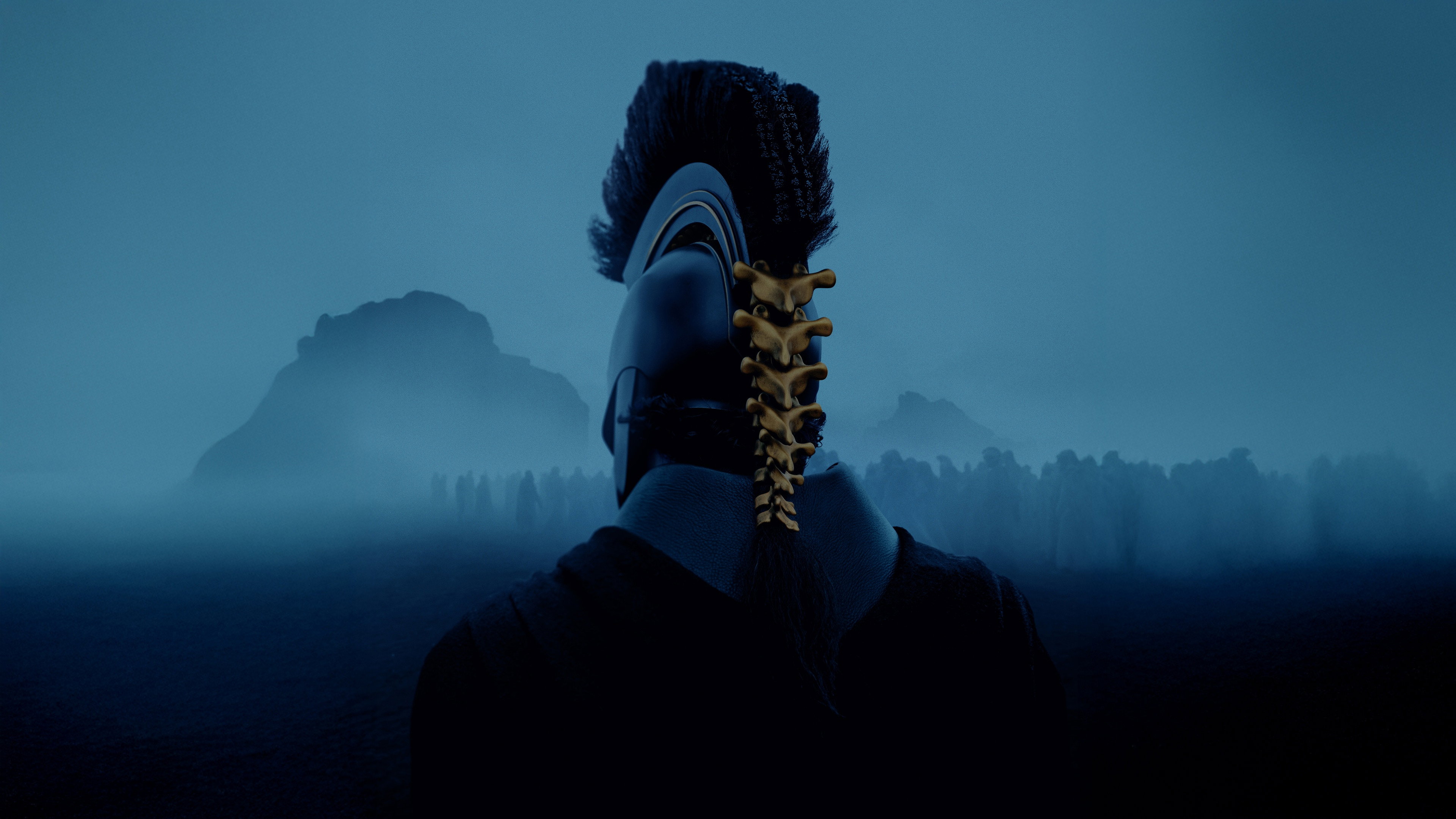
Watch-next pathway
What should you do after The Odyssey?
Three intentional continuations: stay with the filmmaker, chase the dominant pressure signal, or jump into the shelf or argument that best explains why this movie belongs here.
The Dark Knight
The cleanest next move if Christopher Nolan's control, obsessions, or rhythm are what hooked you here.
More myth
Use the taste map to find movies, arguments, and shelves that share this page's strongest signal.
Cathedral Scale
Big-screen movies built around scale, countdown pressure, and the feeling that spectacle only matters because consequence rides inside it.
Movie-page argument
Defend The Odyssey.
If this movie has a scene, performance, ending, or idea people underrate, make the case. The best defenses can become future Cinema One argument material.
Scene challenge
Pick the scene that proves it.
Cinema One is built around scenes that unlock the movie. Tell us which moment carries the pressure, style, argument, or rewatch charge.
Cinema One case file
The argument this page is making
The opening made The Odyssey a real public event; this page gathers the sourced signals and explains why the moment matters without spoiling the voyage.
Nolan did not just adapt a plot. He made ancient oral myth into modern theatrical spectacle without sanding away the format-conscious strangeness.
Follow the pressure between homecoming and scale: the story is huge because the desire is simple — get back to the people who remember you.
Follow format demand, craft reporting, and the critical conversation; route any plot-specific analysis behind an explicit spoiler warning.
Production file
How the movie became this object
IMAX file: the format is part of the argument
The important detail is not just “shot in IMAX.” Nolan has been chasing larger-format immersion since The Dark Knight, and The Odyssey appears to be the moment where the whole film becomes the experiment. If the story is about being dwarfed by gods, sea, distance, and fate, the format is not decoration. It is how the movie makes you feel small inside the myth.
Myth file: Homer as popular source code
Nolan’s Colbert framing matters because he did not sell Homer as homework. He placed The Odyssey in the same appetite system as superheroes: gods walking among people, power made visible, impossible trials, and a hero whose body has to carry belief. The opening confirms the clean read: this is ancient myth treated as mass cinema, not museum material.
Trailer file: monsters, suitors, and the throne at home
The latest trade coverage points to Cyclops footage, Ithaca pressure, Antinous trying to take the throne, and the family line between Odysseus, Penelope, and Telemachus. That is useful because it suggests the movie is not only a voyage picture. The home he is trying to reach is under attack while the mythic world keeps delaying him.
Production file: the nightmare is the point
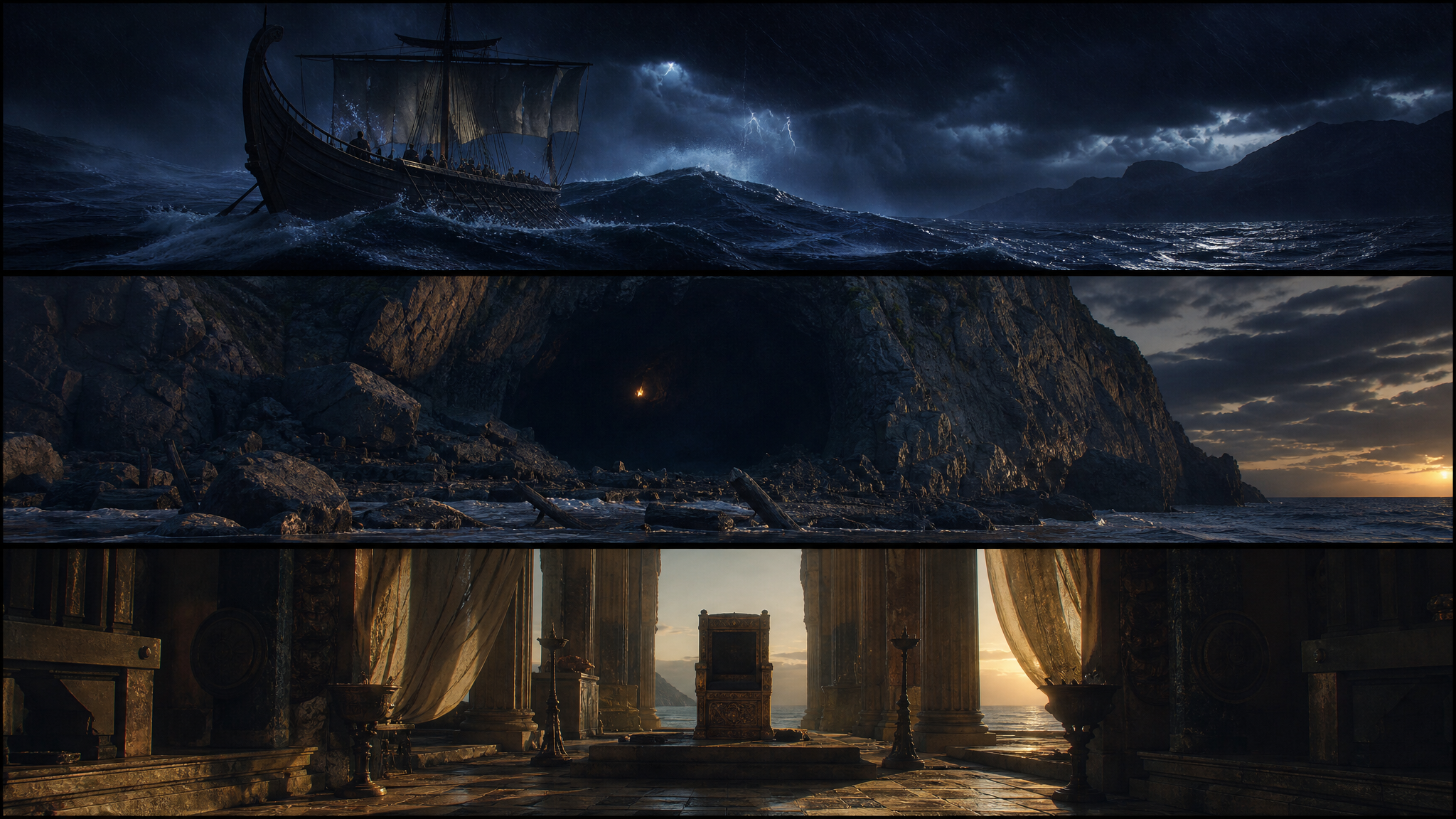
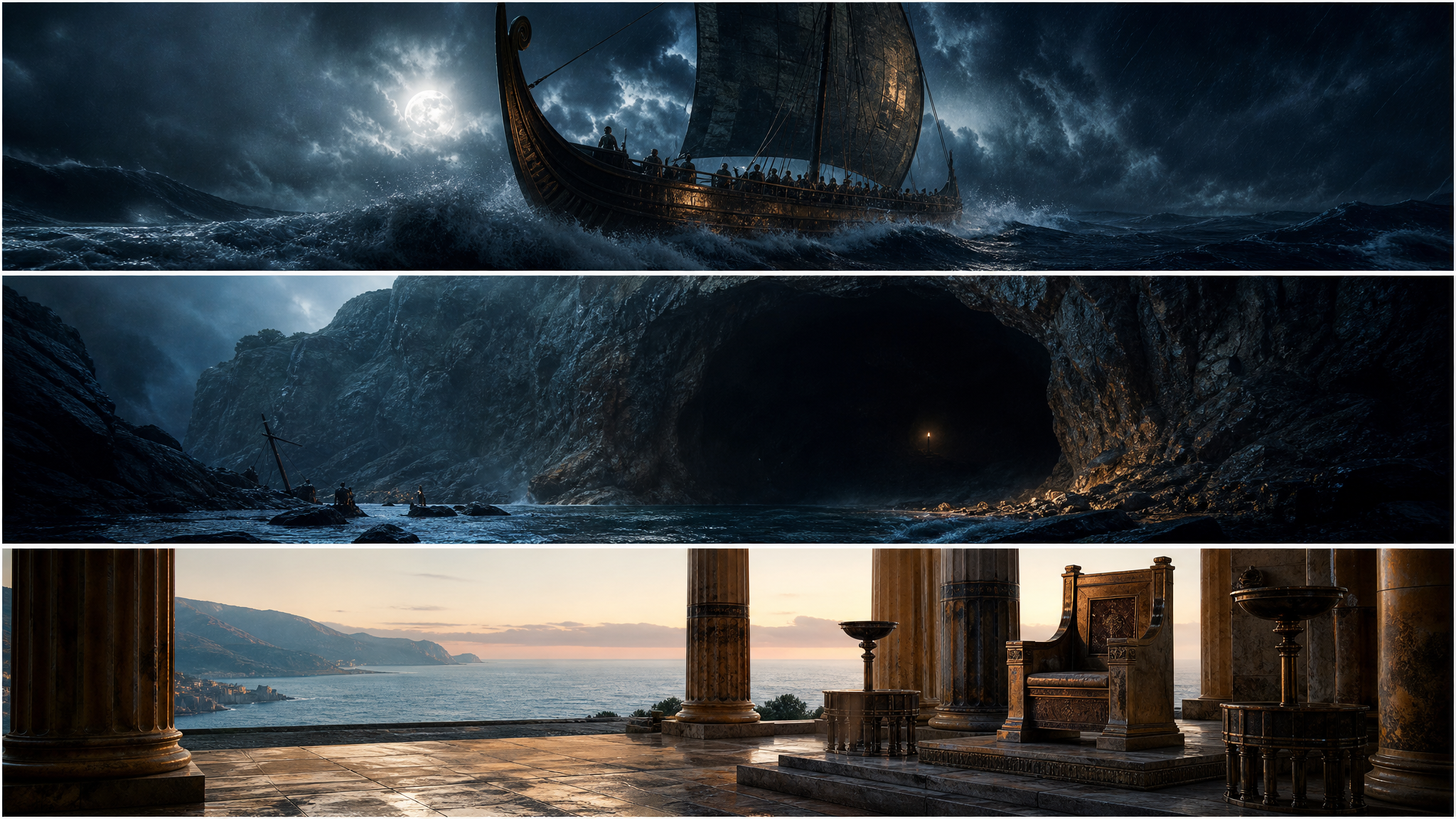
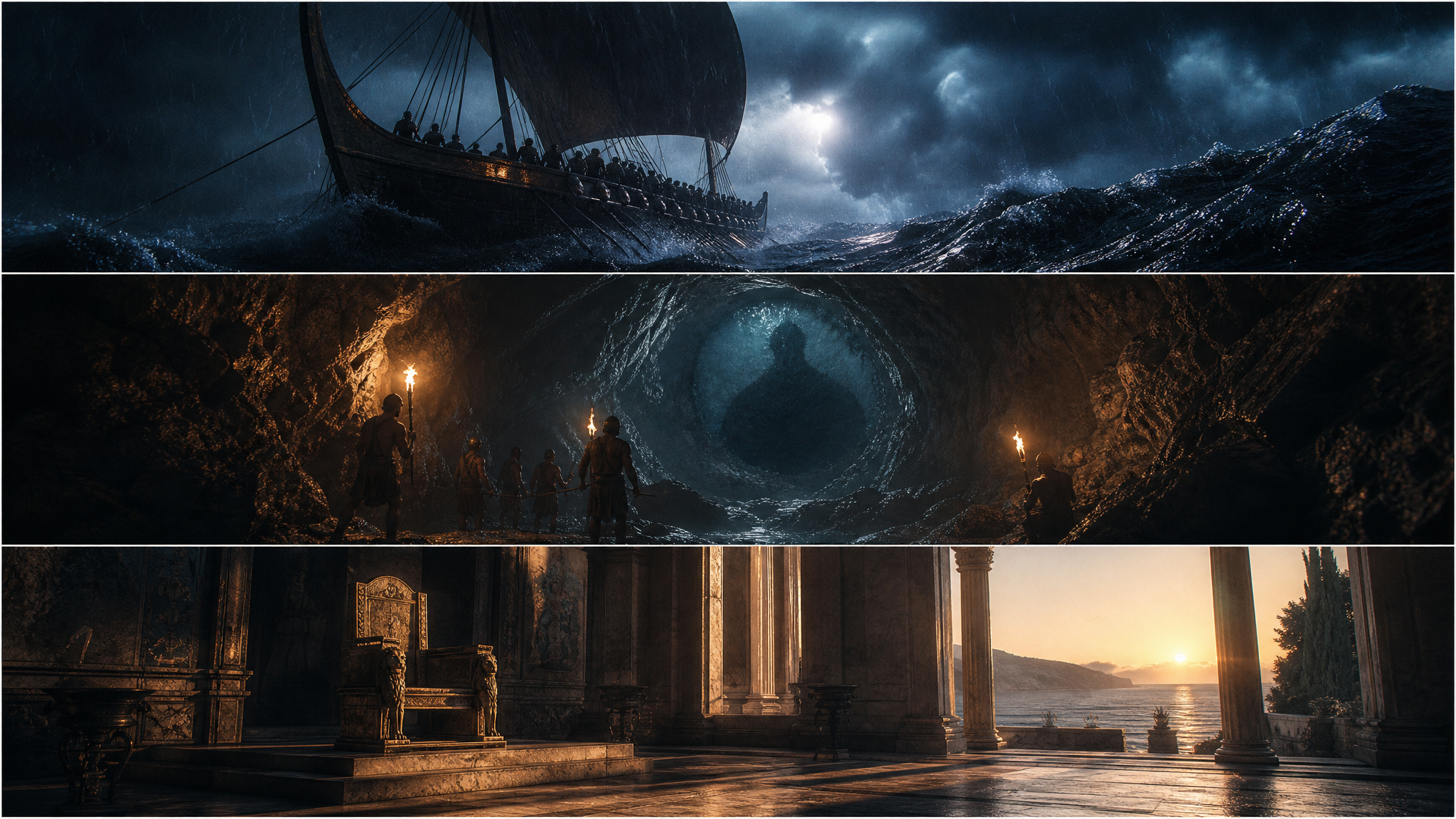
At CinemaCon, Nolan described the shoot as an “absolute nightmare to film — but in all the right ways.” The difficulty matters because The Odyssey is a story about ordeal; if the production was boats, mountains, caves, sun, rain, wind, and open-sea scale, the making-of pressure belongs inside the movie’s promise.
Role map: why the casting now matters
The cast is not only star wattage anymore. Damon gives the page Odysseus, Hathaway gives it Penelope, Holland gives it Telemachus, Pattinson gives it Antinous, Zendaya gives it Athena, and the larger ensemble starts to define which mythic encounters Nolan is foregrounding. Role confirmation is now editorial evidence.
Campaign file: keep the excitement clean
This is the page where opening heat should become useful. A score change, interview, format number, or craft feature should not be pasted in as noise. It should be translated into a clean read: what changed, what is newly supported, and what deepens the formal conversation.
Scene architecture
The moments that change the machine
Trailer read: the Cyclops is the monster test
The Cyclops material matters because it will tell us how literal Nolan is willing to get with myth. A grounded Cyclops, a terrifying Cyclops, or a surreal Cyclops each points to a different movie. This is the first major “how strange will he go?” checkpoint.
Trailer read: Antinous turns home into a battlefield
Pattinson’s Antinous matters because The Odyssey needs home to feel endangered, not merely distant. If Ithaca is politically and emotionally unstable, the return journey gains pressure beyond geography.
Trailer read: Telemachus gives the epic an emotional clock
Tom Holland as Telemachus gives the story a second time pressure: not just whether Odysseus can get home, but what kind of man his son becomes while he is gone.
Confirmed so far
- • Christopher Nolan wrote and directed the film, adapting Homer’s The Odyssey.
- • Universal Pictures is distributing, with Nolan and Emma Thomas producing through Syncopy.
- • The film opened theatrically on July 17, 2026.
- • Matt Damon stars as Odysseus, with Anne Hathaway reported as Penelope and Tom Holland as Telemachus.
- • Trade coverage identifies Robert Pattinson as Antinous and Zendaya as Athena.
- • The film is being positioned as a major IMAX event, with multiple reports describing it as the first narrative feature shot entirely with IMAX cameras.
What to watch for
- • Track the second-weekend hold and format demand without turning the file into daily box-office horse-race coverage.
- • Keep Rotten Tomatoes figures dated because critic and audience samples continue to move after opening weekend.
- • Prioritize interviews about camera, location, sound, performance, and adaptation over campaign chatter.
- • Format details matter because IMAX is part of the viewing argument, not just a premium-ticket upsell.
- • Keep the default route spoiler-safe; plot-specific criticism belongs behind a clear warning.
Open questions
- • How does the all-IMAX approach change the feeling of intimacy as well as scale?
- • Where does Nolan’s structural control help an episodic voyage, and where does it fight the source material?
- • Which physical-production choices give the myth weight beyond surface spectacle?
- • How does the simple pull of homecoming survive inside the movie’s engineered grandeur?
- • Which opening-weekend critical disagreements still feel useful after the event heat cools?
More from this director
Related picks
Read next
Nolan’s opening matters because authored spectacle, format consciousness, ancient myth, and theatrical culture all became part of the same public event.
Tenet divides audiences for good reason, but its appeal is inseparable from the feeling that Nolan built a movie where time itself behaves like an antagonist.
Dunkirk strips war-movie psychology down to time, space, and immediate peril, then finds feeling inside the compression.