
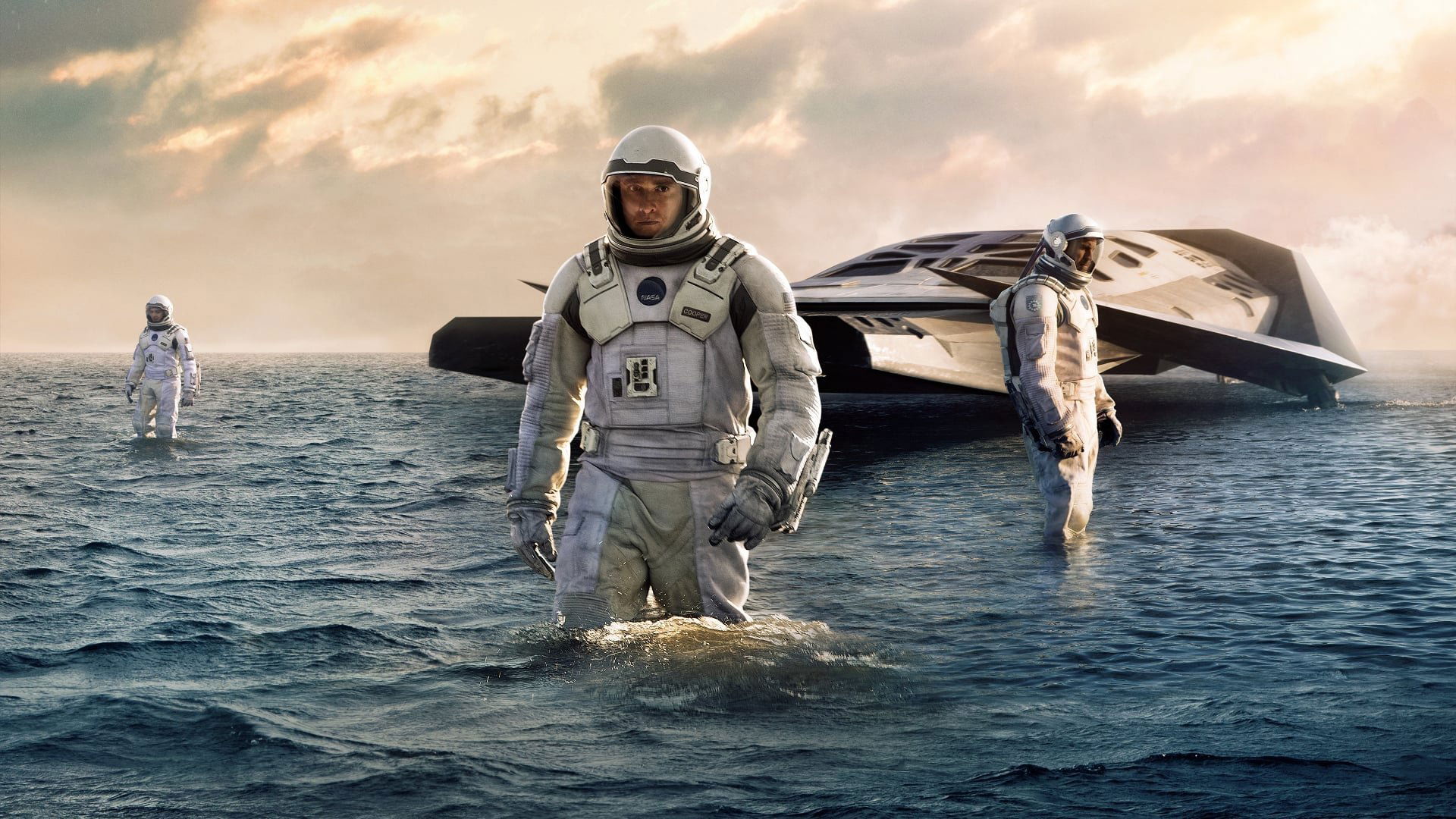

Interstellar backdrop file.

Movie dossier

Interstellar

Nolan makes time itself the villain: relativity, dust, music, and father-daughter grief all engineered into one enormous pressure system.

Directed by Christopher NolanNot rated

Latest video signal

Trailer slot ready

A widescreen slot for the newest official trailer, interview, or scene signal when the page has a playable source.

Why it matters

Interstellar matters because its spectacle is never allowed to float free of consequence. The black hole, wormhole, wave planet, docking spin, organ score, and IMAX scale all push the same wound: Cooper leaves Murph to save a future he may never share with her. That is why the movie survives the “love” argument. Its science is not a credibility badge; it is the machinery that makes absence measurable.

Rating
8.7
Year
2014
Runtime
169 min
Genre
Sci-Fi

Craft read

Scale

IMAX space spectacle grounded in dust, farms, practical builds, and human-sized loss

Emotional engine

Cooper and Murph turn relativity into a family wound rather than a lecture

Research value

Kip Thorne and Double Negative pushed the black-hole imagery far enough that the render work fed back into real scientific papers

Themes

timelovesurvivalinheritancehuman endurance

Cast and context

Cast
Matthew McConaugheyAnne HathawayJessica ChastainMackenzie Foy
Director lane

Christopher Nolan currently has 13 live movie pages in Cinema One.

View director page

Coverage status

Tier
fully authored
Coverage
13/13

A fully shaped Cinema One case: the movie has enough authored context, pathway links, and argument to feel like more than a catalog entry.

Signature scene filedQuote read filedEnding read filedEditorial argument linkedCollection pathway live

Production notes

  • Kip Thorne’s physics guidance and Double Negative’s DNGR renderer make Gargantua a rare blockbuster image where accuracy creates strangeness instead of sanding it down.
  • The black-hole work matters on rewatch because the movie’s most abstract image is also its clearest thesis: nature bends perception, and people have to make choices inside that distortion.
  • Hans Zimmer’s organ score is not just uplift. It gives the mission a religious pulse, then lets ticking and sustained pressure make time feel audible.
  • The film belongs in the pressure-and-awe lane: intimate grief, cosmic scale, and blockbuster craft pushing in the same direction.
Interstellar watch-next background

Watch-next pathway

What should you do after Interstellar?

Three intentional continuations: stay with the filmmaker, chase the dominant pressure signal, or jump into the shelf or argument that best explains why this movie belongs here.

Suggest a better next pick
A dark editorial argument room lit by a film projector.

Movie-page argument

Defend Interstellar.

If this movie has a scene, performance, ending, or idea people underrate, make the case. The best defenses can become future Cinema One argument material.

Small prompts go into the Cinema One review queue.

A dark screening room with a red seat, projector beam, scene cards, and a glowing abstract film frame.

Scene challenge

Pick the scene that proves it.

Cinema One is built around scenes that unlock the movie. Tell us which moment carries the pressure, style, argument, or rewatch charge.

Small prompts go into the Cinema One review queue.

Cinema One case file

The argument this page is making

4 lenses
Core tension

Human survival requires engineering, but the movie’s emotional engine is the cost of leaving people behind.

Best lens

A cosmic melodrama where scale only matters because time makes love and regret measurable.

Nolan lane

The most open-hearted Nolan epic: still structural, still procedural, but powered by grief, awe, and inheritance.

Page job

Defend the earnestness instead of apologizing for it; the feeling is the point.

Behind the movie

Production photos worth studying

A reviewed set of behind-the-scenes images: not celebrity filler, but evidence of how performance, camera placement, room pressure, and Christopher Nolan's authorship shaped the finished movie.

5 reviewed photos
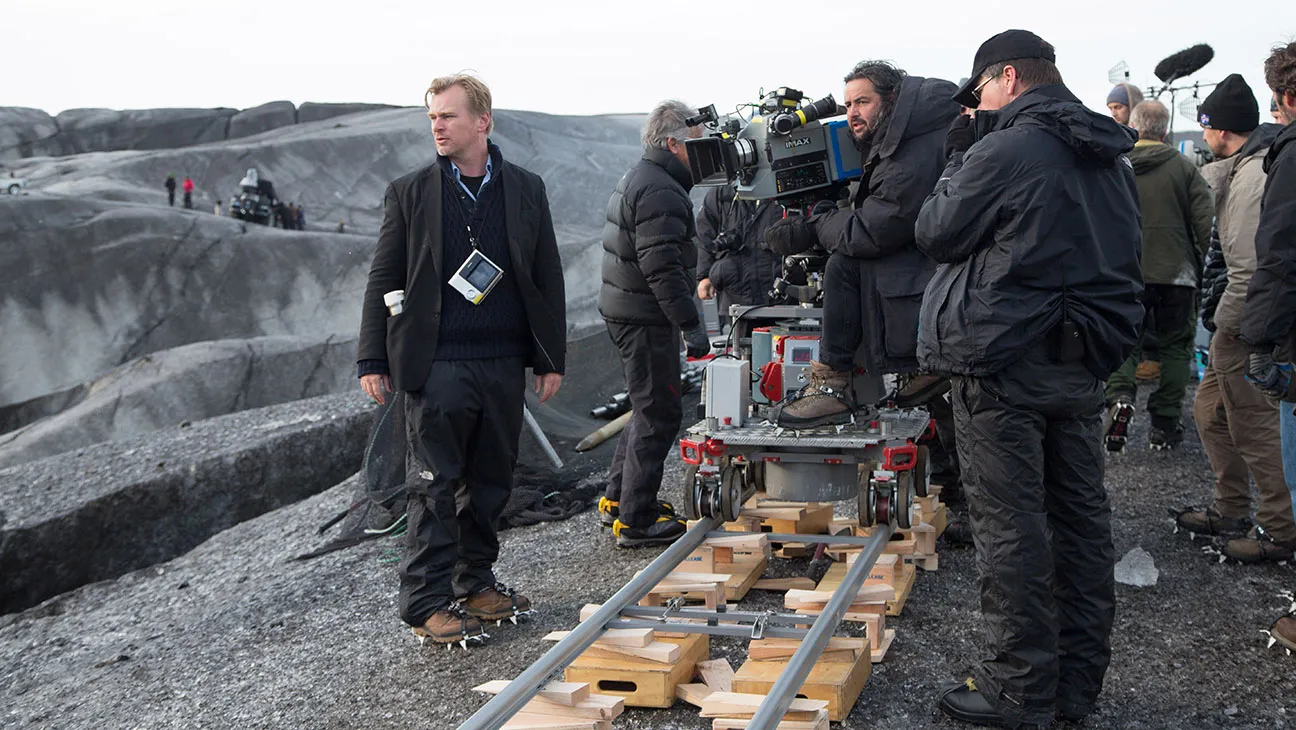
Behind-the-scenes image of Interstellar crew operating IMAX camera equipment on a stark exterior location.
BTS file #1

IMAX camera on the ice

The image is Interstellar in miniature: harsh location, giant camera, tiny humans, and a production chasing cosmic feeling through physical scale.

Notice how Nolan’s practical-scale obsession shows up before the spectacle becomes abstract.

Source · Cinephilia & Beyond production gallery
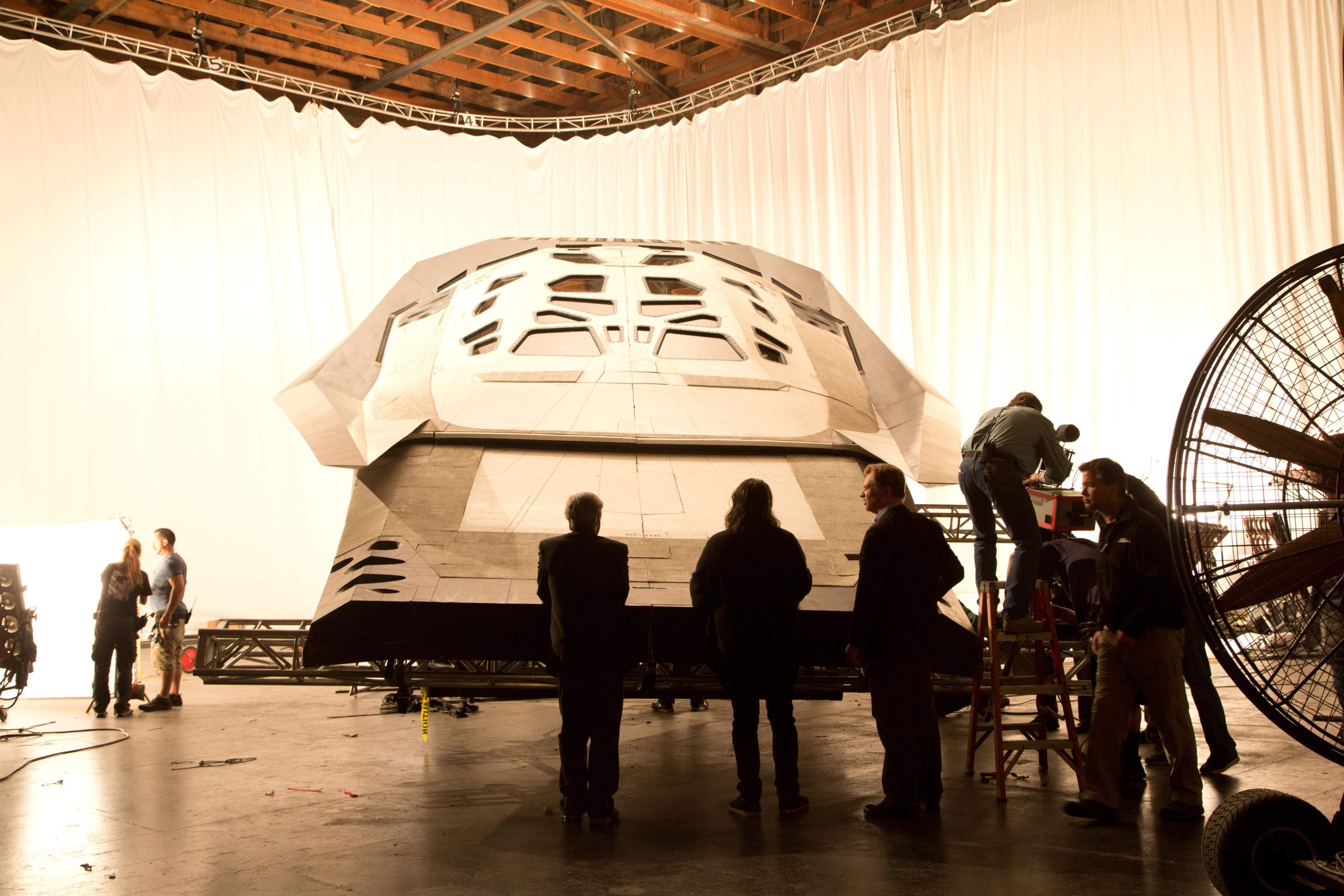

Behind-the-scenes image of the Ranger craft and production crew inside a large hangar setup.
BTS file #2

Ranger hangar build

The spacecraft is not just digital promise; it has mass, rigging, crew, and workshop reality around it. That matters for why the movie feels engineered.

The useful thing to notice is how mechanics become feeling: machinery, bodies, and emotion all share the same pressure.

Source · Cinephilia & Beyond production gallery
Behind-the-scenes image of Christopher Nolan directing on the bedroom set for Interstellar.
BTS file #3

Nolan directing the bedroom wound

A crucial counterweight to the cosmic imagery: the movie’s scale starts in a bedroom, with family rupture staged as carefully as space travel.

The production detail matters because the Murph/Cooper emotion has to survive inside all that engineered scale.

Source · Cinephilia & Beyond production gallery
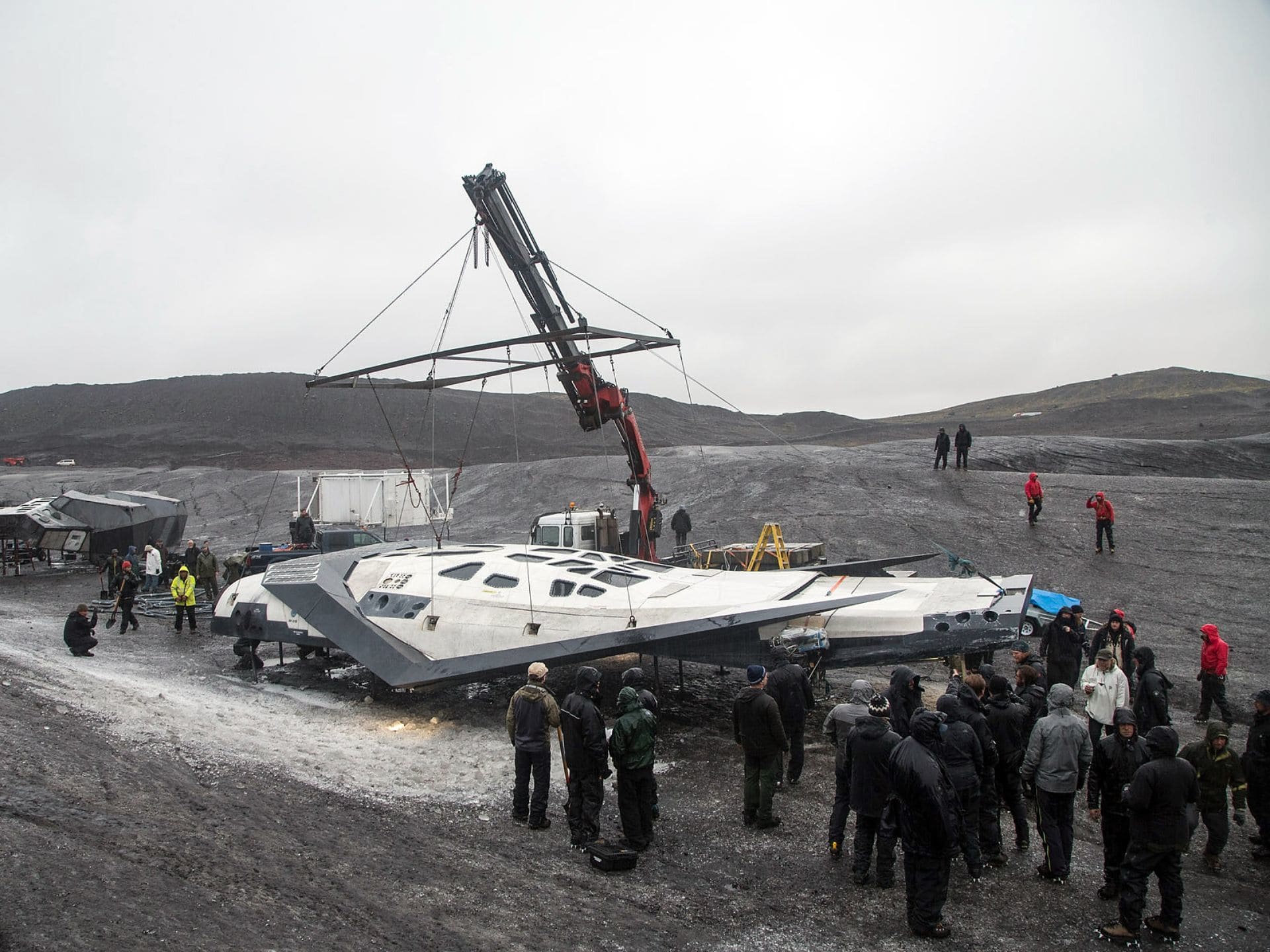
Behind-the-scenes image of the Ranger craft staged outdoors with crane and production crew.
BTS file #4

Ranger crane on location

The location setup shows how Interstellar makes alien terrain feel reachable: practical craft, real weather, visible crew, and heavy equipment doing the myth-building.

This is where the worldbuilding feels physical instead of purely conceptual.

Source · Cinephilia & Beyond production gallery
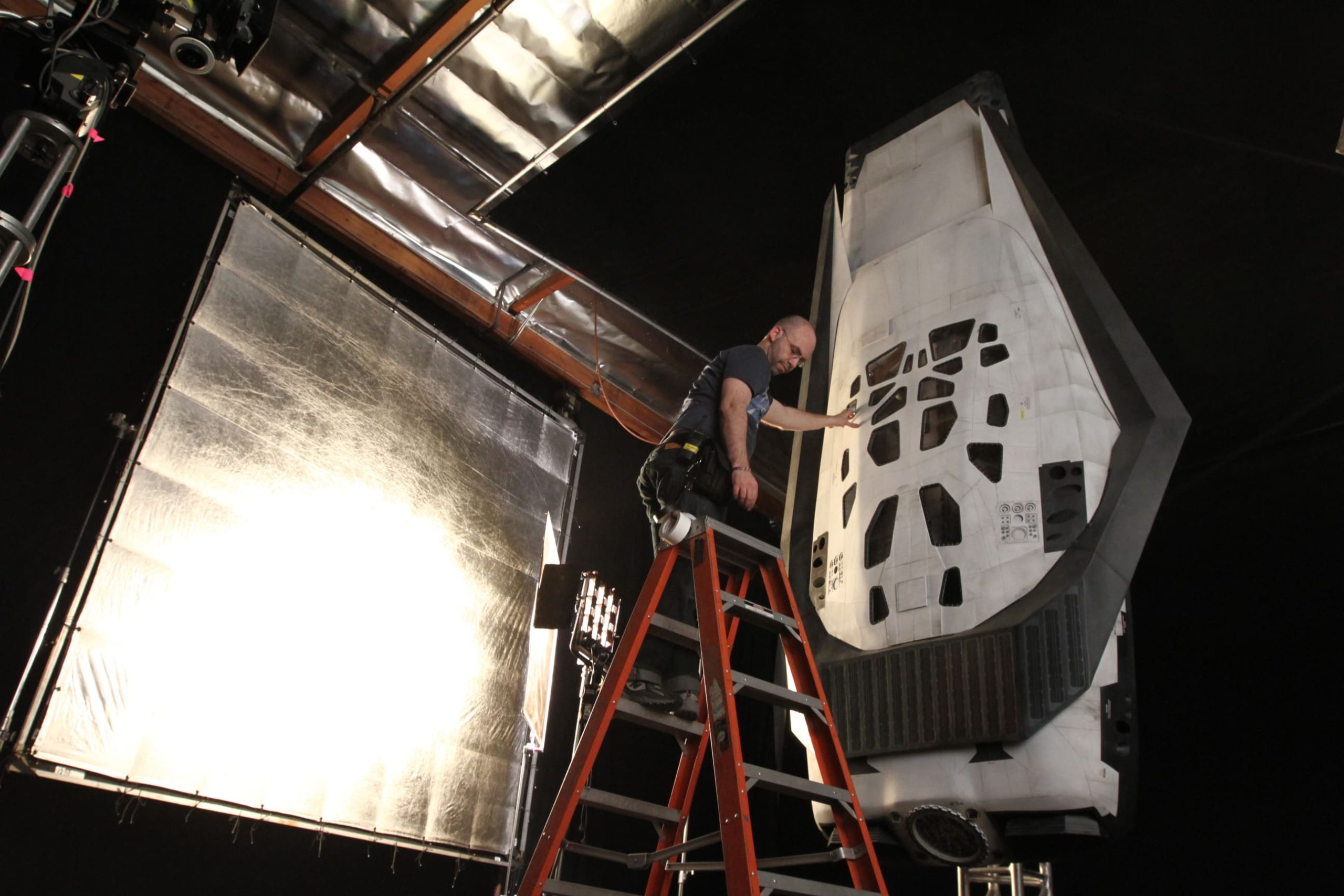
Behind-the-scenes image of crew lighting or preparing a spacecraft shell on set.
BTS file #5

Lighting the spacecraft shell

The photo makes spectacle look like labor. Before the movie can create awe, someone has to aim the light, hold the ladder, and shape the surface.

Read it as craft texture, not generic space imagery: the image matters because it shows how the movie builds awe by hand.

Source · Cinephilia & Beyond production gallery

Production file

How the movie became this object

Hard science as emotional pressure

The film uses relativity, gravity, docking mechanics, and planetary risk as feeling machines. The science is not just credibility; it is how the movie makes separation hurt.

Zimmer gives space a pulse

The organ score is essential authorship. It turns mission procedure into prayer, panic, and cathedral-scale longing.

A blockbuster about inheritance

Interstellar’s real subject is what one generation owes the next when the future has been mismanaged. The spectacle keeps returning to parenthood, absence, and repair.

Scene architecture

The moments that change the machine

Leaving Murph: the wound that powers the epic

The launch matters because the movie’s cosmic scale begins as a domestic rupture. Every later miracle is trying to answer that room.

Miller’s planet: time becomes violence

The wave is frightening, but the years lost are worse. The sequence turns relativity into emotional damage.

Docking: engineering as faith under pressure

The docking scene is the purest fusion of Nolan mechanics and feeling: impossible rotation, impossible odds, and a human refusing to let the mission become meaningless.

Cultural afterlife

What people did with it afterward

The movie people argue about because they felt it

Interstellar’s afterlife is built on big feeling: people quote it, cry at it, mock its sentiment, defend its ambition, and return to the docking sequence like a ritual.

Its earnestness aged better than expected

What once looked overblown to some viewers now reads as part of the film’s courage. It wants awe without irony, and that has become rarer.

Editorial module

Signature scene: the docking sequence

The docking scene is where Interstellar’s engineering fetish and emotional panic become the same thing. It is pure mechanics pushed to the edge, but the reason it works is that every rotation feels tied to survival and love, not spectacle for its own sake.

Editorial module

Line worth carrying forward

"We used to look up at the sky and wonder at our place in the stars. Now we just look down and worry about our place in the dirt." The line frames the whole movie as a fight against civilizational shrinking, materially, spiritually, and imaginatively.

Editorial module

Why the ending moves people

Interstellar earns its sentiment because it spends so much of the runtime making separation feel unbearable. When the movie finally reconnects its timelines, the feeling is not tidy closure, it is relief mixed with loss, which is why it stays potent.

Editorial module

Steelman the debate

The strongest critique is that Interstellar reaches for metaphysical feeling with dialogue and plotting that can tip into overstatement. The best response is that the movie’s excess is part of its identity. Nolan is trying to make cosmic awe and family longing hit at the same scale, and the earnestness is inseparable from that ambition.

Scene shelf

The clips that prove the movie

A swipeable set of scene-level evidence: the moments worth replaying because they carry the movie’s rhythm, style, argument, or rewatch gravity.

4 scenesSwipe or scroll sideways
Scene 1Paramount MoviesAwe / danger

Tidal Wave

The wave sequence makes cosmic scale cruelly practical. The planet is beautiful until the movie reminds you that time, gravity, and survival do not care about wonder.

Scene 2Paramount MoviesClimax set-piece

Docking Scene

This is Nolan at full pressure: math, music, panic, rotation, and grief fused into one engineering miracle.

Scene 3Paramount MoviesEmotional payoff

Murph Saves the World

The payoff works because the solution is not just technical. It is communication across loss, time, and a father-daughter wound the whole movie has been carrying.

Scene 4Paramount MoviesCosmic wonder

Entering the Wormhole

A crucial awe scene because the movie lets science-fiction scale feel tactile, frightening, and almost spiritual without stopping the mission clock.