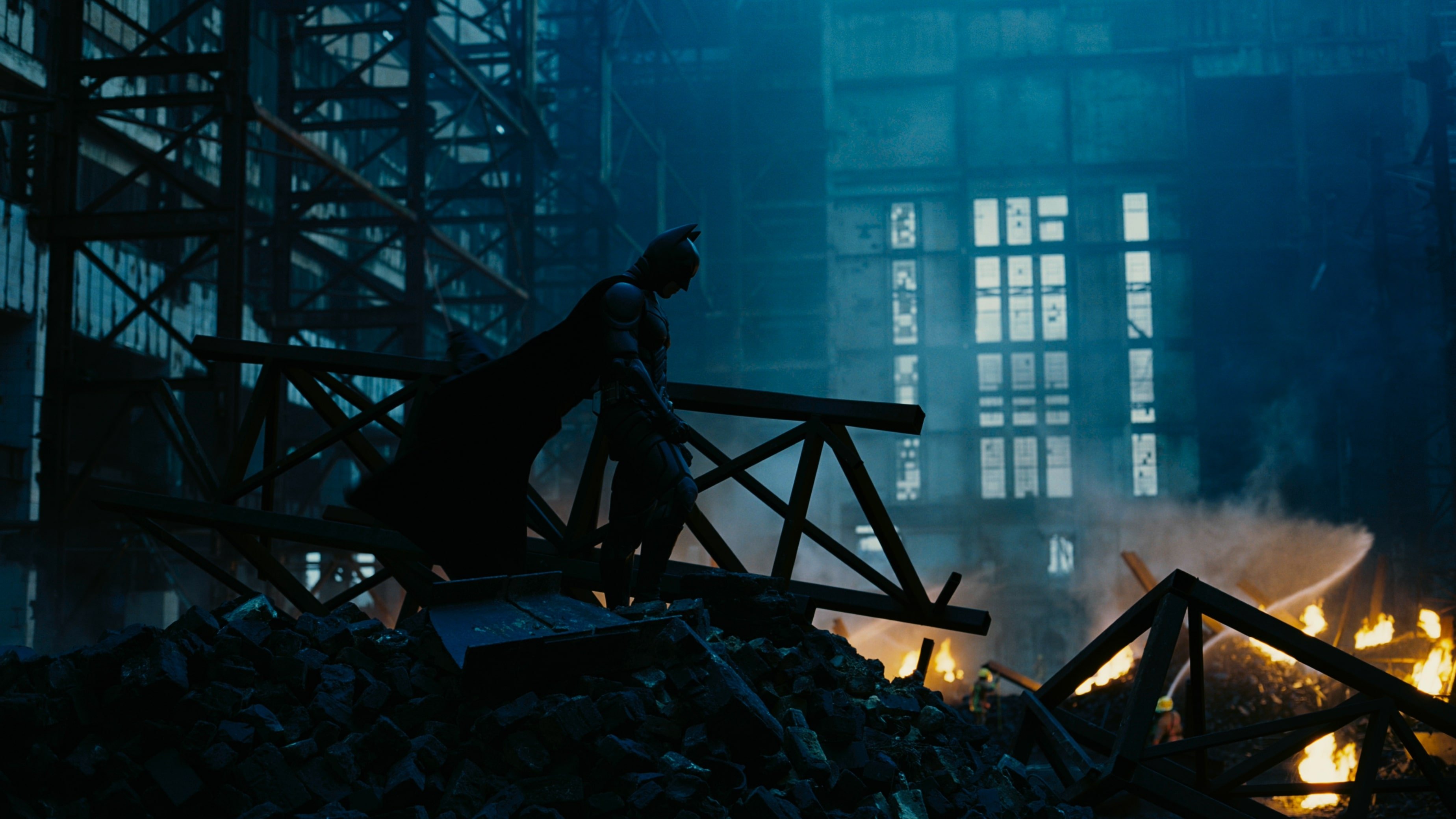
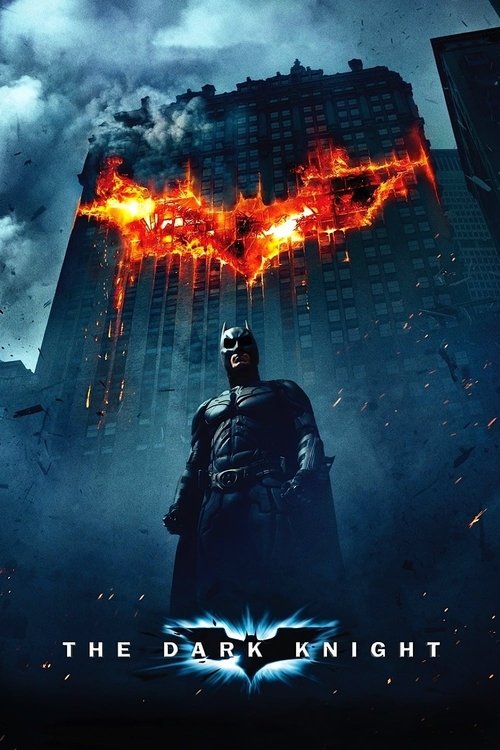
The Dark Knight backdrop file.

Movie dossier

The Dark Knight

The blockbuster as moral pressure system, where escalation is the point.

Directed by Christopher NolanPG-13Academy AwardBAFTA

Latest video signal

Trailer slot ready

A widescreen slot for the newest official trailer, interview, or scene signal when the page has a playable source.

Why it matters

The Dark Knight is one of Nolan’s defining achievements because it makes blockbuster scale answer to moral pressure. The Joker is not only a villain; he is a stress test for Batman’s code, Harvey Dent’s public virtue, and Gotham’s belief that institutions can still mean something when fear becomes contagious.

Rating
9.0
Year
2008
Runtime
152 min
Genre
Action

Craft read

Conflict engine

Batman, Joker, Harvey Dent, and Gotham all stress-testing each other

Scale

Crime saga, superhero film, and urban thriller fused together

Legacy

A modern-blockbuster benchmark because scale, performance, and civic consequence all press on the same nerve

Themes

chaosorderheroismcorruptionsacrifice

Cast and context

Cast
Christian BaleHeath LedgerAaron EckhartMaggie Gyllenhaal
Keywords

batman • joker • gotham • superhero • vigilante

Director lane

Christopher Nolan currently has 13 live movie pages in Cinema One.

View director page

Coverage status

Tier
fully authored
Coverage
13/13

A fully shaped Cinema One case: the movie has enough authored context, pathway links, and argument to feel like more than a catalog entry.

Signature scene filedQuote read filedEnding read filedEditorial argument linkedCollection pathway live

Production notes

  • Warner’s 2008 production notes frame the sequel around escalation: Batman’s attack on Gotham crime creates a vacuum, and the Joker weaponizes the city’s rules, ethics, and faith in order against itself.
  • Six sequences were shot with IMAX cameras, including the opening bank robbery, making the format part of the movie’s pressure system rather than a premium-screen afterthought.
  • Ledger’s Joker remains central, but the movie really works because the whole civic machine is under pressure: police, courts, mob money, public trust, surveillance, and Batman’s own code all start bending at once.
  • Its best scenes work like pressure chambers, each one tightening the moral system until Gotham itself feels rigged to break.
The Dark Knight watch-next background

Watch-next pathway

What should you do after The Dark Knight?

Three intentional continuations: stay with the filmmaker, chase the dominant pressure signal, or jump into the shelf or argument that best explains why this movie belongs here.

Suggest a better next pick
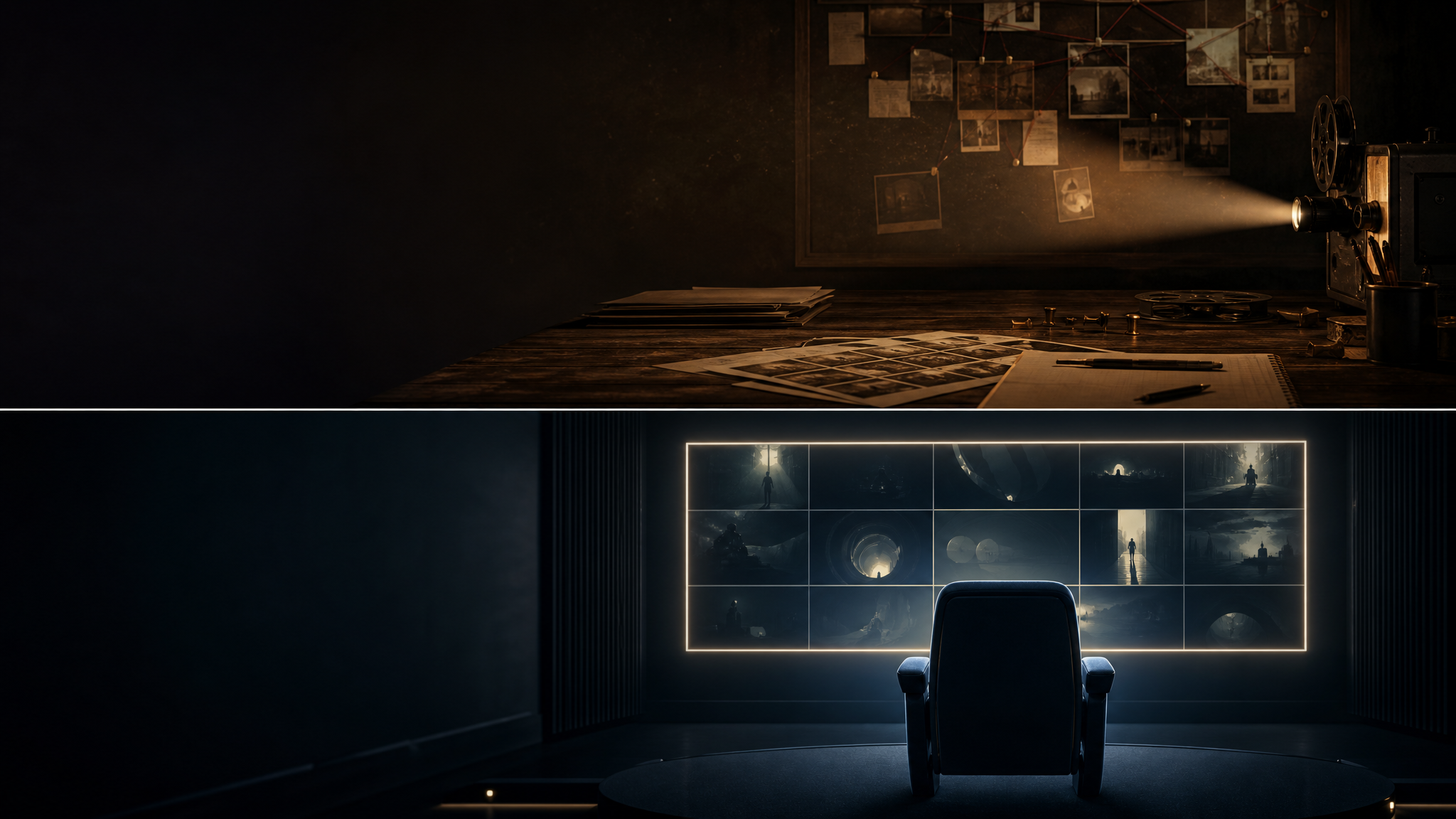
A dark editorial argument room lit by a film projector.

Movie-page argument

Defend The Dark Knight.

If this movie has a scene, performance, ending, or idea people underrate, make the case. The best defenses can become future Cinema One argument material.

Small prompts go into the Cinema One review queue.

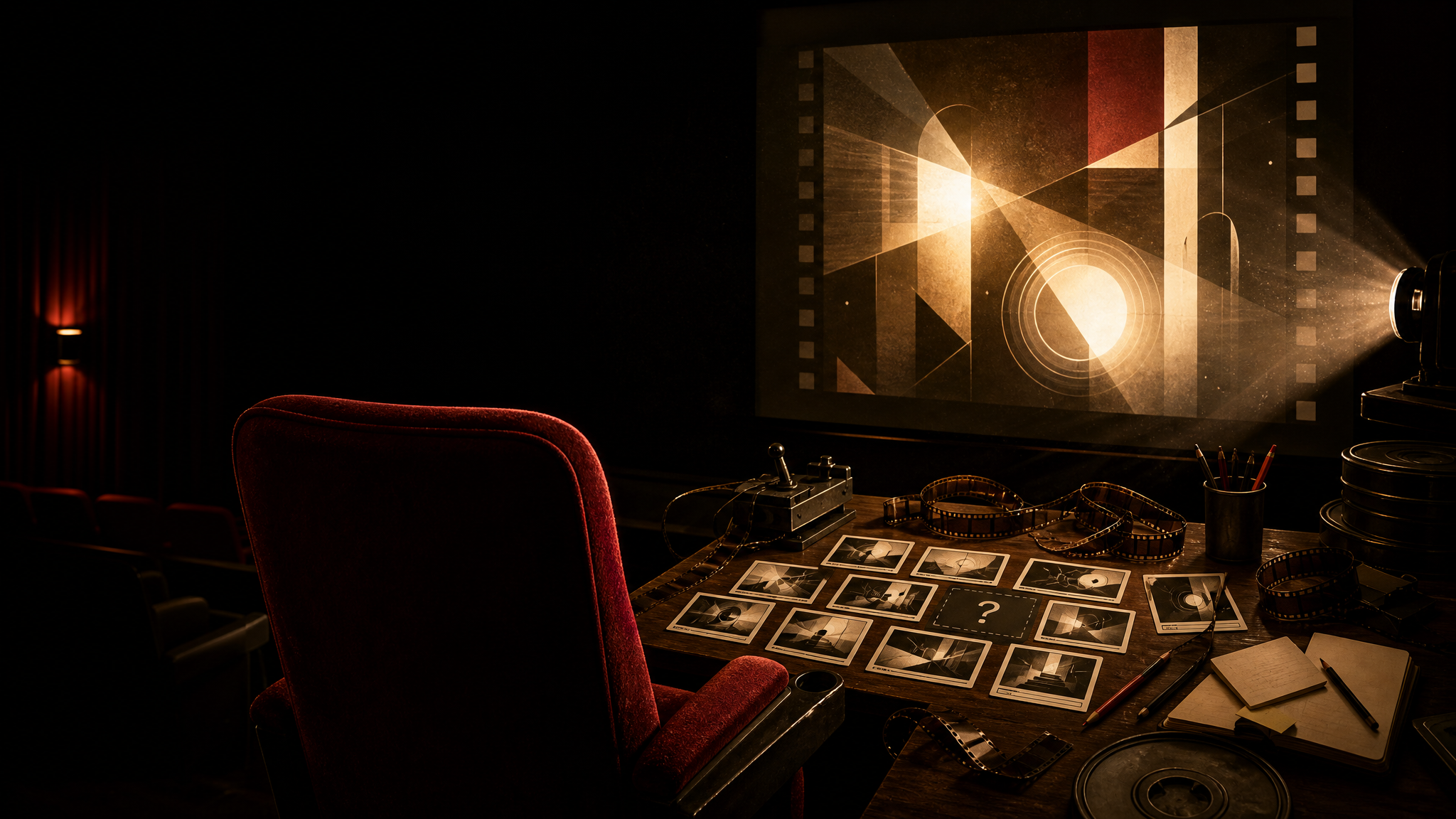
A dark screening room with a red seat, projector beam, scene cards, and a glowing abstract film frame.

Scene challenge

Pick the scene that proves it.

Cinema One is built around scenes that unlock the movie. Tell us which moment carries the pressure, style, argument, or rewatch charge.

Small prompts go into the Cinema One review queue.

Cinema One case file

The argument this page is making

4 lenses
Core tension

Order can beat chaos only by deciding which rules are worth breaking and which ones would destroy the soul of the city.

Best lens

A crime epic about control, escalation, and moral contagion, not simply a superhero-versus-villain showcase.

Nolan lane

The cleanest bridge between puzzle structure, urban scale, and ethical pressure in Nolan’s popular canon.

Page job

Treat the Joker as a pressure system and Batman as a limit case, not just iconography.

Behind the movie

Production photos worth studying

A reviewed set of behind-the-scenes images: not celebrity filler, but evidence of how performance, camera placement, room pressure, and Christopher Nolan's authorship shaped the finished movie.

5 reviewed photos
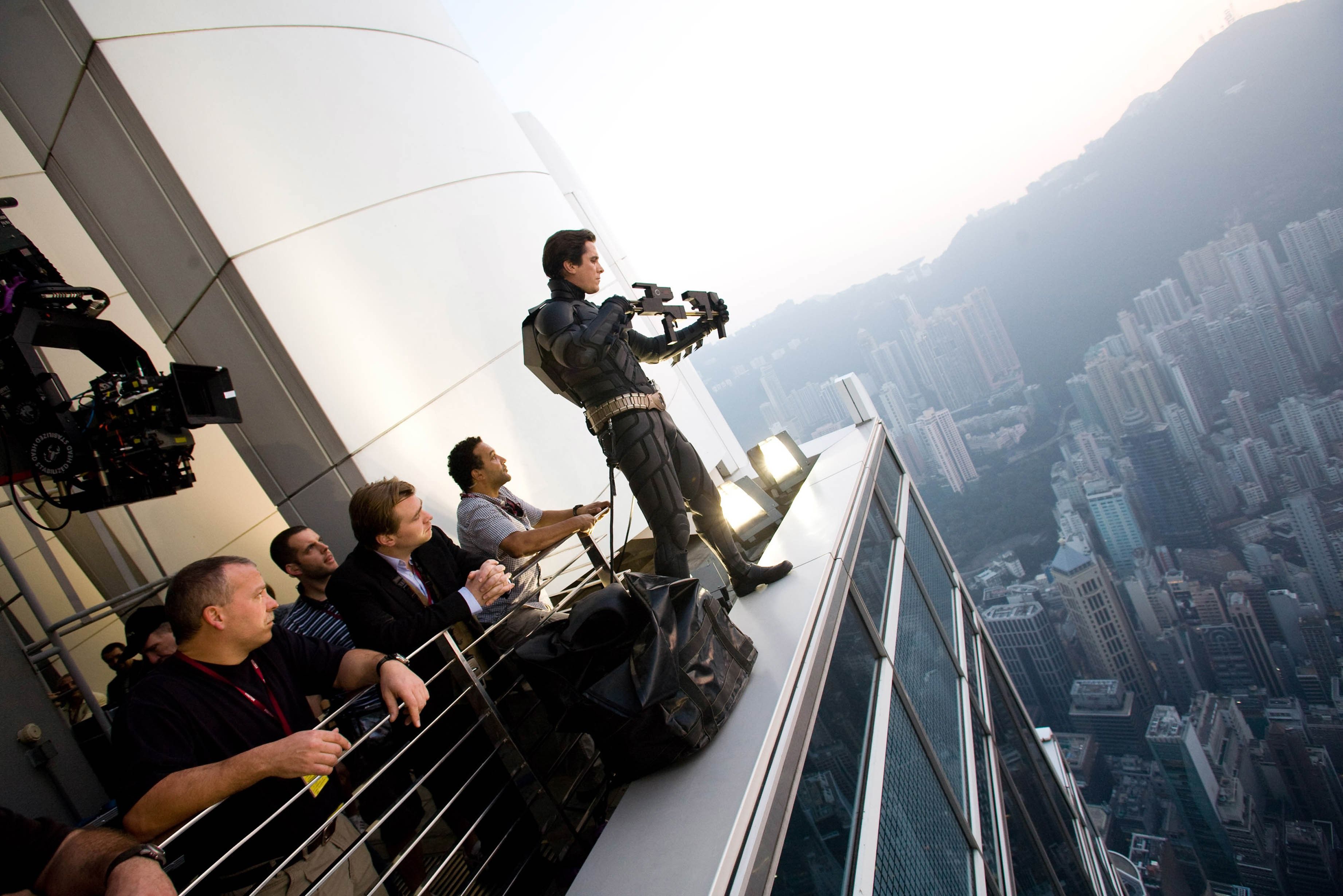
Behind-the-scenes image of The Dark Knight crew filming from a high-rise rooftop with IMAX camera equipment.
BTS file #1

Rooftop IMAX pressure

The frame makes Nolan’s scale physical: camera, height, city geometry, and crew all arranged around Gotham as a real location rather than digital wallpaper.

Notice the authorship in the physical placement: big-city realism is being engineered, not simply captured.

Source · Cinephilia & Beyond production gallery
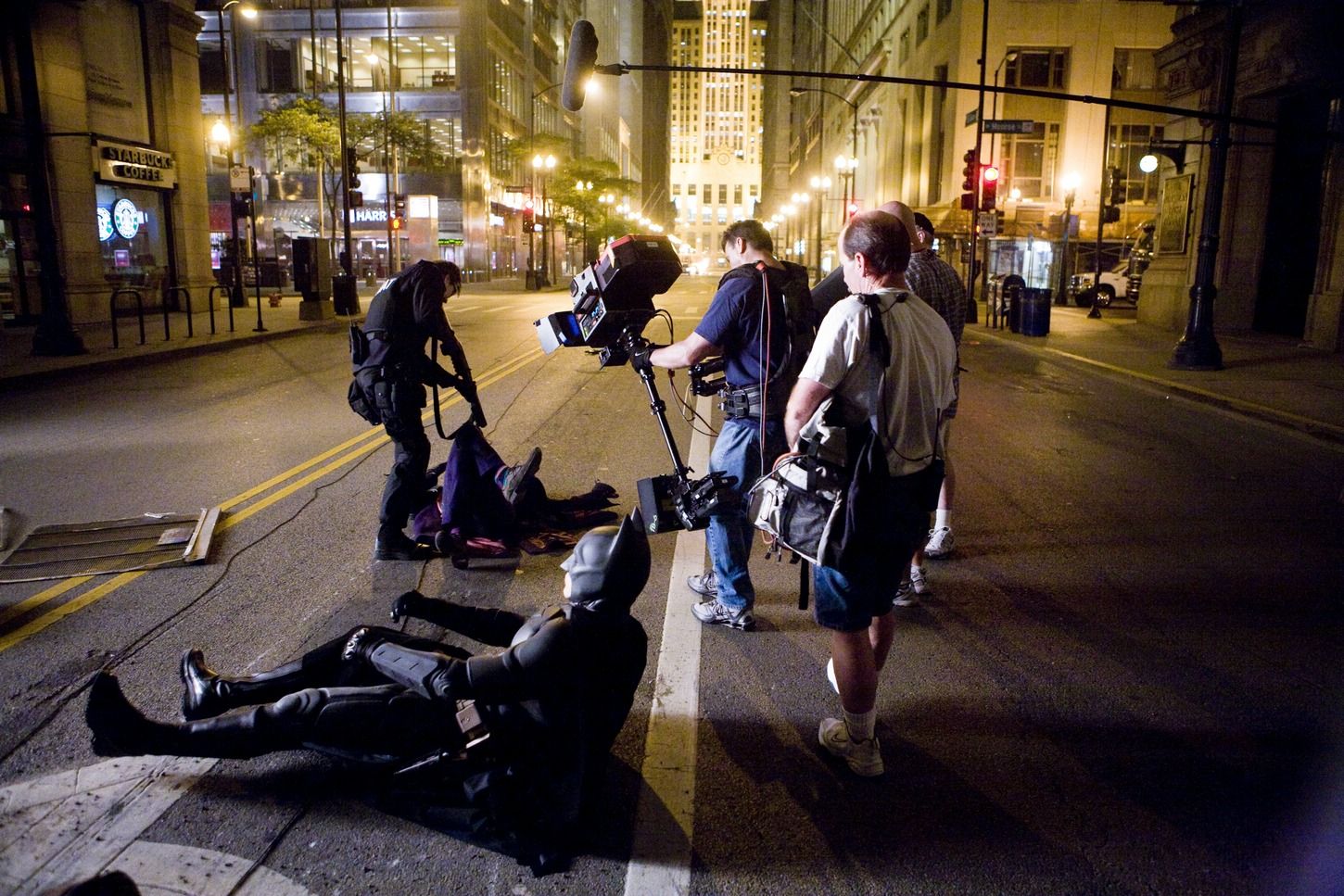
Behind-the-scenes image of crew and performers staging a street action beat for The Dark Knight.
BTS file #2

Street-level chaos under control

The finished movie feels like civic disorder, but this image shows the organization underneath: bodies, camera, street light, and impact arranged with exact control.

The chaos looks loose, but the frame gives away the design underneath it.

Source · Cinephilia & Beyond production gallery
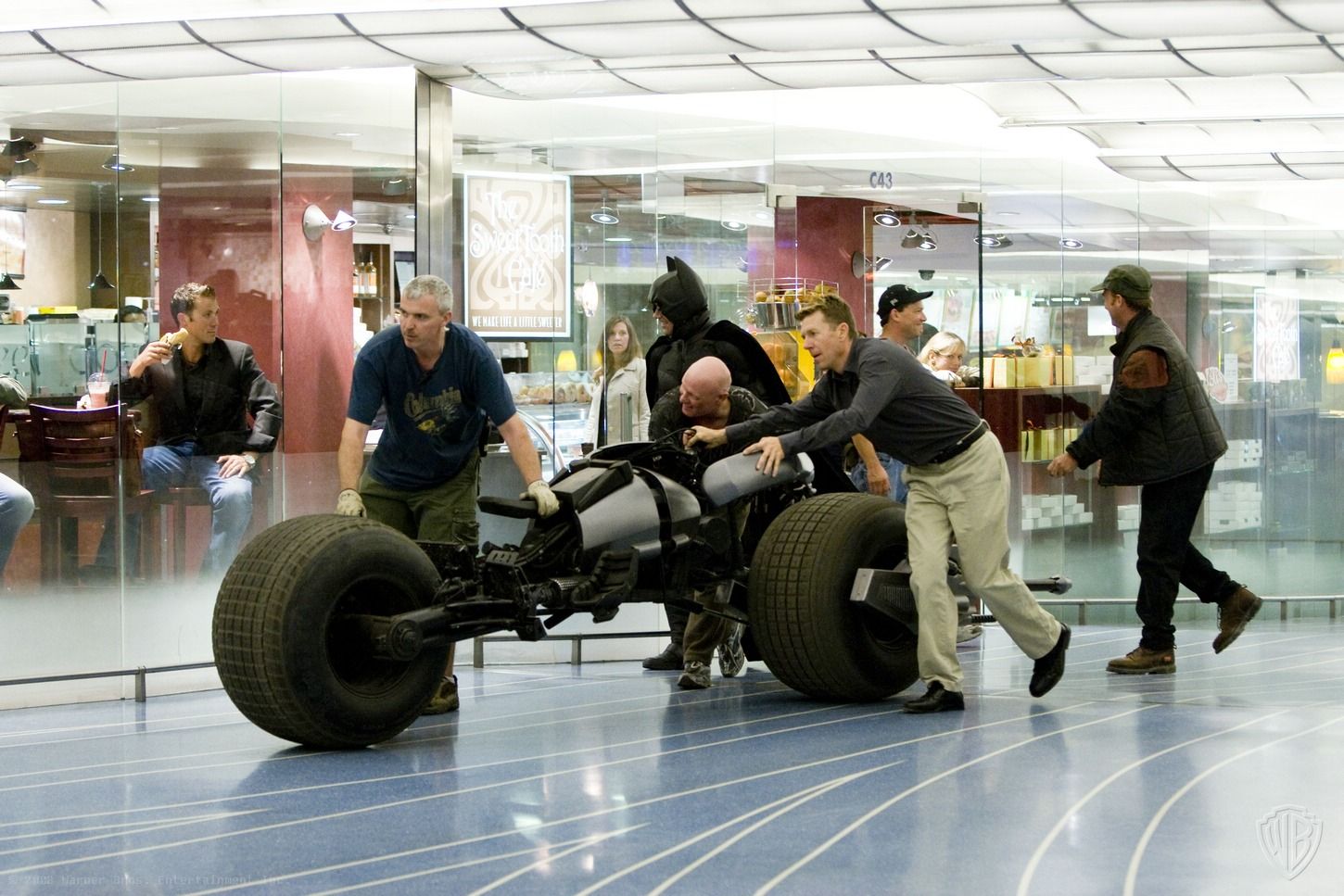
Behind-the-scenes image of crew moving or preparing the Bat vehicle on a bright interior set.
BTS file #3

The Tumbler as practical machinery

The vehicle reads as iconography on screen, but this photo restores the tactile production reality: a massive object being pushed, placed, and handled by people.

This is superhero myth pulled back toward physical weight, one of Nolan’s clearest blockbuster instincts.

Source · Cinephilia & Beyond production gallery
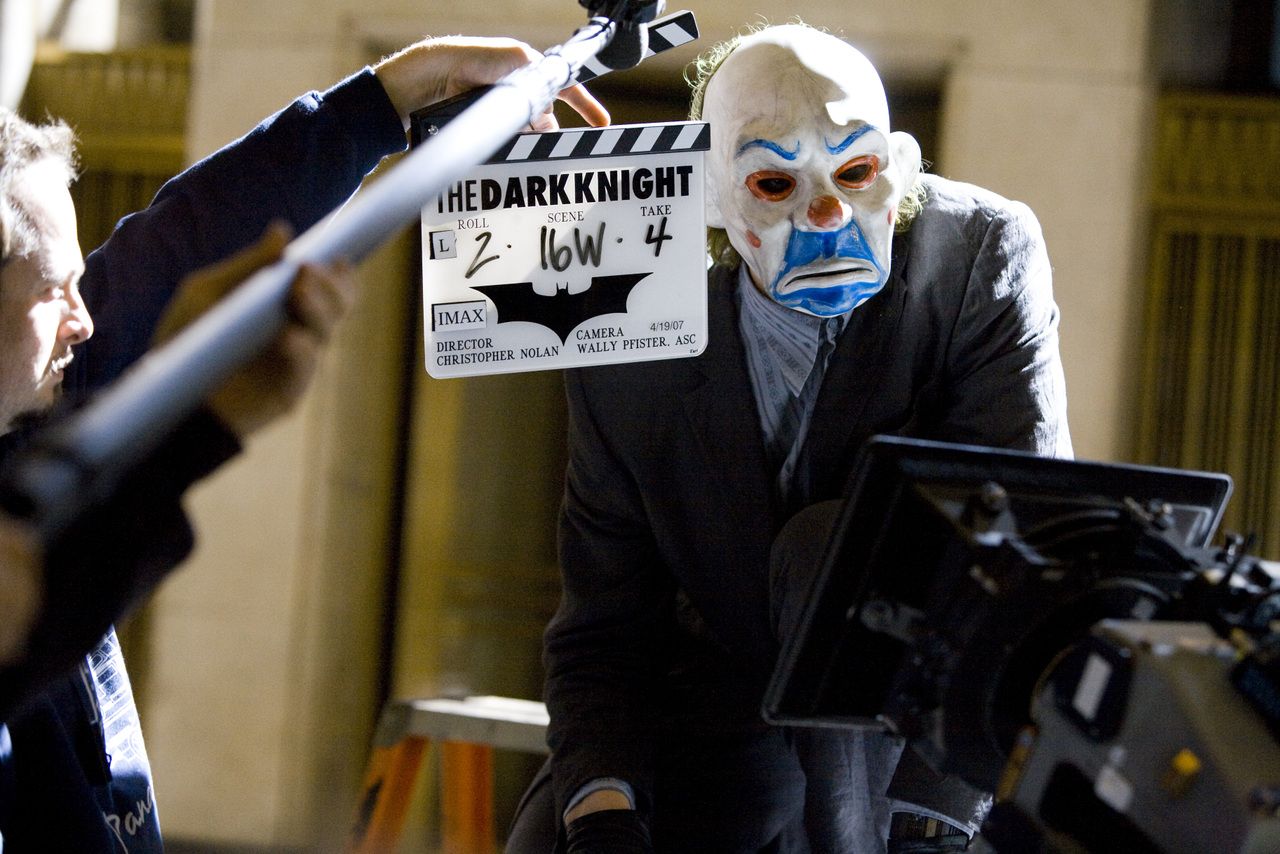
Behind-the-scenes image of the Joker scene setup with a production slate visible.
BTS file #4

Joker setup with slate

The slate cuts through the mythology and reminds you that Ledger’s chaos was built take by take, inside a controlled production machine.

The image helps separate the legend of the performance from the practical work of capturing it.

Source · Cinephilia & Beyond production gallery
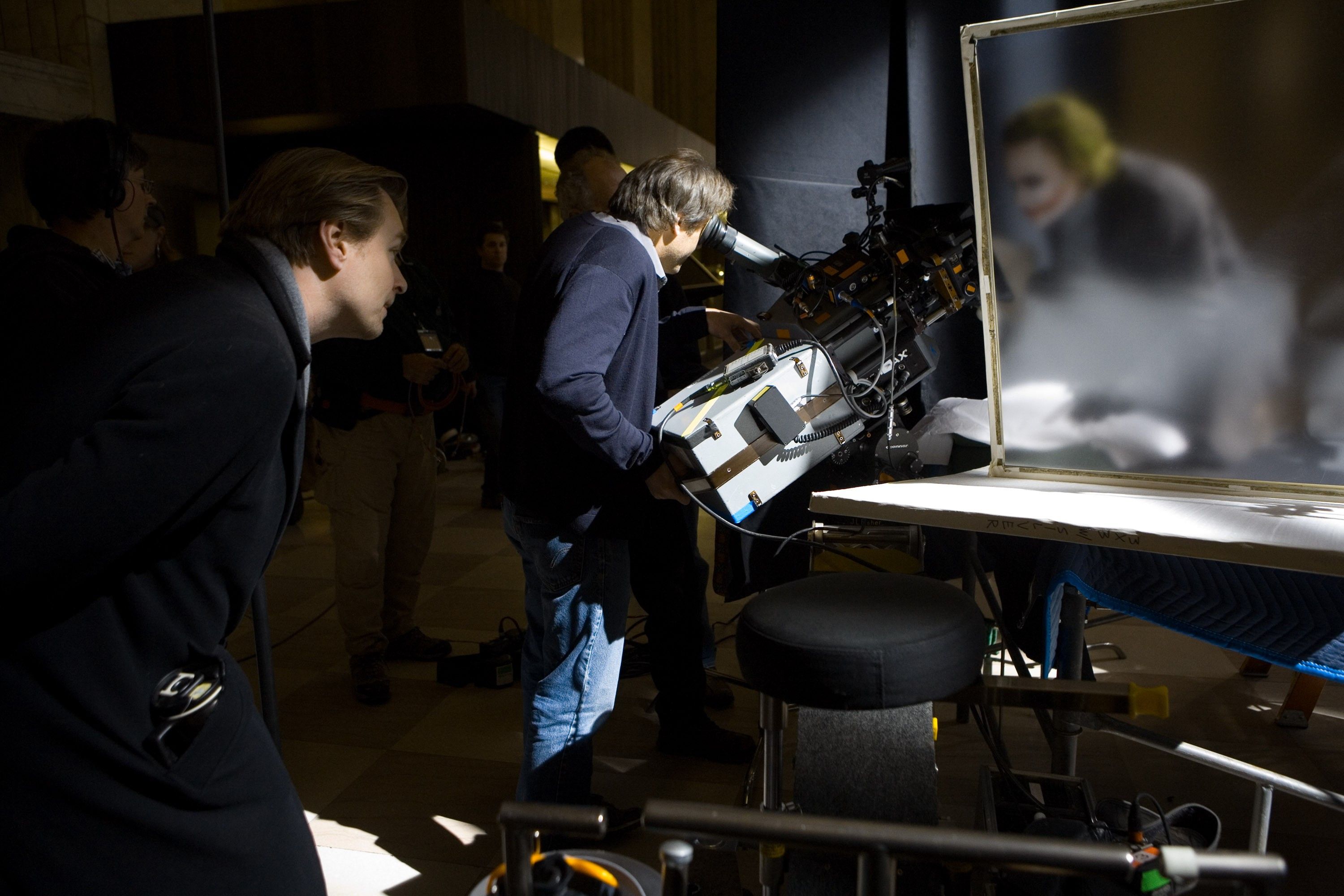
Behind-the-scenes image of camera and lighting equipment around an interior table setup for The Dark Knight.
BTS file #5

Camera and light around the table

The image shows the movie’s room pressure being manufactured through camera distance, light, bodies, and blocked space.

The verbal pressure still depends on visual construction; the scene works because the room is built to hold conflict.

Source · Cinephilia & Beyond production gallery

Production file

How the movie became this object

A blockbuster built like a crime siege

The Dark Knight works because Nolan pushes comic-book material through the grammar of cops, mobs, ferries, hostages, surveillance, and jurisdiction. Gotham feels less like a fantasy city than an institution under coordinated attack.

Ledger changes the movie’s oxygen

Heath Ledger’s Joker is not powerful because he is mysterious alone. He is powerful because every scene becomes unstable around him: rhythms shift, jokes curdle, and strategy becomes useless against appetite.

Scale with moral consequence

The practical spectacle matters because it keeps force legible. The truck flip is not only a stunt flex: a real 18-wheeler, a piston-and-TNT rig, a live driver, and Chicago street geometry make Batman’s restraint feel like a physical event rather than a digital flourish.

The interrogation room is lit like exposure, not mystery

Nolan called the interrogation the fulcrum of the movie, and the craft explains why. Pfister starts with table-lamp darkness, then detonates the room with punishing overexposure, stripping away noir comfort. Batman does not drag the Joker into shadow; he drags both of them into inspection, where rage, makeup decay, armor texture, and moral panic have nowhere to hide.

Scene architecture

The moments that change the machine

The pencil trick: a thesis disguised as a gag

The room learns immediately that this villain changes the rules before anyone has agreed to play. It is funny for one second, then the movie’s entire threat model arrives.

The interrogation: harsh light turns control into evidence

Batman enters with force, Joker answers with tempo, and the lighting refuses the comfort of noir shadow. The room’s white glare exposes makeup decay, armor texture, panic, and bruising; the prisoner seems weaker in physical terms and stronger in structural terms with every sentence.

The ferries: Gotham becomes the test subject

The climax matters because it removes superhero exceptionalism from the argument. Batman can race, fight, and improvise, but the movie’s wager finally belongs to ordinary passengers deciding whether fear has rewritten their ethics. Gotham survives for a moment because people refuse the role the Joker has assigned them.

Cultural afterlife

What people did with it afterward

The villain became the movie’s public memory

The Dark Knight’s afterlife is inseparable from Ledger’s Joker becoming a cultural object: quoted, imitated, memed, misunderstood, and still used as shorthand for charismatic chaos.

It reset what people expected from superhero scale

The film became a benchmark because it made blockbuster seriousness feel commercially explosive. That influence was not always healthy, but the achievement remains massive.

Editorial module

Signature scene: the interrogation room

The interrogation sequence is where the movie stops being merely excellent craft and becomes pure pressure. The room begins as a trap for the Joker, then becomes a trap for Batman’s self-image. Nolan’s harsh light matters because the scene is not about mystery; it is about exposure, watching a hero discover that rage can make him legible to the enemy.

Editorial module

Line worth carrying forward

"You either die a hero or you live long enough to see yourself become the villain" is not just a famous line. It is the movie distilling its whole tragedy into one sentence, Harvey Dent, Gotham, and Batman all trapped inside it.

Editorial module

Why the ending lands

The ending works because it chooses burden over release. Batman takes the moral weight onto himself, and the film closes not on triumph but on the cost of preserving a story a city can live with.

Editorial module

Steelman the debate

One strong argument against The Dark Knight is that its reputation often over-relies on Ledger and treats the rest of the film as prestige-comic-book packaging. The best counter is that the movie’s greatness is systemic. Ledger is devastating, yes, but the architecture around him, Dent’s tragedy, Batman’s burden, Gotham’s moral stress test, is what makes the performance hit this hard in the first place.

Scene shelf

The clips that prove the movie

A swipeable set of scene-level evidence: the moments worth replaying because they carry the movie’s rhythm, style, argument, or rewatch gravity.

5 scenesSwipe or scroll sideways
Scene 1MovieclipsCharacter intro as threat-model reset

Joker’s Magic Trick

The pencil trick is the cleanest possible Joker entrance: funny, ugly, theatrical, and instantly destabilizing. Gotham’s criminal order changes temperature in one gesture.

Scene 2MovieclipsTheme statement

Some Men Just Want to Watch the World Burn

Alfred names the movie’s real problem: not greed, not ordinary strategy, but appetite for collapse. It turns the Joker from villain into philosophical threat.

Scene 3MovieclipsSet-piece escalation

The Car Chase

Nolan turns urban geography into pressure. The chase works because every tactical beat tightens Gotham’s moral trap, not just the traffic.

Scene 4MovieclipsPractical action as moral limit

Bat-Pod Chase

The Bat-Pod sequence is the movie’s cleanest collision of iconography, engineering, and restraint: Batman has maximum force, a city-scale target, and still cannot simply become what he is fighting.

Scene 5MovieclipsVillain pressure

Joker Crashes the Party

Ledger makes the room feel contaminated on arrival. The scene matters because the Joker does not invade Bruce’s world; he exposes how fragile that world already is.