
Filmmaker Systems
Move through filmmaker operating systems: control, rhythm, obsession, and the pages still missing their case.
Filmmakers with a working theory of control
Start with filmmakers who turn style into operating systems — Tarantino, Fincher, Nolan, Tony Scott — then fan out by pressure, rhythm, live pages, and unfinished cases.
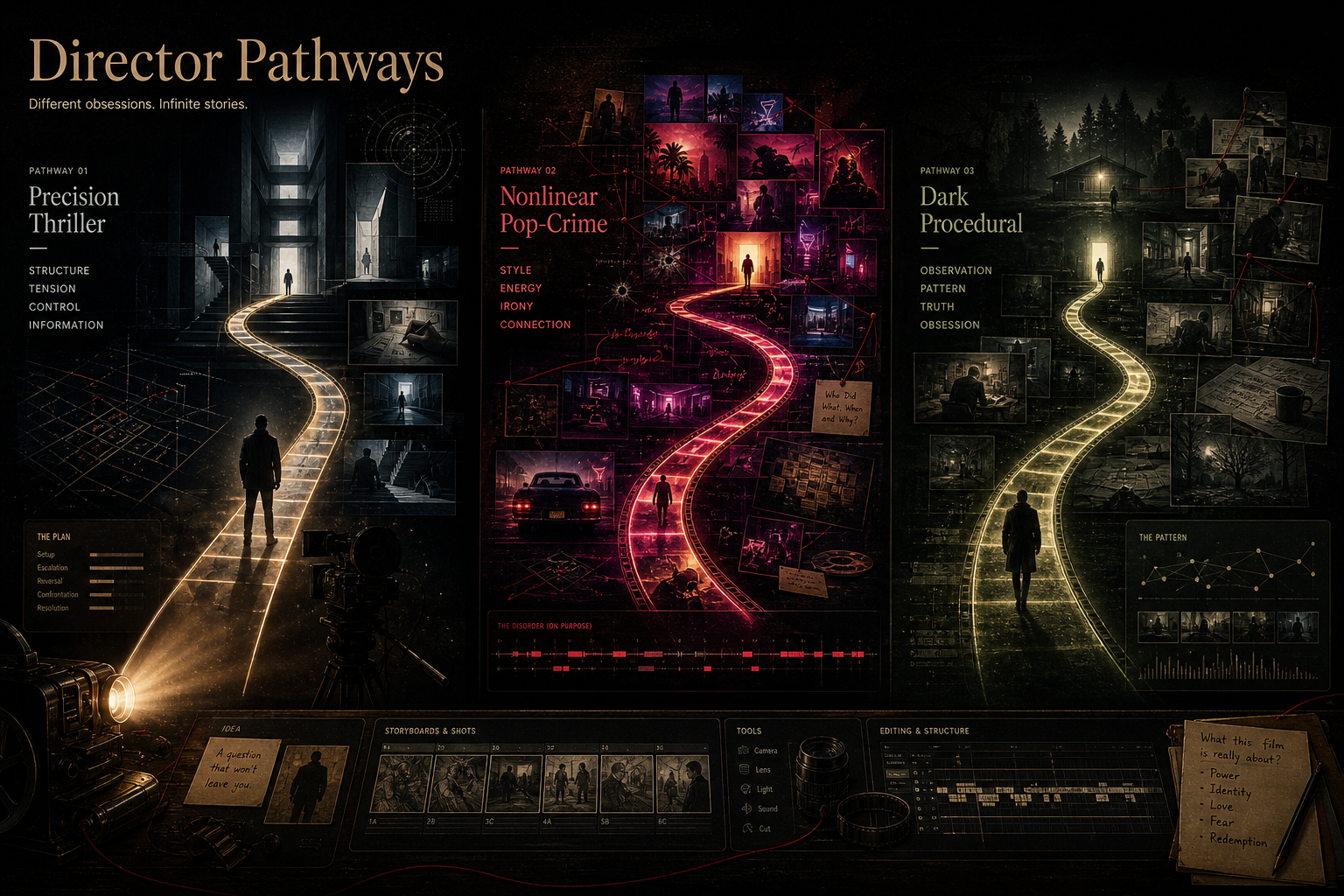
57 / 57directors

Christopher Nolan
Architectural blockbusters where time, rules, and guilt become pressure systems

David Fincher
Control-freak cinema where systems, rot, evidence, and desire keep tightening the frame

Quentin Tarantino
Record-collection cinema where talk, violence, music, and movie memory become rhythm

Jordan Peele
Social commentary through genre filmmaking

Steven Spielberg
Classical clarity, emotional immediacy, and blockbuster scale with human stakes

James Cameron
Engineering-driven spectacle fused to survival pressure and emotional clarity

Greta Gerwig
Authentic feminine perspectives with wit and warmth

Denis Villeneuve
Atmospheric tension with profound visual storytelling
Patty Jenkins
Empathy under spectacle, bruised performance studies, and women carrying myth-sized pressure

Lana Wachowski & Lilly Wachowski
Philosophical pop spectacle fused to cyberpunk mythmaking

Karyn Kusama
Desire, identity, and genre pressure that exposes what people are performing to survive

Kathryn Bigelow
Kinetic procedure, bodies under pressure, and systems that turn danger into addiction

Rob Reiner
Warm, actor-friendly storytelling with sharp comic timing and emotional clarity

Tony Scott
Hyperkinetic image-making fused to command pressure and emotional combustion

Alfred Hitchcock
Suspense architecture, point-of-view tension, and wit sharpened into dread

Francis Ford Coppola
Operatic family power, ritual, and moral corrosion

Gina Prince-Bythewood
Bodies in motion carrying feeling, discipline, identity, and purpose under pressure

Martin Scorsese
Kinetic guilt cinema where crime, faith, appetite, and performance keep collecting interest
Albert Magnoli
Pop-star mythology turned into backstage pressure and stage-light confession

Emerald Fennell
Candy-colored surfaces, social punishment, performance traps, and endings that force the audience to audit its appetite

Stephen Norrington
Industrial-goth genre energy built around attitude, velocity, and creature pressure

Tony Kaye
Raw, confrontational filmmaking focused on systems, damage, and provocation

George Miller
Mythic chase cinema built from clean geography, practical impact, and humane chaos

John Carpenter
Synth-driven genre minimalism with siege tension and anti-authority bite
Sofia Coppola
Loneliness, glamour, pop texture, and feelings caught before they can explain themselves

Gareth Edwards
Ground-level spectacle that makes impossible scale feel discovered by a handheld camera

George P. Cosmatos
Muscular genre filmmaking built around swagger, hardware, and clean mythic stakes

James Foley
Actor-forward pressure cookers where language becomes a weapon

James McTeigue
Matrix-trained action grammar used for symbols, surveillance, and theatrical resistance

John Krasinski
Clean genre rules turned into family-pressure machinery through silence, blocking, and sound design

Mary Harron
Cold-eyed social critique delivered with wit, control, and moral disgust
Neill Blomkamp
Dirty future tech, refugee-camp pressure, and military hardware colliding with social satire

Ben Stiller
Mainstream comedy pushed toward ego panic, chaos, and industry satire

Chris Sanders
Creature empathy, tactile movement, and family stories where belonging has to be earned
Destin Daniel Cretton
Character-first pressure, chosen families, and spectacle anchored to emotional consequence

Luc Besson
Pop-operatic spectacle with pulp sincerity and comic-book velocity
Lynne Ramsay
Elliptical trauma cinema where memory, sound, and missing frames carry the violence

Nia DaCosta
Genre inheritance, Black folklore, body pressure, and images that ask who profits from the wound
Paul W. S. Anderson
Game logic, industrial spaces, and franchise B-movie velocity

Victor Fleming
Big-studio mythmaking delivered with momentum, craft, and emotional directness

Paul Verhoeven
Provocation, pulp, and savage satire hidden inside crowd-pleasing genre form

Ridley Scott
Visual grandeur meets narrative intensity
Doug Liman
Indie friction smuggled into studio engines

Jane Campion
Interior pressure, landscape as desire, and women whose silence or restraint becomes the loudest force in the room

John Landis
Anarchic comedy with showbiz velocity and gleeful tonal whiplash

Nicolas Winding Refn
Neon cool, ritualized violence, and mood as destiny

Alex Proyas
Rain-slick cities, wounded outsiders, and comic-book myth treated like dream logic

Antoine Fuqua
Hard-R moral pressure, professional codes, and violence staged as consequence
Darren Aronofsky
Obsession edited as physical pressure: bodies, rituals, dreams, and punishment loops

John McTiernan
Clean spatial pressure, professional competence, and action that keeps turning into siege logic

Oliver Stone
Aggressive, argumentative filmmaking charged with power, paranoia, and American appetite

Terry Gilliam
Baroque imagination, bureaucratic nightmare, and comic chaos in constant collision

Wolfgang Petersen
Pressure-tested spectacle where crews, kids, and whole worlds survive by holding the line

David Lynch
Dream logic, ruptured identity, and American darkness made tactile

Wes Anderson
Storybook symmetry, deadpan rhythm, and melancholy hidden inside precision

Zack Snyder
Mythic bodies, slow-motion impact, and graphic-novel spectacle pushed into operatic scale

Tim Burton
Gothic pop melancholy rendered with storybook scale and outsider sympathy