
Mad Max: Fury Road
Find the movies with rewatch gravity, live dossiers, and unfinished cases worth deepening.

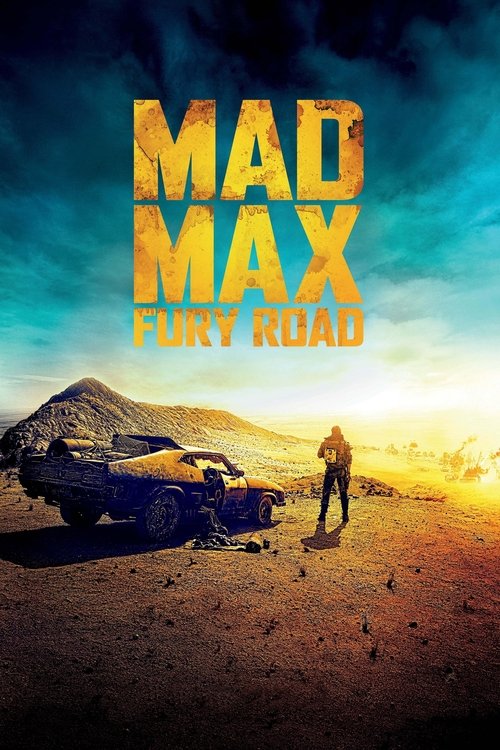
Movie dossier
Mad Max: Fury Road
George Miller makes a two-hour chase feel like myth, machine logic, and rescue under full desert pressure.
Latest video signal
Trailer slot ready
A widescreen slot for the newest official trailer, interview, or scene signal when the page has a playable source.
Why it matters
Fury Road matters here because it is blockbuster cinema with almost no fat on the frame. The plot is elemental — leave, discover the promised place is gone, turn back — but Miller makes that simplicity feel huge by turning every image into readable pressure. You always know where the War Rig is, who is gaining, what resource is running out, and which body is paying the cost. That clarity is why the movie keeps rewatching: the first pass is velocity, the second is grammar.
Craft read
A chase out and a chase back, stripped down until geography, motive, and momentum become one system
Water, fuel, bodies, engines, weather, and tribal power all fight for control of the same road
The movie rewards repeat viewings because the cutting is both frantic and legible: chaos disciplined into clean eye-trace
Themes
Cast and context
desert chase • furiosa • war rig • practical stunts • george miller • charlize theron • rewatch engine
Coverage status
A strong case file with real editorial shape: enough craft, context, and connection to guide a serious watch.
Production notes
- • fxguide reported that the Namibia shoot used multiple digital cameras, more than 150 vehicles, and a stunt-heavy foundation before VFX cleaned, extended, and intensified the world rather than replacing the physical event.
- • Editor Margaret Sixel told ProVideo Coalition she was on the film from 2012 to 2015 and shaped almost 500 hours of footage into the final two-hour screening experience, which explains why the movie can feel wild without becoming unreadable.
- • The center-framed, eye-trace-friendly action grammar is the secret weapon: Fury Road looks chaotic, but the viewer is rarely lost, so the spectacle lands as pressure instead of noise.
Watch-next pathway
What should you do after Mad Max: Fury Road?
Three intentional continuations: stay with the filmmaker, chase the dominant pressure signal, or jump into the shelf or argument that best explains why this movie belongs here.
Furiosa: A Mad Max Saga
The cleanest next move if George Miller's control, obsessions, or rhythm are what hooked you here.
More survival
Use the taste map to find movies, arguments, and shelves that share this page's strongest signal.
Stylized Worlds
Big visual identity, mythic energy, and movies that know exactly how they want to look and feel.
Movie-page argument
Defend Mad Max: Fury Road.
If this movie has a scene, performance, ending, or idea people underrate, make the case. The best defenses can become future Cinema One argument material.
Scene challenge
Pick the scene that proves it.
Cinema One is built around scenes that unlock the movie. Tell us which moment carries the pressure, style, argument, or rewatch charge.
Production file
How the movie became this object
Storyboards make the chase feel inevitable
John Seale’s Filmmaker interview gives the useful rewatch key: Fury Road was built from years of board-level planning, with Miller, Guy Norris, and the action team knowing where each truck, jump, impact, and explosion lived before the cameras had to survive it. That is why the movie feels wild without feeling random. The road is chaos only on the surface; underneath it is a diagram with teeth.
Sixel cuts spectacle by refusing repetition
Margaret Sixel told ProVideo Coalition the edit had to turn nearly 500 hours of material into a persuasive experience, which is more than an Oscar fact. The movie’s speed works because each shot has to progress action, character, or rhythm. Fury Road does not exhaust you by showing every good crash; it trusts the cut to decide which crash changes the room.
The rig is a pressure room on wheels
fxguide’s VFX reporting matters because it shows the balance: more than 150 vehicles and extensive stunt work gave the images weight, while cleanup, sky work, dust, compositing, and extensions made the wasteland mythic. The War Rig stays believable because the movie starts from metal, bodies, speed, and desert contact before it lets the digital world intensify the pressure.
Scene architecture
The moments that change the machine
The left turn starts the movie for real
Seale names the breakaway from the Citadel as the moment the movie starts, and he is right. Furiosa turning left is not just a plot trigger; it is the first visible act of disobedience against the whole water-and-body economy. The chase begins because one driver decides the road can carry a moral argument.
The Vuvalini section is the movie choosing breath over noise
Sixel’s postmortem is sharp on this: audiences welcomed the quieter middle stretch instead of rejecting it. That pause is why the return lands. The movie needs the Green Place grief, the old women, and the brief fall in engine noise so turning back feels like a choice, not just the next action beat.
The final War Rig roll is release by subtraction
The third act works because Miller and Sixel keep narrowing the problem: get back, cross the convoy, take Joe’s system apart, keep the bodies alive. When the War Rig finally rolls, it is not spectacle stacked on spectacle. It is the machine eating itself after the movie has spent two hours teaching us what every wheel, chain, body, and gallon costs.
Signature scene: the sandstorm turns pursuit into judgment
The storm sequence is where Fury Road announces that it is not just doing car action. The frame becomes orange weather, flares, lightning, engines, bodies on poles, and impossible silhouettes, but the scene still tracks cleanly because Miller keeps the goal simple: escape the pursuing machine. It is spectacle as moral weather — everyone drives into the same apocalypse, but only Furiosa’s mission gives the chaos purpose.
Line worth carrying forward
“Witness me.” It is funny, horrifying, and efficient world-building at once: a death cult slogan that turns disposability into ceremony. The line tells you how Immortan Joe keeps bodies loyal even when the system is literally killing them.
Why turning back is the whole movie
The green place being gone could have made the movie collapse into nihilism. Instead, it gives the story its cleanest moral turn: stop chasing a myth elsewhere and take the Citadel back. The ending works because rescue becomes political. Survival is no longer enough if the water stays locked upstairs.
Steelman the debate
The knock is that Fury Road is mostly one long chase. The defense is simple: yes, and that is the achievement. Miller compresses theme, geography, character, and world-building into motion so completely that the chase becomes the story’s language, not a substitute for story.
Shows up in
Big visual identity, mythic energy, and movies that know exactly how they want to look and feel.
Movies built for return visits, momentum, quotability, texture, and pure replay value.
Movies where staying alive means reading rules, terrain, logistics, and bodies faster than the danger can adapt.
Big-screen movies built around scale, countdown pressure, and the feeling that spectacle only matters because consequence rides inside it.
More from this director
Related picks
Read next
Cameron’s action-comedy stays watchable because it never treats the marriage plot as filler. Embarrassment, deception, and spectacle are all part of the same propulsion system.
Cameron’s sequel works because it does not simply supersize Ridley Scott’s terror. It rebuilds the xenomorph threat around group collapse, siege pressure, and Ripley’s protective ferocity.
James Cameron’s sequel gets larger, louder, and more advanced, but it stays alive because every escalation feeds the movie’s protector-child-parent triangle.