Predator
Find the movies with rewatch gravity, live dossiers, and unfinished cases worth deepening.
Movie dossier
Predator
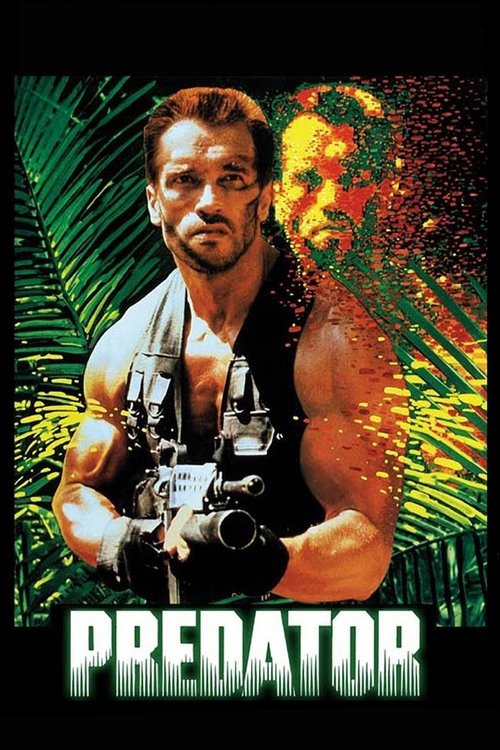
John McTiernan turns 80s commando swagger into jungle horror, then strips the alpha myth down to mud and breath.
Latest video signal
Trailer slot ready
A widescreen slot for the newest official trailer, interview, or scene signal when the page has a playable source.
Why it matters
Predator belongs here because it is a perfect rewatch-engine mutation: it starts as a squad-of-killers action picture and quietly becomes a monster movie about professional men losing every advantage they trust. The pleasure is not only the creature. It is watching McTiernan weaponize confidence against the characters, reducing guns, rank, muscle, and one-liners until Dutch has to become primitive, patient, and genuinely afraid.
Craft read
Commando rescue mission that sheds its war-movie skin and becomes survival horror
A team built on force keeps losing information, geography, and certainty to an enemy that studies them first
The movie improves once you track the genre handoff: every flex in the first half becomes a liability in the second
Themes
Cast and context
jungle • alien hunter • survival horror • commandos • camouflage • arnold schwarzenegger • john mctiernan
Coverage status
A strong case file with real editorial shape: enough craft, context, and connection to guide a serious watch.
Production notes
- • The Hollywood Reporter oral history traces the original concept to Jim and John Thomas asking what would happen if an alien big-game hunter came after the most dangerous humans: combat soldiers.
- • Visual effects supervisor Joel Hynek described building the camouflage effect from concentric inline mattes with background plates reduced inside the figure, a smart analog-digital trick that made invisibility feel physical in the jungle instead of merely blank.
- • The same THR oral history makes the location pressure useful rather than incidental: heat, heavy gear, leaf crews, tactical training, and a troubled creature redesign all feed the finished movie’s sense that every advantage is being sweated away.
Watch-next pathway
What should you do after Predator?
Three intentional continuations: stay with the filmmaker, chase the dominant pressure signal, or jump into the shelf or argument that best explains why this movie belongs here.
More survival
Use the taste map to find movies, arguments, and shelves that share this page's strongest signal.
Tension Machines
Command decisions, brinkmanship, pressure, and movies that tighten the screws scene by scene.
Movie-page argument
Defend Predator.
If this movie has a scene, performance, ending, or idea people underrate, make the case. The best defenses can become future Cinema One argument material.
Scene challenge
Pick the scene that proves it.
Cinema One is built around scenes that unlock the movie. Tell us which moment carries the pressure, style, argument, or rewatch charge.
Production file
How the movie became this object
The premise is a trophy wall with soldiers on it
The Hollywood Reporter oral history is useful because Jim Thomas names the clean original question: if humans hunt dangerous animals, what happens when something stronger treats combat soldiers as the dangerous game? That is why Predator does not need much lore. Its mythology is a reversal of confidence: the men who arrive as professionals become specimens inside someone else's sport.
The redesign saved the movie by making the enemy read as hierarchy
The troubled first creature matters less as gossip than as craft pressure. Once Kevin Peter Hall's height and Stan Winston's design enter the movie, the Predator stops feeling like a stunt problem and starts feeling like a rival system: taller, calmer, better equipped, and physically readable even under camouflage. The monster has to look like it can study Dutch before Dutch can study it back.
The jungle production gives the movie sweat equity
THR's cast-and-crew memories of Mexico heat, heavy gear, leaf crews, training, illness, and shutdown confusion explain why the finished film feels punished in the best way. The environment is not just scenery around the action; it is the pressure cooker that makes every weapon, joke, and bicep look less useful by the minute.
Scene architecture
The moments that change the machine
The handshake is the trap, not just the meme
Dutch and Dillon's arm-clasp tells the audience exactly what kind of movie it thinks it is watching: muscle, history, rivalry, certainty. The brilliance is that McTiernan lets that image become evidence against the characters. Predator spends the rest of the runtime proving that the biggest arms in the room do not matter if the room belongs to someone else.
The mud reveal rewrites strength as disappearance
When Dutch realizes the mud masks his heat signature, the movie finds its real action idea. Survival no longer means louder force; it means becoming unreadable. The image works because it humiliates the action-star body without destroying it: Schwarzenegger survives by letting the jungle erase him first.
Cultural afterlife
What people did with it afterward
Why it keeps outliving ordinary 80s action
Predator lasts because it gives viewers two pleasures at once: the surface charge of quotable commando cinema and the deeper satisfaction of watching that cinema get hunted. Every sequel, crossover, and creature-design echo is chasing the same simple engine: confidence enters the jungle; the jungle starts taking notes.
Signature scene: the jungle shootout proves firepower is not control
The squad unloading into the trees is the movie’s first full admission that the old rules have failed. It is huge, loud, muscular, and almost completely useless. McTiernan lets the scene play like an exorcism of action-movie confidence: everyone fires, the jungle absorbs it, and the silence afterward is more frightening than the noise.
Line worth carrying forward
“If it bleeds, we can kill it.” The line works because it is not empty bravado. It is Dutch rebuilding the movie’s contract from scratch: stop treating the thing like myth, find the wound, and make fear practical.
Why the ending strips the movie to its bones
The final duel matters because Dutch does not win by being bigger than the Predator. He wins by becoming less visible, less verbal, less modern. Mud replaces armor, traps replace bullets, and the action star survives only after the movie forces him to become a horror protagonist.
Steelman the debate
The knock is that Predator can look like pure muscle-cinema if you only remember the handshake, the minigun, and the quotable swagger. The defense is that the movie is smarter than its own poster: it sells the swagger hard so it can dismantle it with maximum pleasure.
Shows up in
Command decisions, brinkmanship, pressure, and movies that tighten the screws scene by scene.
Movies built for return visits, momentum, quotability, texture, and pure replay value.
The lane where personality beats polish and cult energy becomes part of the pleasure.
Containment, distrust, infiltration, and movies that trap characters inside systems they can no longer verify.
Movies where staying alive means reading rules, terrain, logistics, and bodies faster than the danger can adapt.
Owned-shelf movies where the pleasure is watching capable people read rooms, rules, bodies, and consequences under pressure.
More from this director
Related picks
Read next
Jordan Peele’s breakthrough lands so hard because every smile, compliment, and gesture of welcome feels like part of the extraction system.
Tarantino’s war fantasia works because the suspense is not built on firefights first. It is built on who can control the room, the accent, the cover story, and the next sentence.
Glengarry Glen Ross still cuts because James Foley stages sales talk as status warfare where every word is either leverage or humiliation.