
V for Vendetta
Find the movies with rewatch gravity, live dossiers, and unfinished cases worth deepening.
Movie dossier
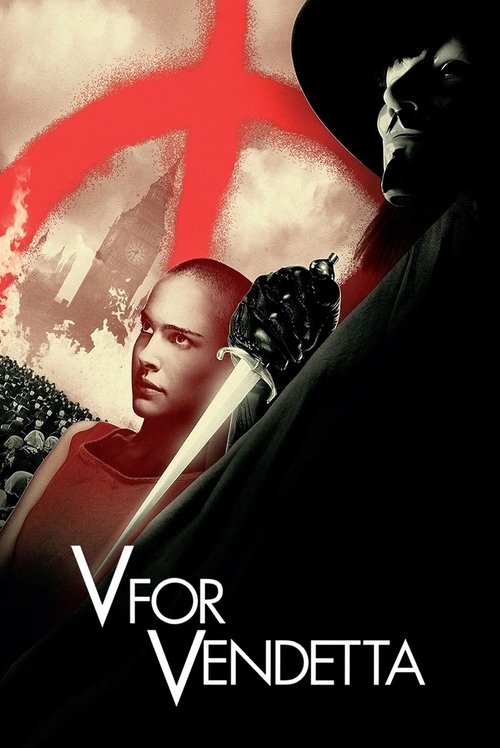
V for Vendetta
A masked political thriller where the symbol is fixed, so the pressure has to move through voice, lighting, fear, and Evey’s refusal to stay small.
Latest video signal
Trailer slot ready
A widescreen slot for the newest official trailer, interview, or scene signal when the page has a playable source.
Why it matters
V for Vendetta matters here because it is not just a comic-book revenge machine. It is a movie about how power teaches people to police their own imagination, then how a symbol can become dangerous once enough private fear turns public. The Wachowskis and James McTeigue give Cinema One a Thomas Library Spine title with argument gravity: theatrical, quotable, sometimes blunt, but still potent because it understands that revolutions are staged in rooms before they fill streets.
Craft read
Dystopian mystery, revenge plot, and public uprising braided into one countdown to the fifth of November
State surveillance, media control, private grief, and a masked performer who can never use facial expression as release
High-contrast shadows, theatrical interiors, propaganda screens, and a Guy Fawkes mask lit to change intent without changing shape
Themes
Cast and context
guy fawkes mask • wachowskis • alan moore • natalie portman • hugo weaving • dystopian britain • political thriller
Coverage status
A strong case file with real editorial shape: enough craft, context, and connection to guide a serious watch.
Production notes
- • James McTeigue told Letterboxd that he wanted a timeless, high-contrast look where shadow and light could change how viewers read V’s fixed mask.
- • The Hollywood Reporter’s anniversary interview notes that McTeigue came out of the Wachowskis’ Matrix unit and directed their long-developing script after the siblings chose to produce rather than direct.
- • IndieWire’s oral history frames the film as a Wachowski rewrite filtered through McTeigue’s debut, updating the Thatcher-era graphic novel into a post-9/11 political pressure chamber.
Watch-next pathway
What should you do after V for Vendetta?
Three intentional continuations: stay with the filmmaker, chase the dominant pressure signal, or jump into the shelf or argument that best explains why this movie belongs here.
More symbol warfare
Use the taste map to find movies, arguments, and shelves that share this page's strongest signal.
Cult and Oddball
The lane where personality beats polish and cult energy becomes part of the pleasure.
Movie-page argument
Defend V for Vendetta.
If this movie has a scene, performance, ending, or idea people underrate, make the case. The best defenses can become future Cinema One argument material.
Scene challenge
Pick the scene that proves it.
Cinema One is built around scenes that unlock the movie. Tell us which moment carries the pressure, style, argument, or rewatch charge.
Production file
How the movie became this object
The mask is a lighting problem before it is an icon
StudioDaily's 2006 production interview gives the clean rewatch key: McTeigue tested film stocks because V's mask had no expression, then leaned into one-sided source light, silhouette, windows, and Venetian-blind noir so the same face could read as menace, tenderness, joke, or judgment. That is why the movie can make a fixed object feel reactive without cheating the idea.
The voice had to become the close-up
The same StudioDaily interview notes how difficult it was to record through a fiberglass-and-plastic mask, with the crew placing the mic near the hairline because vocal nuance had to carry the character. The craft point matters more than the trivia: V is not expressive because the mask changes. He is expressive because the movie treats voice, posture, pause, and light as the performance system.
The finale was logistics turned into public authorship
McTeigue described closing Trafalgar Square and Whitehall for three nights, working from midnight to 4 a.m., moving roughly 500 soldier extras, and lighting the scale with four massive backlights. The ending plays because it does not feel like a private revenge beat expanded by CGI alone; it feels like a city, a crowd, and a production machine all being choreographed into one public image.
Scene architecture
The moments that change the machine
The mask close-ups: expression by subtraction
Watch how often the movie refuses the normal actor close-up bargain. Because V's face cannot soften, McTeigue has to build emotion from angle, silhouette, timing, and Weaving's vocal pressure. The limitation becomes the thesis: a symbol is powerful because it will not personalize itself for your comfort.
The domino room: revolution as rehearsal
The domino sequence works because it turns political momentum into hand labor. V is not just waiting for history; he is arranging history piece by piece, obsessively, theatrically, with the same control-freak patience that makes the mask frightening.
Parliament: spectacle after ownership changes hands
The explosion is staged after V has already lost control of the image. That order matters. The crowd inherits the mask first, so the blast reads less like one man's punctuation and more like the public finally speaking in a language the regime helped create by making everyone afraid.
Signature scene: Evey in the cell turns fear into the unlock
The imprisonment passage is the movie’s harshest argument because it removes the spectacle and makes resistance intimate. Evey is not radicalized by a speech; she is stripped down to a choice between survival obedience and a self she can still respect. When the rain finally hits her, the scene releases because the movie has made courage physical, not decorative.
Line worth carrying forward
“Beneath this mask there is more than flesh. Beneath this mask there is an idea.” It works because Hugo Weaving has to make a static face feel alive through rhythm and restraint; the line turns a costume into a transmission system.
Why the ending still plays
The Parliament explosion is less interesting as destruction than as authorship. By the finale, V is no longer the owner of the image. The crowd inherits it, which is why the masks matter: the movie’s real payoff is watching a private vendetta become a public language.
Steelman the debate
The critique is that V for Vendetta can flatten politics into slogan and opera. The defense is that the opera is the point: the film is about how symbols simplify, travel, mutate, and outlive the person who made them useful. Its bluntness is also why people still reach for it when the room feels authoritarian.
More from this director
Read next
Fincher’s Dragon Tattoo remake endures because research, pattern recognition, and bruised trust become as gripping as any chase scene.
Panic Room works because Fincher turns walls, sightlines, and delays into the whole suspense engine instead of treating them as setup for louder thrills.
Fincher’s luxury paranoia machine still lands because every escalation turns wealth, control, and self-protection into liabilities instead of armor.