
A Quiet Place
Find the movies with rewatch gravity, live dossiers, and unfinished cases worth deepening.
Movie dossier
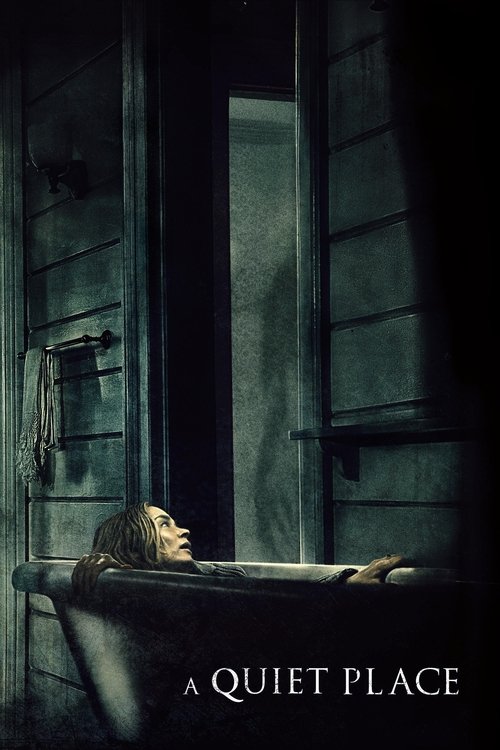
A Quiet Place
A family-survival horror movie where silence is not absence; it is the whole operating system.
Latest video signal
Trailer slot ready
A widescreen slot for the newest official trailer, interview, or scene signal when the page has a playable source.
Why it matters
A Quiet Place matters here because it converts a monster premise into pure movie grammar. The rule is simple enough to explain in one breath, but Krasinski turns it into a full pressure system: family communication, disability, pregnancy, grief, protection, and terror all have to move through sound. It gives the Thomas Library Spine a modern rewatch engine that is not about lore or gore. It is about watching a household invent rituals precise enough to keep love alive in a world that punishes noise.
Craft read
Creature-feature survival built around one clean rule: make sound and the world answers violently
Every domestic action becomes suspense because the family has to eat, mourn, give birth, argue, and protect each other without ordinary noise
Sound design, ASL, muffled point-of-view shifts, sand paths, and floorboard maps make silence feel engineered rather than gimmicky
Themes
Cast and context
silence • sound design • creature feature • family survival • john krasinski • emily blunt • millicent simmonds • sign language
Coverage status
A strong case file with real editorial shape: enough craft, context, and connection to guide a serious watch.
Production notes
- • Krasinski told the Writers Guild of America East that the spec premise clicked for him as a metaphor for parenthood, which is why the finished film plays less like a monster puzzle and more like a love letter under siege.
- • IndieWire’s craft interview with Erik Aadahl and Ethan Van der Ryn explains the film’s sonic point-of-view system, especially Regan’s two sound envelopes around her cochlear implant and the creatures’ inverse sensitivity.
- • Deadline’s Production Value interview frames the sound team’s risk clearly: long gradations of quiet, strict rules for which sounds are safe, and a story where sound becomes a character instead of background texture.
Watch-next pathway
What should you do after A Quiet Place?
Three intentional continuations: stay with the filmmaker, chase the dominant pressure signal, or jump into the shelf or argument that best explains why this movie belongs here.
More family survival
Use the taste map to find movies, arguments, and shelves that share this page's strongest signal.
Paranoia Machines
Containment, distrust, infiltration, and movies that trap characters inside systems they can no longer verify.
Movie-page argument
Defend A Quiet Place.
If this movie has a scene, performance, ending, or idea people underrate, make the case. The best defenses can become future Cinema One argument material.
Scene challenge
Pick the scene that proves it.
Cinema One is built around scenes that unlock the movie. Tell us which moment carries the pressure, style, argument, or rewatch charge.
Signature scene: the nail and the birth turn domestic space into a pressure room
The basement sequence works because the movie has trained the audience to hear danger before seeing it. Evelyn stepping on the nail, holding back pain, managing labor, flooding water, a red warning light, and a creature in the house all become one impossible domestic task. The scare is not just the monster. It is the brutal math of needing to make human noise in a world that treats human noise as blood in the water.
Line worth carrying forward
“Who are we if we can’t protect them?” That question is the movie’s real engine. The monsters make the rule visible, but the pressure underneath is parental: love measured against the terrifying possibility that vigilance still might not be enough.
Why the ending lands like release
The finale earns its shotgun-cock catharsis because Regan’s discovery is not random monster weakness trivia. It grows from the movie’s whole sound system: her difference, her father’s tinkering, the creatures’ sensitivity, and a family learning how to convert vulnerability into signal.
Steelman the debate
The fair knock is that A Quiet Place can strain plausibility if you audit every survival rule. The defense is that the movie’s bargain is theatrical, not documentary. Accept the rule, and it gives you one of modern studio horror’s cleanest machines: suspense as household choreography, silence as action, and family love turned into tactical behavior.
More from this director
Related picks
Read next
Fincher’s Dragon Tattoo remake endures because research, pattern recognition, and bruised trust become as gripping as any chase scene.
Panic Room works because Fincher turns walls, sightlines, and delays into the whole suspense engine instead of treating them as setup for louder thrills.
Fincher’s luxury paranoia machine still lands because every escalation turns wealth, control, and self-protection into liabilities instead of armor.