
The Martian
Find the movies with rewatch gravity, live dossiers, and unfinished cases worth deepening.
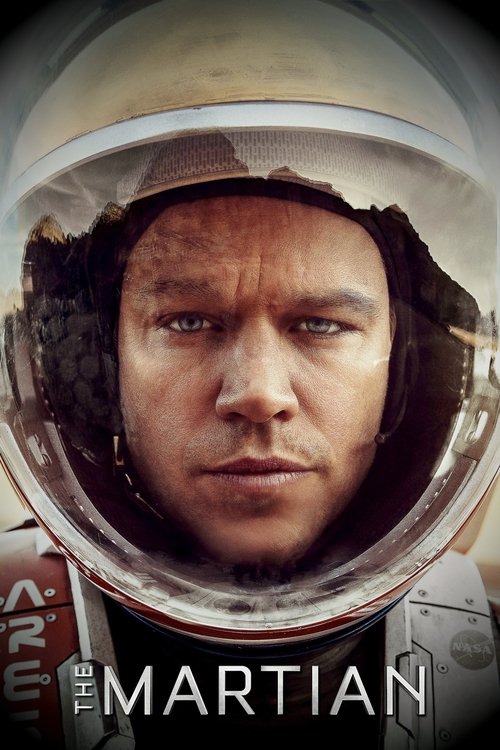
Movie dossier
The Martian
Ridley Scott turns Mars survival into competence cinema with jokes, duct tape, math, and a rescue loop that actually warms the room.
Latest video signal
Trailer slot ready
A widescreen slot for the newest official trailer, interview, or scene signal when the page has a playable source.
Why it matters
The Martian matters here because it is one of the rare modern studio spectacles where intelligence is the action. Watney survives by breaking panic into tasks; NASA survives by turning bureaucracy into a pressure room; the crew survives by deciding that procedure still has to serve loyalty. Scott gives Cinema One a different kind of rewatch engine: not dread, not violence, but the clean pleasure of watching capable people solve impossible problems without pretending optimism is easy.
Craft read
A castaway survival story built from engineering problems, mission-room decisions, and crew-risk arithmetic
Every solution buys time while oxygen, food, weather, distance, politics, and orbital math keep closing the margin
The movie stays comforting because competence, humor, and teamwork become the spectacle instead of decoration around it
Themes
Cast and context
mars • survival • nasa • engineering • ridley scott • andy weir • competence cinema
Coverage status
A strong case file with real editorial shape: enough craft, context, and connection to guide a serious watch.
Production notes
- • NASA JPL wrote that the story leans on real Mars-exploration history, including Pathfinder and the can-do engineering culture that helps Watney regain contact with Earth.
- • fxguide reported that the VFX team had a compressed post schedule and used virtual-production tools, simulcam planning, GoPro inserts, Jordan sky replacements, and specialist vendors to keep the Mars/space work efficient without losing scale.
- • The Credits interview with VFX supervisor Richard Stammers notes Dariusz Wolski’s single-source lighting approach for Mars material, which helps the surface feel sun-baked and practical instead of glossy studio red.
Watch-next pathway
What should you do after The Martian?
Three intentional continuations: stay with the filmmaker, chase the dominant pressure signal, or jump into the shelf or argument that best explains why this movie belongs here.
Blade Runner
The cleanest next move if Ridley Scott's control, obsessions, or rhythm are what hooked you here.
More survival
Use the taste map to find movies, arguments, and shelves that share this page's strongest signal.
Survival Systems
Movies where staying alive means reading rules, terrain, logistics, and bodies faster than the danger can adapt.
Movie-page argument
Defend The Martian.
If this movie has a scene, performance, ending, or idea people underrate, make the case. The best defenses can become future Cinema One argument material.
Scene challenge
Pick the scene that proves it.
Cinema One is built around scenes that unlock the movie. Tell us which moment carries the pressure, style, argument, or rewatch charge.
Signature scene: “science the shit out of this” is the whole movie in one reset
The line works because it is not a meme pasted onto survival. Watney has already panicked, bled, counted supplies, and understood how dead he should be. The scene flips the movie from disaster into procedure: not because the danger shrinks, but because he finds a language that can hold it. From there, every potato, patch, rover drive, and bad idea becomes one more vote for organized hope.
Line worth carrying forward
“I’m going to have to science the shit out of this.” It is funny, but it is also Cinema One’s case for the movie: intelligence as morale, profanity as pressure release, and problem-solving as a form of refusing despair.
Why the ending earns the classroom
Watney teaching astronaut candidates could have played like a victory lap. Instead it clarifies the movie’s ethic: at some point everything will go wrong, and survival begins when you solve one problem, then the next, then the next. The ending turns the rescue into a transferable method.
Steelman the debate
A fair critique is that The Martian sands down loneliness and institutional friction into a sunnier survival fantasy. The defense is that this is exactly its chosen bargain: Scott makes optimism procedural, not naive. The movie believes in jokes and teamwork because it has made the math hard enough for those things to matter.
More from this director
Related picks
Read next
Ridley Scott’s future-noir lasts because its atmosphere is not decoration, it is the emotional form of a movie about built lives and borrowed time.
Fincher’s serial-killer landmark still lands because every clue, room, and conversation feels touched by the same civic rot as the murders themselves.
The real reason to track Dune: Messiah early is that it could force blockbuster franchise culture to sit inside consequence instead of momentum.