
The Bourne Identity
Find the movies with rewatch gravity, live dossiers, and unfinished cases worth deepening.
Movie dossier
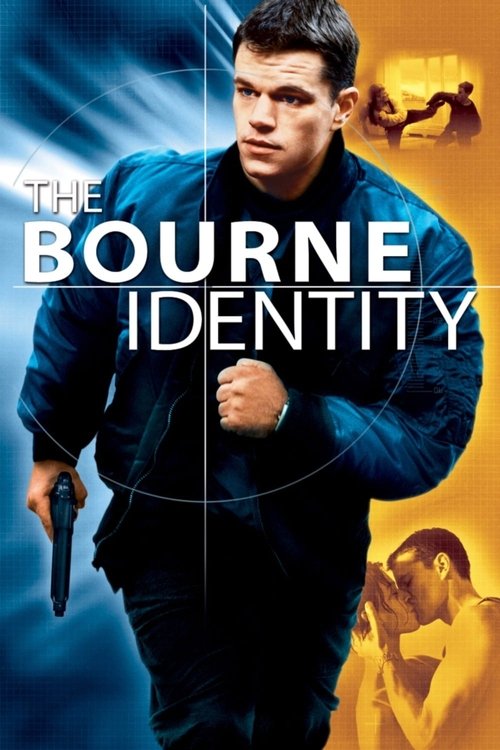
The Bourne Identity
Doug Liman turns amnesia into spy-movie procedure: a man reading his own body like a case file while Europe closes in around him.
Latest video signal
Trailer slot ready
A widescreen slot for the newest official trailer, interview, or scene signal when the page has a playable source.
Why it matters
The Bourne Identity matters here because it gives the Thomas Library Spine a clean rewatch engine for modern action: not superhero scale, not gadget fantasy, but a wounded professional discovering his own operating system one reflex at a time. Bourne does not enter scenes with swagger. He enters with suspicion, exits, sightlines, documents, distance, and hands that move faster than his memory. That is the hook: identity as evidence, action as self-diagnosis.
Craft read
A fugitive amnesia thriller where every chase, passport, and fight doubles as character reconstruction
Bourne has to escape the agency hunting him while deciding whether the skills saving him are also proof of what he fears he is
The pleasure is tracking how calmly the movie turns ordinary infrastructure — banks, maps, stations, stairwells — into spy pressure
Themes
Cast and context
jason bourne • amnesia • spy thriller • doug liman • matt damon • kali • paris chase • identity crisis
Coverage status
A strong case file with real editorial shape: enough craft, context, and connection to guide a serious watch.
Production notes
- • In a 2002 BBC interview, Liman said Kali helped define Bourne because its efficiency suggested a man who would solve every problem with the simplest, least wasteful move available.
- • Liman later told Den of Geek that he brought an independent-film instinct to Bourne, even running around Paris with Matt Damon and a shoulder camera in places like Gare du Nord without normal permit control; the guerrilla pressure became part of the film’s handheld pulse.
- • Den of Geek’s production history traces how the troubled ending was reworked into a stairwell action beat, which matters because the finished climax keeps the movie’s best idea intact: action should reveal Bourne’s frightening competence, not inflate into generic spectacle.
Watch-next pathway
What should you do after The Bourne Identity?
Three intentional continuations: stay with the filmmaker, chase the dominant pressure signal, or jump into the shelf or argument that best explains why this movie belongs here.
More identity
Use the taste map to find movies, arguments, and shelves that share this page's strongest signal.
Rewatchables
Movies built for return visits, momentum, quotability, texture, and pure replay value.
Movie-page argument
Defend The Bourne Identity.
If this movie has a scene, performance, ending, or idea people underrate, make the case. The best defenses can become future Cinema One argument material.
Scene challenge
Pick the scene that proves it.
Cinema One is built around scenes that unlock the movie. Tell us which moment carries the pressure, style, argument, or rewatch charge.
Signature scene: the Paris apartment fight tells Bourne who he is before memory can
The apartment fight works because it is almost diagnostic. Bourne does not posture; he responds. A pen becomes a weapon, distance becomes math, furniture becomes geography, and the room tells him something terrifying: his body has been trained to survive before his conscience has been allowed to vote. The scene unlocks the whole movie because the action is not decoration. It is evidence.
Line worth carrying forward
“I can tell you the license plate numbers of all six cars outside.” It is the movie’s cleanest self-reveal. Bourne is not bragging; he is discovering the surveillance machine inside his own head, and the audience hears the horror under the competence.
Why the ending chooses refusal over triumph
The ending matters because Bourne does not become comfortable with being the perfect weapon. He refuses the role, finds Marie, and leaves the agency with a problem it cannot simply shoot: a trained asset developing a moral self. The movie’s victory is not defeating Treadstone forever. It is Bourne choosing a name, a person, and a life outside the file.
Steelman the debate
The critique is that Bourne helped normalize shaky-camera action until lesser movies turned impact into blur. The defense is that The Bourne Identity is still cleaner and smarter than many of its imitators: its handheld urgency comes from character paranoia, practical geography, and Liman’s indie friction, not from hiding empty choreography.
Shows up in
Movies built for return visits, momentum, quotability, texture, and pure replay value.
Movies where staying alive means reading rules, terrain, logistics, and bodies faster than the danger can adapt.
Owned-shelf movies where the pleasure is watching capable people read rooms, rules, bodies, and consequences under pressure.
More from this director
Related picks
Read next
Fincher’s Dragon Tattoo remake endures because research, pattern recognition, and bruised trust become as gripping as any chase scene.
Panic Room works because Fincher turns walls, sightlines, and delays into the whole suspense engine instead of treating them as setup for louder thrills.
Fincher’s luxury paranoia machine still lands because every escalation turns wealth, control, and self-protection into liabilities instead of armor.