
A Few Good Men
Find the movies with rewatch gravity, live dossiers, and unfinished cases worth deepening.
Movie dossier
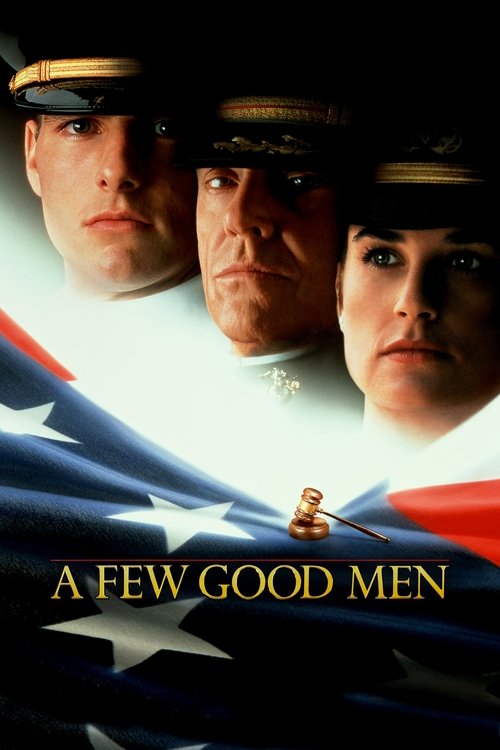
A Few Good Men
Rob Reiner and Aaron Sorkin turn a military courtroom into a chain-of-command pressure room.
Latest video signal
Trailer slot ready
A widescreen slot for the newest official trailer, interview, or scene signal when the page has a playable source.
Why it matters
A Few Good Men matters here because it is one of the cleanest command-pressure movies in the Thomas Library Spine. The plot is a murder trial, but the real engine is hierarchy: who gets to give orders, who has to carry them out, who hides behind duty, and who has enough nerve to make power explain itself under oath. It is courtroom cinema with rewatch gravity because every joke and objection is also a calibration of courage.
Craft read
Courtroom procedure built around military rank, testimony traps, and escalating institutional pressure
Kaffee has to prove an illegal order without letting Jessup turn authority itself into reasonable doubt
The pleasure is watching casual legal talent become moral command one question at a time
Themes
Cast and context
courtroom • military justice • chain of command • aaron sorkin • rob reiner • tom cruise • jack nicholson • code red
Coverage status
A strong case file with real editorial shape: enough craft, context, and connection to guide a serious watch.
Production notes
- • AFI traces the original stage play to Aaron Sorkin hearing from his sister, a naval lawyer, about a 1986 Guantanamo Bay hazing case; that origin is why the movie feels procedural before it feels theatrical.
- • AFI also notes Sorkin and Rob Reiner spent eight months collaborating on the film adaptation, which helps explain why the finished movie keeps the play's verbal compression while moving the pressure through offices, softball fields, bases, corridors, and finally court.
- • TCM records Reiner describing the climactic courtroom sequence as an eighteen-minute ending built around Nicholson's long speech; the scene works because the movie has already trained the audience in orders, loyalty, contempt, and who is allowed to define truth.
Watch-next pathway
What should you do after A Few Good Men?
Three intentional continuations: stay with the filmmaker, chase the dominant pressure signal, or jump into the shelf or argument that best explains why this movie belongs here.
Stand by Me
The cleanest next move if Rob Reiner's control, obsessions, or rhythm are what hooked you here.
More command pressure
Use the taste map to find movies, arguments, and shelves that share this page's strongest signal.
Tension Machines
Command decisions, brinkmanship, pressure, and movies that tighten the screws scene by scene.
Movie-page argument
Defend A Few Good Men.
If this movie has a scene, performance, ending, or idea people underrate, make the case. The best defenses can become future Cinema One argument material.
Scene challenge
Pick the scene that proves it.
Cinema One is built around scenes that unlock the movie. Tell us which moment carries the pressure, style, argument, or rewatch charge.
Scene architecture
The moments that change the machine
Architecture note: Kaffee has to become a commander before he can beat one
The movie opens with Kaffee as a plea-bargain specialist who treats law like damage control. What makes the rewatch stronger is tracking how the room keeps asking him to issue cleaner orders to himself: stop hiding behind charm, stop outsourcing conviction to Galloway, stop treating the case as career weather, and finally stand in front of Jessup with enough command to make command incriminate itself.
Architecture note: Galloway is the conscience engine, not the scold
JoAnne Galloway matters because she protects the movie from becoming a swagger contest between two men. She sees the Code Red shape before Kaffee wants to risk seeing it, and her pressure is practical: file the motion, ask the harder question, respect the defendants enough to make the institution answer. Without her, Kaffee gets a good closing argument. With her, he earns a moral spine.
Signature scene: “You can’t handle the truth” is a command structure cracking in public
The climax does not work because Jessup yells. It works because Kaffee makes him choose between two identities: disciplined commander or untouchable author of the rules. Nicholson plays the explosion like a man who has been waiting for civilians to thank him, and Cruise wins by refusing to blink when that contempt finally becomes evidence.
Line worth carrying forward
“You can’t handle the truth!” survives because it is not just a meme line. It is Jessup’s whole worldview in one outburst: truth as classified property, morality as weakness, and command as a license to decide what everyone else is allowed to know.
Why the ending keeps the bruise
The verdict does not simply clear the room. Dawson and Downey are spared murder, then dishonorably discharged because the movie refuses to pretend obedience erases responsibility. The final lesson is harder than the win: duty without conscience is just another way to let power outsource its sins.
Steelman the debate
The knock is that A Few Good Men is stage-built and engineered for applause. The defense is that this is exactly its strength. Reiner understands the movie as a pressure device: every scene tightens the question of who controls the room until the theatricality becomes the point, not the leak.
Shows up in
Command decisions, brinkmanship, pressure, and movies that tighten the screws scene by scene.
Movies built for return visits, momentum, quotability, texture, and pure replay value.
Owned-shelf movies where the pleasure is watching capable people read rooms, rules, bodies, and consequences under pressure.
More from this director
Related picks
Read next
Fincher’s Dragon Tattoo remake endures because research, pattern recognition, and bruised trust become as gripping as any chase scene.
Benjamin Button matters because Fincher treats the reverse-aging premise less like a trick than a way to make timing itself feel tragic.
Panic Room works because Fincher turns walls, sightlines, and delays into the whole suspense engine instead of treating them as setup for louder thrills.