
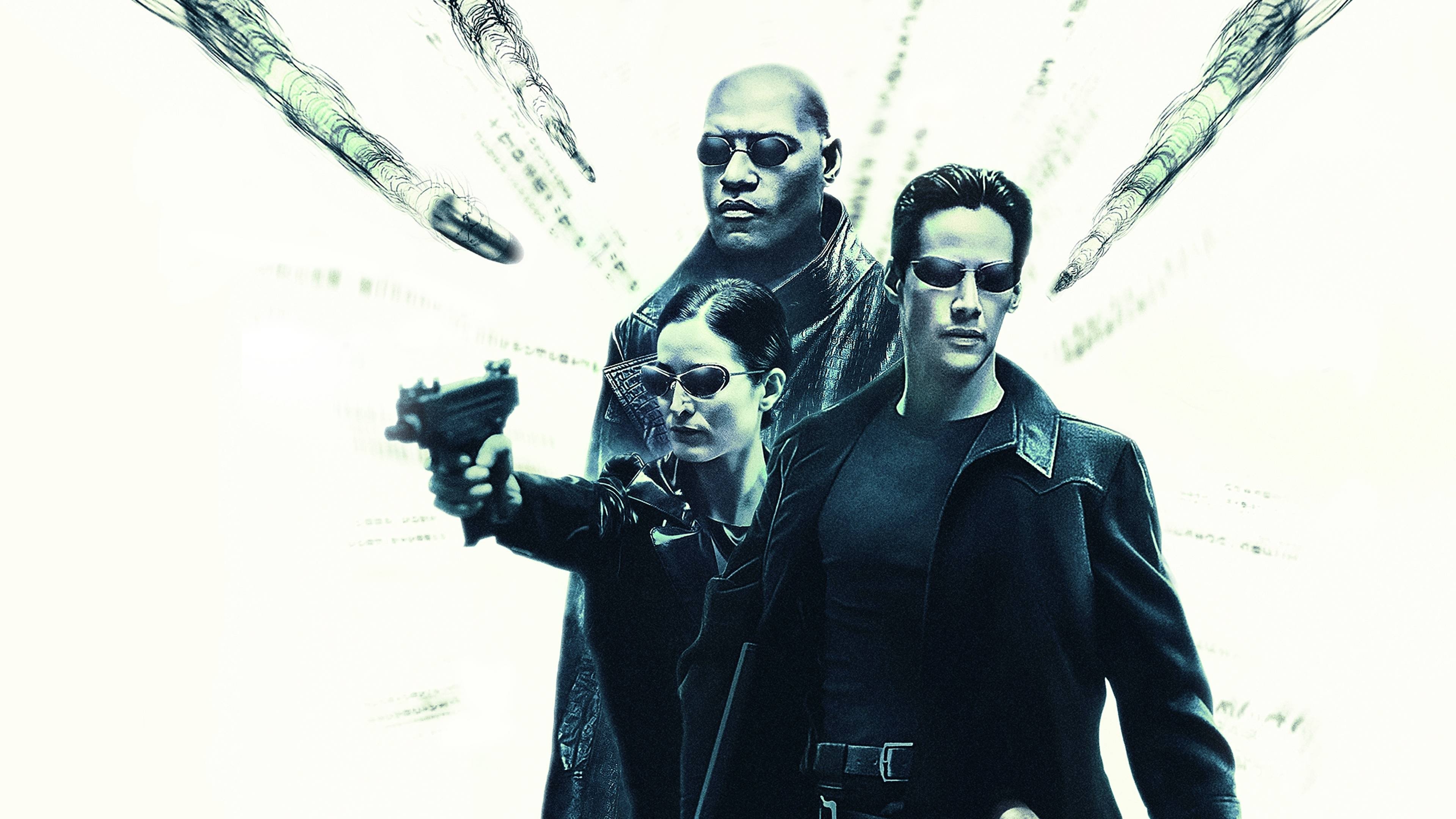
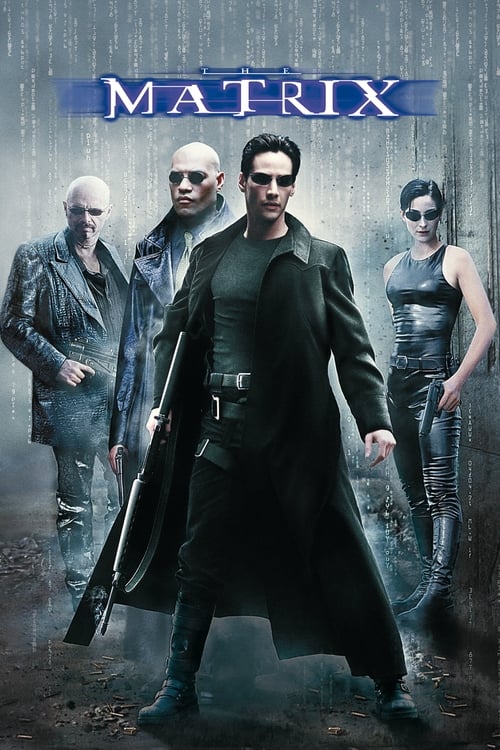
The Matrix backdrop file.

Movie dossier

The Matrix

A cyberpunk action landmark that turns philosophy, style, and blockbuster propulsion into one clean machine.

Directed by Lana Wachowski & Lilly WachowskiNot rated

Latest video signal

Trailer slot ready

A widescreen slot for the newest official trailer, interview, or scene signal when the page has a playable source.

Why it matters

The Matrix matters because it made a difficult idea physically legible. The Wachowskis did not simply explain simulation theory, hacker alienation, anime velocity, Hong Kong fight grammar, and messianic myth; they turned each idea into a move, color split, phone exit, costume choice, training beat, and camera trick. That is why the movie still plays. Its philosophy has handles.

Rating
8.7
Year
1999
Runtime
136 min
Genre
Sci-Fi

Craft read

Design

Hong Kong action, anime pressure, cyberpunk dread, and hacker-room texture fused into one readable system

Structure

Every reveal teaches a rule, then every action scene tests how far that rule can bend

Impact

A culture-shifting blockbuster whose copied surfaces can hide how disciplined the original construction is

Themes

realitycontrol systemsawakeningidentityfreedom

Cast and context

Cast
Keanu ReevesLaurence FishburneCarrie-Anne MossHugo Weaving
Director lane

Lana Wachowski & Lilly Wachowski currently has 5 live movie pages in Cinema One.

View director page

Coverage status

Tier
fully authored
Coverage
14/13

A fully shaped Cinema One case: the movie has enough authored context, pathway links, and argument to feel like more than a catalog entry.

Signature scene filedQuote read filedEnding read filedEditorial argument linkedCollection pathway live

Production notes

  • American Cinematographer’s 1999 account gives the page its cleanest rewatch key: Lana Wachowski described the goal as an “intellectual action movie,” not an action film with ideas pasted on afterward.
  • The whole film was drawn as a graphic storyboard bible before production, which explains why the complicated premise moves with comic-panel clarity instead of exposition sludge.
  • Bill Pope’s color split is practical philosophy: the simulated world carries a wrong green cursor tint, while the real world loses sunlight and turns cold blue. The movie teaches reality through color before characters finish explaining it.
  • Pope later noted that the bullet-time setup reused one camera path because the production could only afford one rig. That constraint makes the icon better, not smaller: the future of action was being engineered out of budget pressure, still cameras, morphing, wires, and enough light to survive 300fps.
  • A flagship page for Cinema One’s machine-nightmare, rewatchable, and cyberpunk lanes because the movie keeps converting abstraction into bodies, rooms, exits, and choices.
The Matrix watch-next background

Watch-next pathway

What should you do after The Matrix?

Three intentional continuations: stay with the filmmaker, chase the dominant pressure signal, or jump into the shelf or argument that best explains why this movie belongs here.

Suggest a better next pick
A dark editorial argument room lit by a film projector.

Movie-page argument

Defend The Matrix.

If this movie has a scene, performance, ending, or idea people underrate, make the case. The best defenses can become future Cinema One argument material.

Small prompts go into the Cinema One review queue.

A dark screening room with a red seat, projector beam, scene cards, and a glowing abstract film frame.

Scene challenge

Pick the scene that proves it.

Cinema One is built around scenes that unlock the movie. Tell us which moment carries the pressure, style, argument, or rewatch charge.

Small prompts go into the Cinema One review queue.

Cinema One case file

The argument this page is making

4 lenses
Core tension

Liberation is exhilarating, but the movie never forgets that waking up means losing the comfort of the world that made sense.

Best lens

A cyberpunk action film where philosophy becomes choreography and style becomes proof of awakening.

Wachowski lane

The movie’s fusion is the argument: anime velocity, Hong Kong action grammar, leather-club cool, hacker paranoia, religious myth, and trans-coded self-reinvention all moving as one system.

Page job

Keep the movie from becoming only memes and sunglasses; restore how radical the form felt.

Behind the movie

Production photos worth studying

A reviewed set of behind-the-scenes images: not celebrity filler, but evidence of how performance, camera placement, room pressure, and Lana Wachowski & Lilly Wachowski's authorship shaped the finished movie.

5 reviewed photos
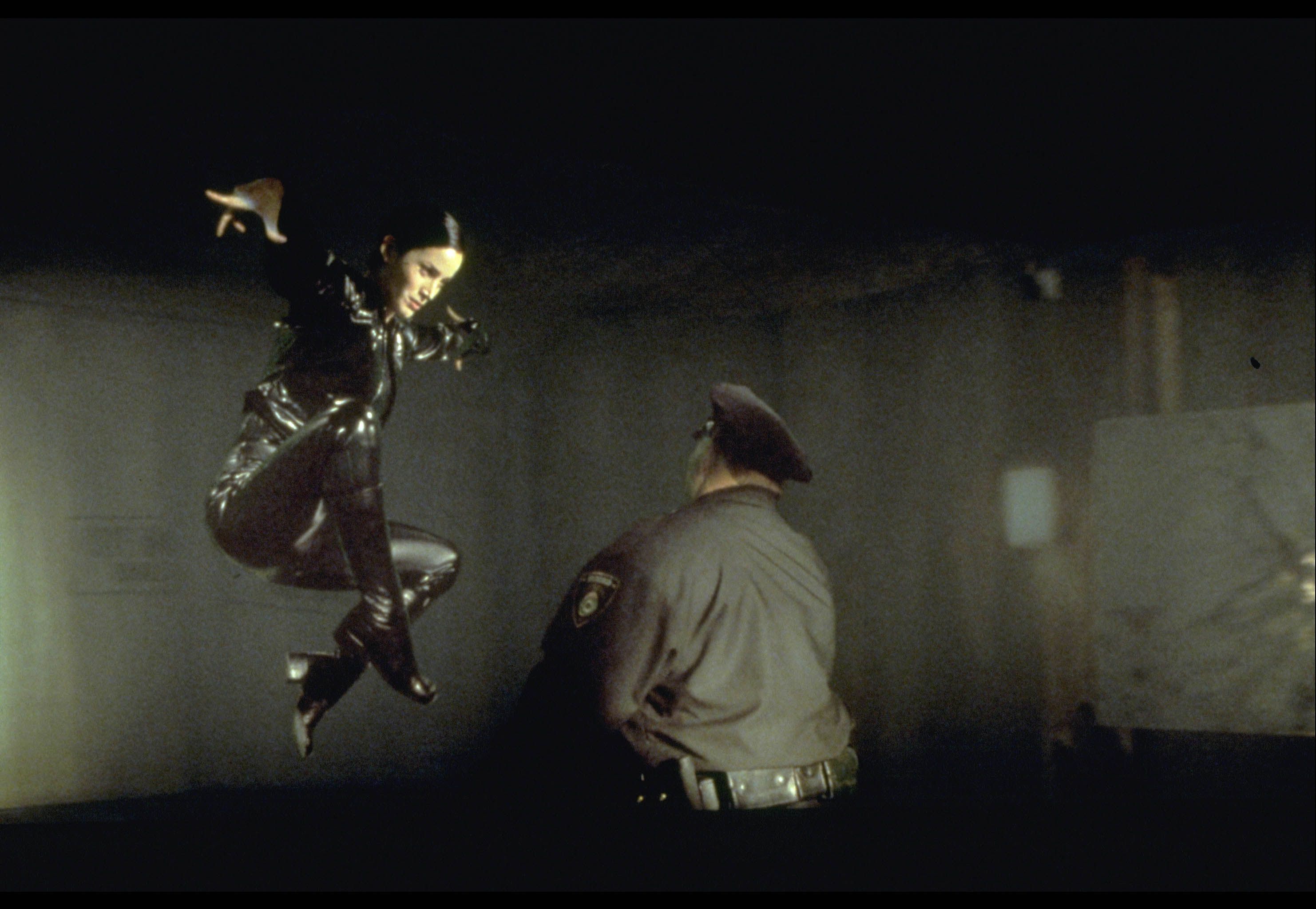
Behind-the-scenes image of The Matrix action being staged with wire-rig and crew support.
BTS file #1

Wire rig action mechanics

The Matrix changed action because bodies could suddenly behave like code. This photo shows the physical rigging underneath that illusion.

The digital-age feeling is being built through analog stunt discipline.

Source · Cinephilia & Beyond production gallery
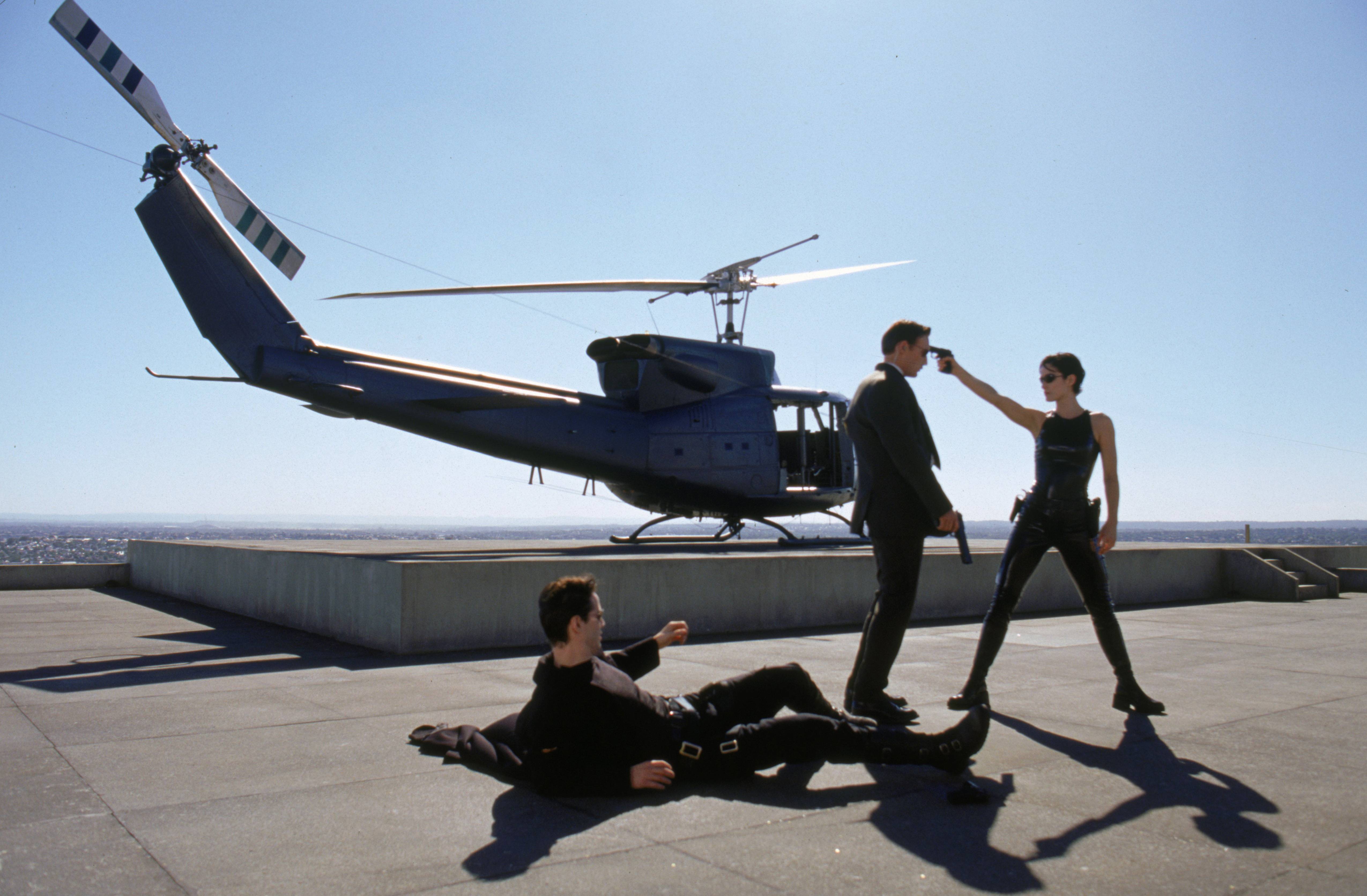
Behind-the-scenes image of the rooftop action setup with helicopter, cast, and crew visible.
BTS file #2

Rooftop helicopter setup

A useful image because it ties one of the film’s cleanest action spaces to actual production logistics: roof, aircraft, performers, and camera geometry.

The action grammar is visible here: bodies, lines, and camera logic working together.

Source · Cinephilia & Beyond production gallery
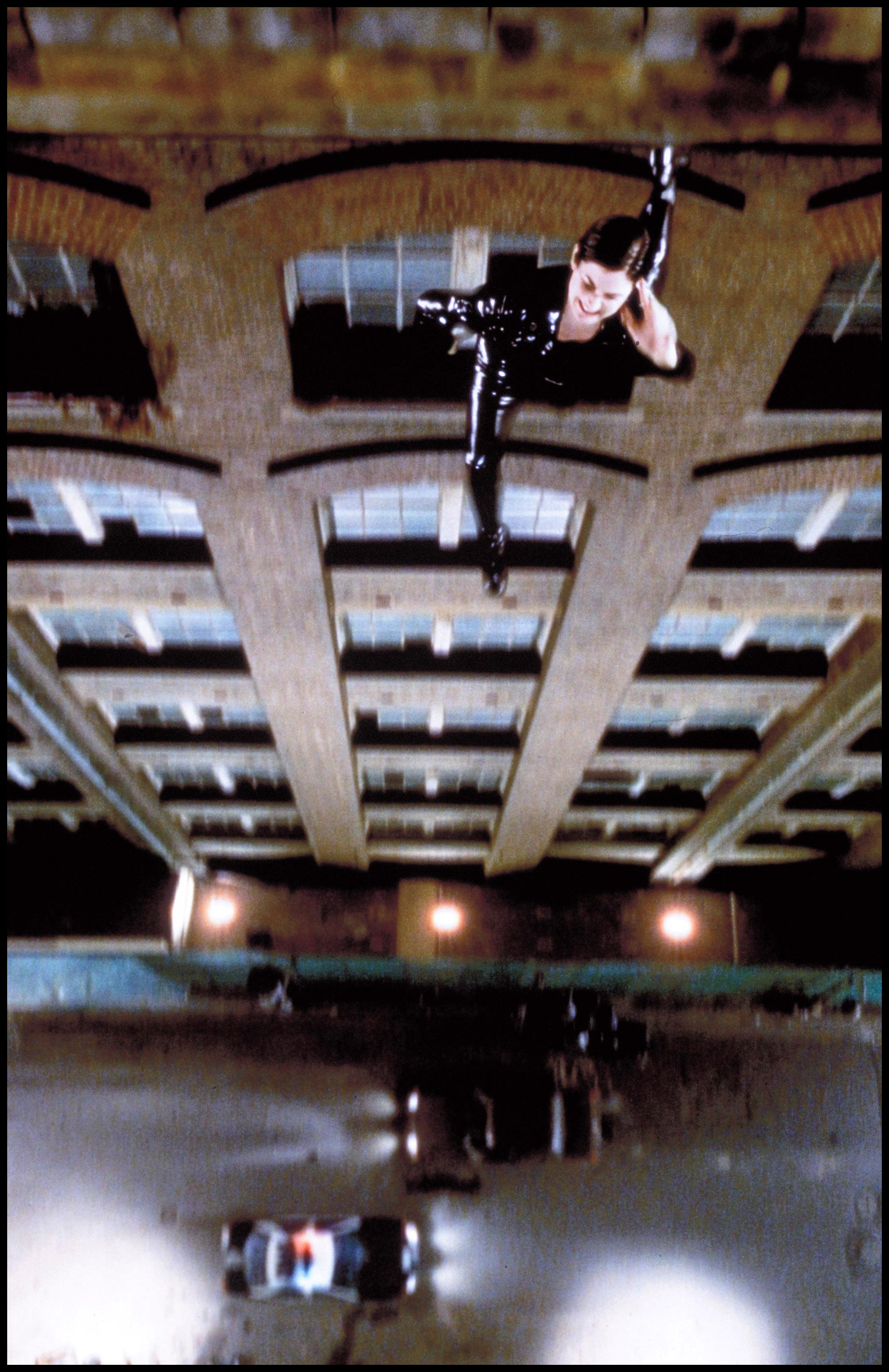
Behind-the-scenes image showing wire work and inverted action geometry during The Matrix production.
BTS file #3

Ceiling wire geometry

The image makes the movie’s impossible movement legible as craft. Gravity gets rewritten because the production has literally built a way around it.

This is philosophy becoming choreography, the movie’s ideas translated into movement.

Source · Cinephilia & Beyond production gallery
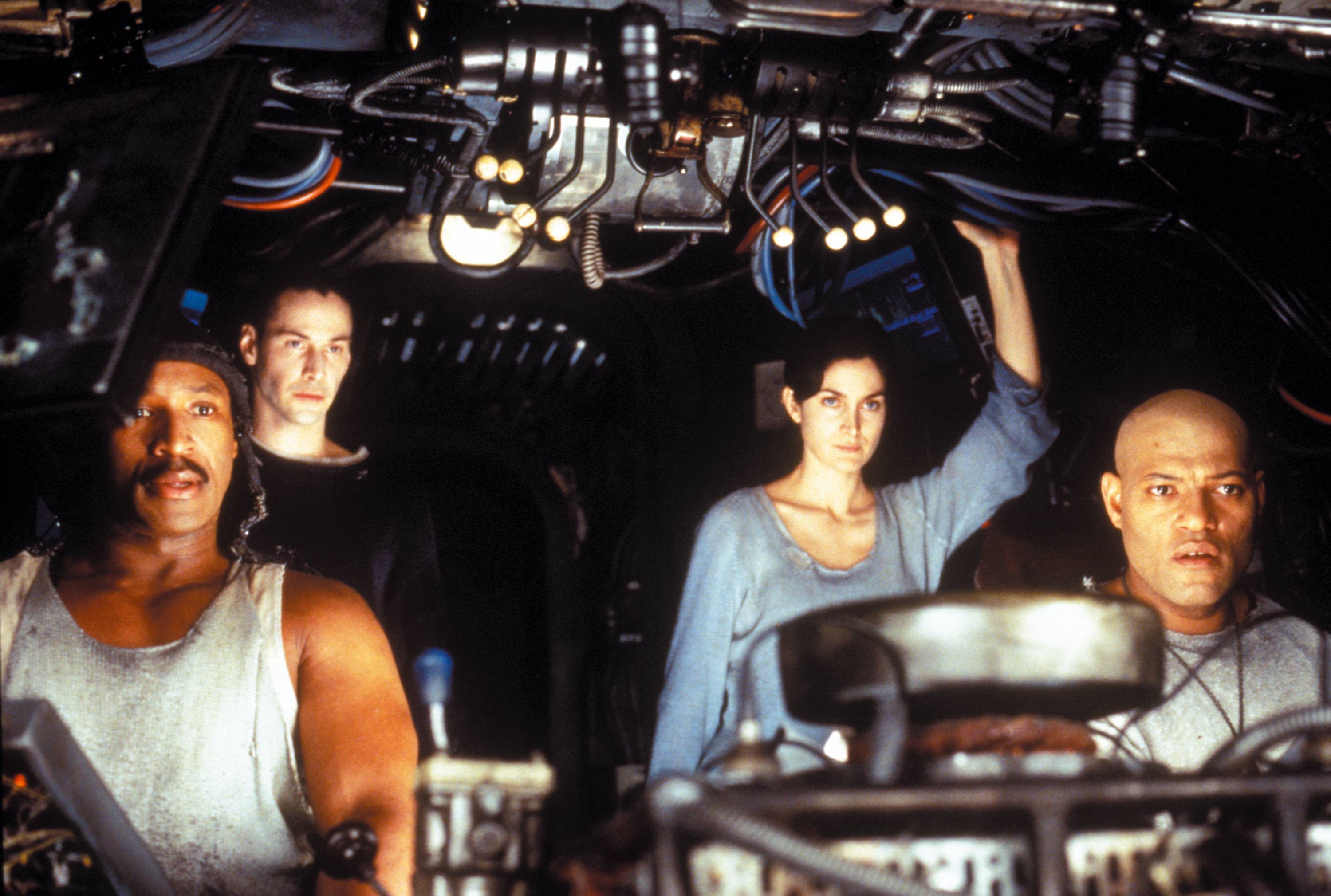
Behind-the-scenes image of cast and crew in the Nebuchadnezzar cockpit set.
BTS file #4

Nebuchadnezzar cockpit process

The cockpit photo grounds the mythology in cramped material space: cables, bodies, screens, and exhaustion inside the rebellion’s machine.

It pushes past sunglasses-and-code iconography into the actual work of making the world tactile.

Source · Cinephilia & Beyond production gallery
Behind-the-scenes image of the dojo fight being staged with stunt support and wire work.
BTS file #5

Dojo stunt rig

The dojo sequence is where training becomes cinema language. This photo shows that enlightenment still needs pads, wires, rehearsals, and bodies in space.

The image makes the movie’s action philosophy tactile instead of theoretical.

Source · Cinephilia & Beyond production gallery

Production file

How the movie became this object

Action grammar rewritten by rule-learning

The Matrix did not just add bullet time as a signature effect. It rebuilt action around people learning that their environment has rules, then discovering those rules are editable. The fights are tutorials before they are victories.

The dojo turns exposition into muscle memory

The training-room fight is the page’s cleanest rewatch key because it makes philosophy physical before bullet time takes over. Morpheus is not only teaching Neo kung fu; he is teaching him that a body inside the Matrix is an argument with the code. Every block, pause, smile, and impossible leap turns belief into choreography.

Woo-Ping makes enlightenment physical

The Wachowskis’ Hong Kong action debt is not flavor text; Yuen Woo-Ping’s choreography is how the movie proves its philosophy. Neo does not become free by understanding a lecture. He becomes free when training rewrites balance, impact, hesitation, and the visible limits of his own body.

Color as ontology, not decoration

The green Matrix tint and cold-blue real world are not just late-90s mood. Pope’s lighting split lets the viewer feel two kinds of reality before the dialogue names them: a cursor-colored prison and a sunless material world.

The storyboard bible made density playable

The Wachowskis’ full graphic storyboard process matters because the movie could have collapsed under its own premise. Instead, it behaves like a sequence of clean panels: choice, training, extraction, pursuit, death, rebirth.

Constraint sharpened the icon

The bullet-time rig detail is the hidden-gem rewatch lens. Because the production could only afford one main camera path, the effect had to be pre-visualized, lit, and engineered with extreme discipline. The image feels impossible because the planning is so physical.

Scene architecture

The moments that change the machine

Red pill / blue pill: exposition as irreversible action

The choice works because Morpheus does not merely explain the premise; he turns knowledge into a physical commitment. Once Neo reaches for the pill, the movie has made philosophy behave like a stunt beat: a body crossing a threshold it cannot uncross.

The dojo: the movie teaches its viewer how to watch it

The dojo scene is not a warm-up before the real action. It is the movie’s rulebook in motion. Morpheus keeps changing the frame of the fight from skill to perception: speed matters, but only until Neo understands that the program is asking whether he accepts its limits. That is why the scene still feels electric even without guns, leather, or bullet time.

The lobby: style becomes system failure

The lobby shootout is not empty cool. It is a clean visual proof that Neo and Trinity now understand the world as editable architecture: walls shed marble, bodies move like rewritten physics, and the old security order loses the room one impact at a time.

Neo turns around: the chase becomes transcendence

The movie peaks when Neo stops fleeing the system and faces it. Action becomes metaphysics without losing the punch.

Cultural afterlife

What people did with it afterward

A style copied until its shock was easy to forget

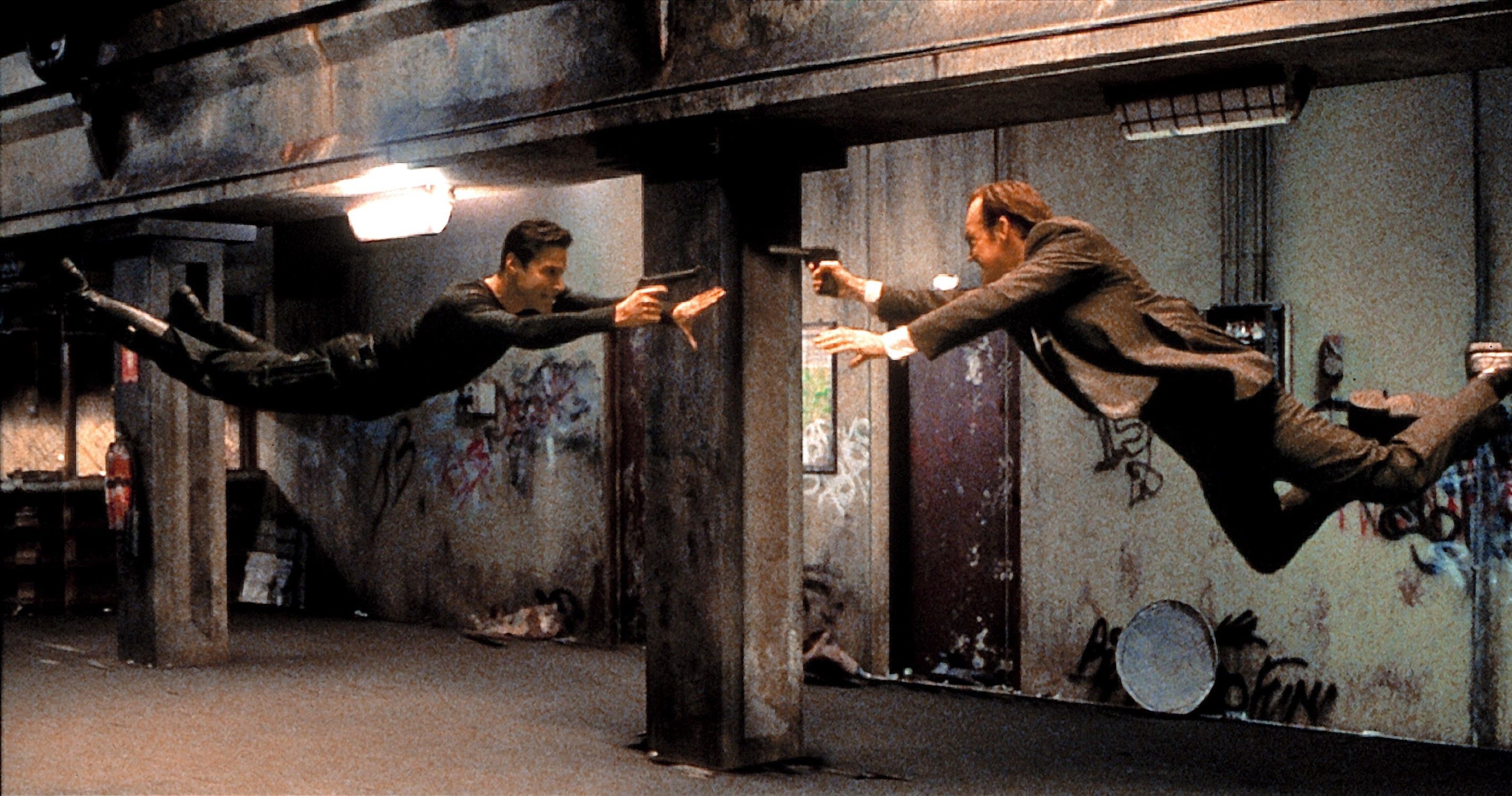
The Matrix was absorbed so aggressively by ads, games, fashion, parody, and action-movie grammar that its originality can now look familiar. The useful correction is to watch the craft before the memes: the green-world split, pre-drawn panels, wire discipline, Woo-Ping body logic, and bullet-time engineering all existed before “Matrix style” became shorthand.

The red pill was stolen by bad readings

Like Fight Club, The Matrix has an afterlife problem: one of its metaphors escaped into crude ideology. That misreading should be acknowledged without surrendering the movie’s deeper liberation argument.

Editorial module

Signature scene: Neo stops running from the system and turns to face it

The hallway and rooftop action is great, but the movie truly declares itself when Neo stops treating the Matrix as an environment and starts treating it as code that can be bent. The exhilaration comes from liberation becoming legible in action terms.

Editorial module

Line worth carrying forward

"There is no spoon" lasts because it reduces the movie’s whole metaphysical challenge to one child-sized lesson. The world is not changed by brute force first, it is changed by seeing the system’s claims as contingent.

Editorial module

Why the ending feels like ignition instead of closure

The Matrix ends as a promise, not a wrap-up. Neo’s final message matters because the movie understands revelation should expand possibility, making the story feel bigger just as the credits arrive.

Editorial module

Steelman the debate

A fair pushback is that The Matrix can be flattened by its own influence, so familiar now that viewers underestimate how much heavy lifting it does. The best answer is to watch how cleanly it marries explanation, atmosphere, action, and ideology. Very few blockbusters this ambitious are also this teachable and this fun.

Scene shelf

The clips that prove the movie

A swipeable set of scene-level evidence: the moments worth replaying because they carry the movie’s rhythm, style, argument, or rewatch gravity.

5 scenesSwipe or scroll sideways
Scene 1MovieclipsChoice / premise

Blue Pill or Red Pill

The whole movie becomes legible here: liberation offered as terror, truth offered as rupture, and style sharpened into myth.

Scene 2MovieclipsReality reveal

Waking from the Dream

The reveal works because it makes the premise bodily. Neo does not learn the truth like information; he is extracted from one reality and born into another.

Scene 3MovieclipsMythology / philosophy

There Is No Spoon

A tiny scene that explains the movie’s action grammar. The Matrix is not only a prison; it is a belief system that can be edited.

Scene 4MovieclipsStyle-defining action

The Lobby Shootout

This is where late-90s action gets rewritten in black coats, bullet rhythm, and architectural violence. It is pure cool, but built with formal discipline.

Scene 5MovieclipsBullet-time icon

Rooftop Showdown

Bullet time endures because it turns awakening into an image. Neo’s body starts learning faster than the old world can hit him.