
The Abyss
Find the movies with rewatch gravity, live dossiers, and unfinished cases worth deepening.

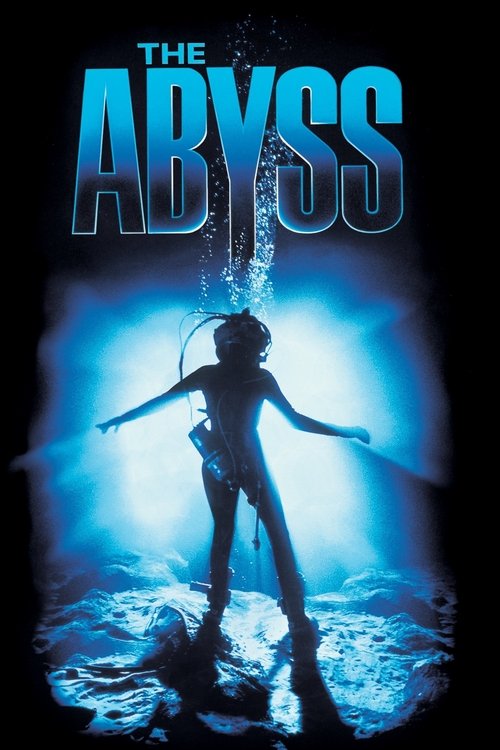
Movie dossier
The Abyss
Cameron’s deep-sea pressure chamber, where industrial procedure, marital damage, and contact-with-the-unknown all push against each other.
Latest video signal
Trailer slot ready
A widescreen slot for the newest official trailer, interview, or scene signal when the page has a playable source.
Why it matters
The Abyss matters because it shows Cameron before the full blockbuster coronation but already thinking at giant scale. It is a work-movie, a claustrophobic rescue thriller, a damaged-love story, and an awe object all at once, which makes it one of the clearest bridges between the lean aggression of The Terminator and the size-and-feeling synthesis of Terminator 2 and Titanic.
Craft read
Underwater labor, military mistrust, and physical jeopardy turned into scene-by-scene suspense
Bud and Lindsey make the spectacle feel bruised instead of abstract
A key Cameron bridge text for understanding how engineering obsession evolves into wonder
Themes
Cast and context
underwater • deep sea • alien contact • submarine • pressure
Coverage status
A fully shaped Cinema One case: the movie has enough authored context, pathway links, and argument to feel like more than a catalog entry.
Production notes
- • One of Cameron’s most revealing films because the technical ambition and the human strain feel inseparable from each other.
- • The underwater setting turns every repair job, dive, and equipment failure into genuine dramatic material.
- • Essential for making the Cameron lane feel fuller than just franchise landmarks and mega-hits.
Watch-next pathway
What should you do after The Abyss?
Three intentional continuations: stay with the filmmaker, chase the dominant pressure signal, or jump into the shelf or argument that best explains why this movie belongs here.
Terminator 2: Judgment Day
The cleanest next move if James Cameron's control, obsessions, or rhythm are what hooked you here.
More pressure
Use the taste map to find movies, arguments, and shelves that share this page's strongest signal.
Cathedral Scale
Big-screen movies built around scale, countdown pressure, and the feeling that spectacle only matters because consequence rides inside it.

Movie-page argument
Defend The Abyss.
If this movie has a scene, performance, ending, or idea people underrate, make the case. The best defenses can become future Cinema One argument material.

Scene challenge
Pick the scene that proves it.
Cinema One is built around scenes that unlock the movie. Tell us which moment carries the pressure, style, argument, or rewatch charge.
Signature scene: Lindsey’s resuscitation turns procedure into heartbreak
The Abyss fully locks in when Lindsey is dragged back from the freezing dive and Bud starts working through the resuscitation. Cameron stages the scene with brutal procedural clarity, but the reason it hurts is that every instruction and compression is carrying years of anger, dependence, and unfinished love.
Line worth carrying forward
"Love your wife?" / "With all my heart." lands because The Abyss keeps stripping macho competence down until only naked emotional commitment can get anyone through the pressure. It is the movie admitting the rescue is never only technical.
Why the ending earns its turn toward awe
The ending works because Cameron spends so much time making steel, water, panic, and exhaustion feel tactile that the final contact does not play like fantasy pasted onto another movie. It feels like revelation after prolonged ordeal, the unknown arriving only once the film has fully convinced you of human fragility.
Steelman the debate
A fair critique is that The Abyss can feel overextended and tonally split, torn between hard-hat suspense, military-thriller tension, broken-marriage melodrama, and spiritual uplift. The strongest defense is that the messiness is part of its fascination. Cameron is testing how much strain one movie can hold, and the result becomes a revealing prototype for the larger-scale emotional engineering that defines his best work.
More from this director
Related picks
Read next
Cameron’s undersea epic stays alive because it never treats labor, machinery, and emotional damage as setup for the awe. They are the price of reaching it.
Cameron’s action-comedy stays watchable because it never treats the marriage plot as filler. Embarrassment, deception, and spectacle are all part of the same propulsion system.
Titanic lasts because Cameron never treats feeling as the embarrassing part of the enterprise. The romance, class tension, and mechanical catastrophe are all designed to reinforce each other.