
Resident Evil
Find the movies with rewatch gravity, live dossiers, and unfinished cases worth deepening.
Movie dossier
Resident Evil
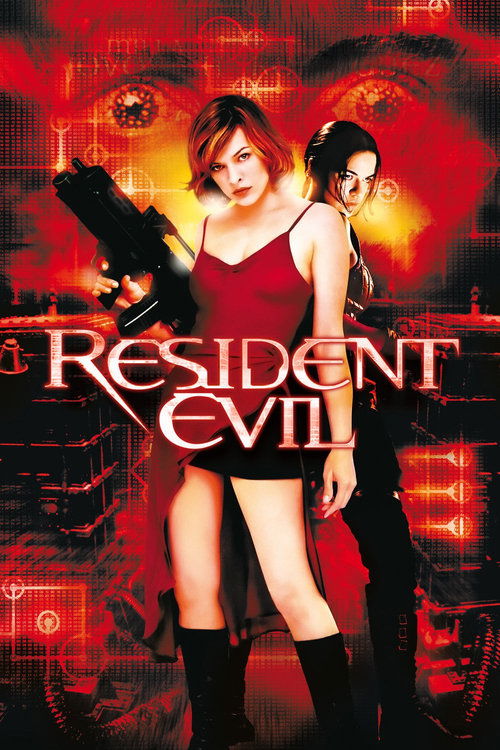
Paul W. S. Anderson turns Capcom survival horror into a lean kill-box movie: mansion, Hive, red dress, laser grid, corporate rot.
Latest video signal
Trailer slot ready
A widescreen slot for the newest official trailer, interview, or scene signal when the page has a playable source.
Why it matters
Resident Evil matters here because the Thomas Library Spine should have room for defended cult machinery, not only canonized prestige. The 2002 film is blunt, synthetic, and often ridiculous, but its pleasures are clean: Alice wakes into a system she does not understand, the soldiers keep losing informational advantage, and the Hive turns every white corridor and industrial shaft into a test chamber. The page belongs because it explains why this thing stayed in rotation: game logic became action architecture, and Milla Jovovich turned a thin amnesia role into a durable genre silhouette.
Craft read
A contained descent movie where the objective keeps changing: secure the Hive, survive the Red Queen, understand Umbrella, escape the infection
Corporate architecture behaves like a monster; doors, elevators, labs, trains, dogs, and lasers all become systems that know more than the people inside them
The movie improves as B-movie design: red-and-white color coding, industrial corridors, clean trap geography, and Jovovich’s action-star body language doing more than the dialogue
Themes
Cast and context
resident evil • milla jovovich • umbrella corporation • the hive • zombie dogs • laser corridor • video game adaptation • paul w s anderson
Coverage status
A strong case file with real editorial shape: enough craft, context, and connection to guide a serious watch.
Production notes
- • Inverse’s franchise oral history reports that Anderson wrote the script on spec after obsessively playing the first two Capcom games, then met with Capcom in Japan to pitch his approach and access the creative minds behind the property.
- • Anderson told Inverse he treated the first movie as a chamber-piece horror in the spirit of Alien: mansion above, underground Hive below, claustrophobia as both budget discipline and pressure engine.
- • The same oral history notes the first film shot in Berlin on a $33 million budget across basements and bunkers, with Jovovich physically punished by winter conditions while wearing the now-signature red dress.
- • Box Office Mojo records the film at about $102.98 million worldwide, a useful reminder that the supposedly disposable video-game movie became the first turn of a long-running franchise machine.
Watch-next pathway
What should you do after Resident Evil?
Three intentional continuations: stay with the filmmaker, chase the dominant pressure signal, or jump into the shelf or argument that best explains why this movie belongs here.
More Thomas Library Spine
Use the taste map to find movies, arguments, and shelves that share this page's strongest signal.
Rewatchables
Movies built for return visits, momentum, quotability, texture, and pure replay value.
Movie-page argument
Defend Resident Evil.
If this movie has a scene, performance, ending, or idea people underrate, make the case. The best defenses can become future Cinema One argument material.
Scene challenge
Pick the scene that proves it.
Cinema One is built around scenes that unlock the movie. Tell us which moment carries the pressure, style, argument, or rewatch charge.
Signature scene: the laser corridor teaches the whole movie
The laser corridor is not just a nasty gag. It is Resident Evil reducing the franchise to pure room logic: mission professionals enter a clean white space, the system changes the rules faster than bodies can adapt, and survival depends on reading geometry before geometry reads you. That is the movie’s best trick — horror as architecture with a corporate logo on the door.
Line worth carrying forward
“You are all going to die down here.” It works because it is not poetry; it is system language. The Red Queen speaks with the awful calm of an institution that has already done the math and decided the people inside the building are acceptable losses.
Steelman the debate
The fair knock is that Resident Evil strips out much of the games’ slow dread and replaces character with corridor momentum. The defense is that Anderson’s movie has its own playable grammar: clear spaces, clear threats, clean escalation, and a heroine whose image becomes stronger as the plot gets more mechanical. It is not the definitive Resident Evil adaptation. It is the franchise as a kill-box pop object, and on those terms it has teeth.
Shows up in
Movies built for return visits, momentum, quotability, texture, and pure replay value.
The lane where personality beats polish and cult energy becomes part of the pleasure.
Cold systems, synthetic threats, and movies where technology stops feeling like a tool and starts feeling like an adversary.
More from this director
Related picks
Read next
Cameron’s sequel works because it does not simply supersize Ridley Scott’s terror. It rebuilds the xenomorph threat around group collapse, siege pressure, and Ripley’s protective ferocity.
Peele’s follow-up becomes more interesting the moment you stop asking it to behave like a puzzle and start watching it as a national ghost story.
Jordan Peele’s breakthrough lands so hard because every smile, compliment, and gesture of welcome feels like part of the extraction system.