
Panic Room
Find the movies with rewatch gravity, live dossiers, and unfinished cases worth deepening.
Movie dossier
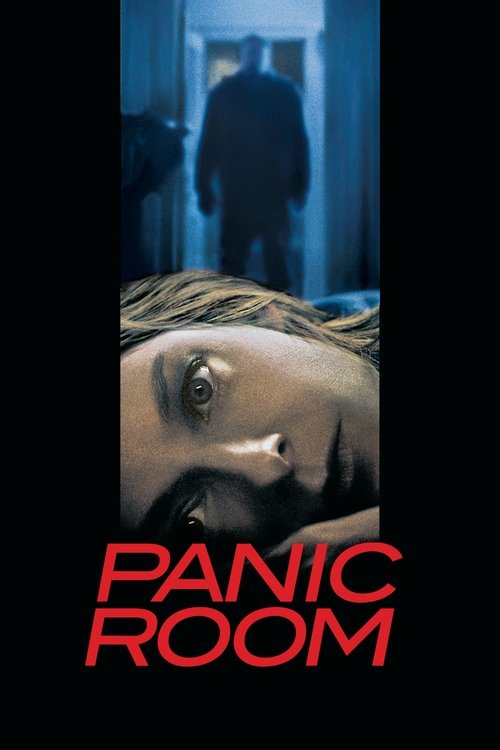
Panic Room
A stripped-down home-invasion thriller where architecture itself becomes the suspense engine.
Latest video signal
Trailer slot ready
A widescreen slot for the newest official trailer, interview, or scene signal when the page has a playable source.
Why it matters
Panic Room matters because it shows Fincher working in a tighter, more classical thriller mode without losing his love of control, spatial precision, and pressure. It is one of the clearest examples of him turning technique directly into anxiety.
Craft read
Single-location siege thriller built around space, surveillance, and delay
A safe room that immediately becomes a trap
A clean bridge between his stylish thrillers and his procedural rigor
Themes
Cast and context
Coverage status
A strong case file with real editorial shape: enough craft, context, and connection to guide a serious watch.
Production notes
- • A very useful Fincher page because it demonstrates how much suspense he can generate from pure layout and movement.
- • Jodie Foster gives the movie calm intelligence rather than panic-for-panic’s-sake.
- • Strong fit for collections about siege films, home invasion, and contained thrillers.
Watch-next pathway
What should you do after Panic Room?
Three intentional continuations: stay with the filmmaker, chase the dominant pressure signal, or jump into the shelf or argument that best explains why this movie belongs here.
Fight Club
The cleanest next move if David Fincher's control, obsessions, or rhythm are what hooked you here.
More containment
Use the taste map to find movies, arguments, and shelves that share this page's strongest signal.
One of the cleanest arguments for spatial thriller craft where architecture itself becomes the suspense engine.
Use this for home-invasion craft arguments, contained-thriller programming, and cases where directorial control is felt through space rather than spectacle.
Movie-page argument
Defend Panic Room.
If this movie has a scene, performance, ending, or idea people underrate, make the case. The best defenses can become future Cinema One argument material.
Scene challenge
Pick the scene that proves it.
Cinema One is built around scenes that unlock the movie. Tell us which moment carries the pressure, style, argument, or rewatch charge.
Signature scene: the camera glides through the brownstone’s impossible geometry
Panic Room announces its whole method when Fincher’s camera starts treating the house like a machine to be mapped, penetrated, and weaponized. The movie’s excitement comes from how clearly it makes space legible, then turns that legibility into dread.
Line worth carrying forward
The movie is remembered more for mechanics than speeches, and that is worth saying plainly on the page. Panic Room’s real line of dialogue is the house itself, every door, hinge, and blind corner telling you how safety can become choreography.
Why the ending satisfies
The ending works because Panic Room never forgets its scale. It does not need to become grander than its premise. Fincher simply lets the pressure resolve through stamina, spatial clarity, and a mother-daughter bond that the film has kept tactile the whole time.
Steelman the debate
A reasonable critique is that Panic Room can feel minor next to Fincher’s more thematically ambitious films. The best defense is that minor is the wrong category. It is compact, not trivial, a filmmaker of enormous control proving he can make architecture, waiting, and physical logistics carry a whole movie.
Editorial arguments
One of the cleanest arguments for spatial thriller craft where architecture itself becomes the suspense engine.
Panic Room is easy to underrate because it looks modest next to Fincher’s larger cultural landmarks, but that modesty is exactly what makes it such a useful showcase. The film turns house geography, surveillance lines, delayed information, and one supposedly safe room into a system of escalating pressure with almost mathematical clarity.
A useful reminder that suspense can still feel luxurious when a filmmaker trusts space, delay, and clear physical stakes.
Panic Room matters because it is Fincher proving how much style can come from containment instead of sprawl. The movie turns one brownstone, one sealed room, and one night of intrusion into a complete pressure system, which makes it especially valuable in an era when many thrillers over-explain instead of simply tightening.
Shows up in
Collection pathway still being shaped.
More from this director
Related picks
Read next
Panic Room works because Fincher turns walls, sightlines, and delays into the whole suspense engine instead of treating them as setup for louder thrills.
Fincher’s Dragon Tattoo remake endures because research, pattern recognition, and bruised trust become as gripping as any chase scene.
Fincher’s luxury paranoia machine still lands because every escalation turns wealth, control, and self-protection into liabilities instead of armor.