Lost in Translation
Find the movies with rewatch gravity, live dossiers, and unfinished cases worth deepening.
Movie dossier
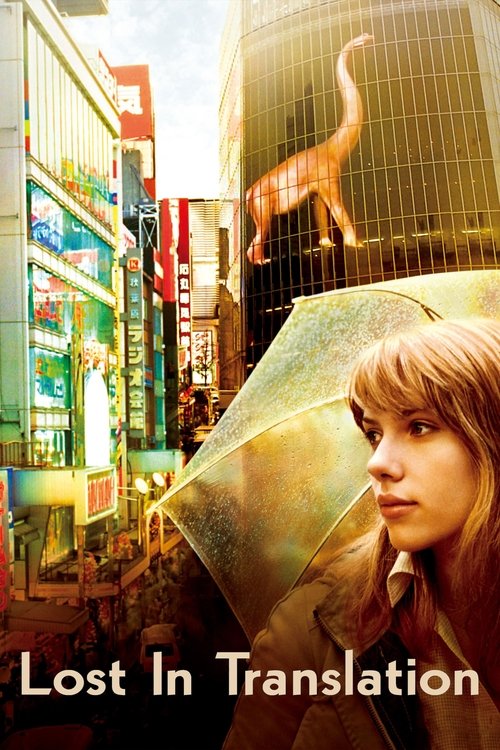
Lost in Translation
Sofia Coppola turns jet lag, hotel silence, and borrowed intimacy into second-viewing cinema.
Latest video signal
Trailer slot ready
A widescreen slot for the newest official trailer, interview, or scene signal when the page has a playable source.
Why it matters
Lost in Translation matters here because it expands Cinema One breadth without leaving the house taste model behind. It is not a soft postcard romance. It is a controlled mood piece about two people whose real lives have become badly lit rooms: marriage, fame, work, youth, middle age, and performance all feel slightly out of tune. Coppola gives the movie rewatch gravity by keeping the central bond temporary. The first watch follows the connection; the second watch notices how carefully the movie protects the ache of knowing it cannot become ordinary life.
Craft read
A brief encounter shaped through jet lag, hotel ritual, city drift, and emotional misalignment
Nothing explodes; the pressure is social, marital, existential, and quietly comic
Lance Acord’s mobile low-light images make Tokyo feel like memory instead of tourism
Brian Reitzell and Kevin Shields turn dream-pop drift into emotional architecture, so the movie can say what Bob and Charlotte cannot
Themes
Cast and context
sofia coppola • tokyo • park hyatt • jet lag • loneliness • bill murray • scarlett johansson • brief encounter
Coverage status
A strong case file with real editorial shape: enough craft, context, and connection to guide a serious watch.
Production notes
- • Coppola told IndieWire the movie came from wanting to shoot Tokyo, the Park Hyatt, and neon at night, drawing on time she spent there when she was younger rather than treating the city as generic exotic wallpaper.
- • In the same IndieWire interview, Coppola described working with Lance Acord on a small lightweight camera and faster film stock so the crew could move through clubs and streets with an almost documentary looseness.
- • Focus Features’ music essay tracks Brian Reitzell’s script-stage involvement, the “Tokyo dream pop” mixes, and Kevin Shields receiving Tokyo cityscape footage before the film was finished; that matters because the soundtrack is not decoration, but the movie’s private emotional language.
- • The ASC later quoted Coppola praising camera departments and collaborators, including Acord, as central to how close the camera can feel to a character — a useful key to why this movie’s intimacy lives in glances, pauses, and room tone.
Watch-next pathway
What should you do after Lost in Translation?
Three intentional continuations: stay with the filmmaker, chase the dominant pressure signal, or jump into the shelf or argument that best explains why this movie belongs here.
The Virgin Suicides
The cleanest next move if Sofia Coppola's control, obsessions, or rhythm are what hooked you here.
More loneliness
Use the taste map to find movies, arguments, and shelves that share this page's strongest signal.
Manufactured Dreams
Movies about performance, mythmaking, show-business machinery, and the strange cost of turning fantasy into public image.
Movie-page argument
Defend Lost in Translation.
If this movie has a scene, performance, ending, or idea people underrate, make the case. The best defenses can become future Cinema One argument material.
Scene challenge
Pick the scene that proves it.
Cinema One is built around scenes that unlock the movie. Tell us which moment carries the pressure, style, argument, or rewatch charge.
Signature scene: karaoke turns performance into confession
The karaoke sequence is the unlock scene because nobody announces what they feel. Bob, Charlotte, and the room perform around the truth until the songs do the emotional labor for them. Coppola lets the scene stay loose and funny, then the looks start carrying more than the lyrics. That is the movie’s whole contract: the real confession happens sideways.
Line worth carrying forward
“The more you know who you are, and what you want, the less you let things upset you.” Bob says it like weary advice, but the movie knows he has not mastered it either. The line is moving because it is half wisdom and half wishful thinking from someone still negotiating his own drift.
Why the whisper should stay private
The ending works because the movie refuses to convert intimacy into information. If we knew the whisper, it would become a clue to solve. By keeping it from us, Coppola protects the relationship as a moment that belongs to the characters, not the audience’s need for ownership.
Steelman the debate
The fair critique is that the film’s Tokyo gaze can feel insulated by privilege and outsider wonder. The defense is not that the movie is culturally complete; it is that the point of view is deliberately stranded, lonely, and partial. Coppola is making a movie about dislocation through people who are bad at belonging, and the best viewing keeps both truths in the frame.
Shows up in
Movies about performance, mythmaking, show-business machinery, and the strange cost of turning fantasy into public image.
Movies about identity under construction, feminine self-authorship, and the pressure to turn feeling, ambition, and image into a life.
Women-directed films where genre, image, bodies, and self-invention become pressure systems instead of soft-focus sidebars.
More from this director
Related picks
Read next
Benjamin Button matters because Fincher treats the reverse-aging premise less like a trick than a way to make timing itself feel tragic.
Titanic lasts because Cameron never treats feeling as the embarrassing part of the enterprise. The romance, class tension, and mechanical catastrophe are all designed to reinforce each other.
Tony Scott’s lovers-on-the-run movie still feels special because it never treats style and sincerity as enemies.