
Monster
Find the movies with rewatch gravity, live dossiers, and unfinished cases worth deepening.
Movie dossier
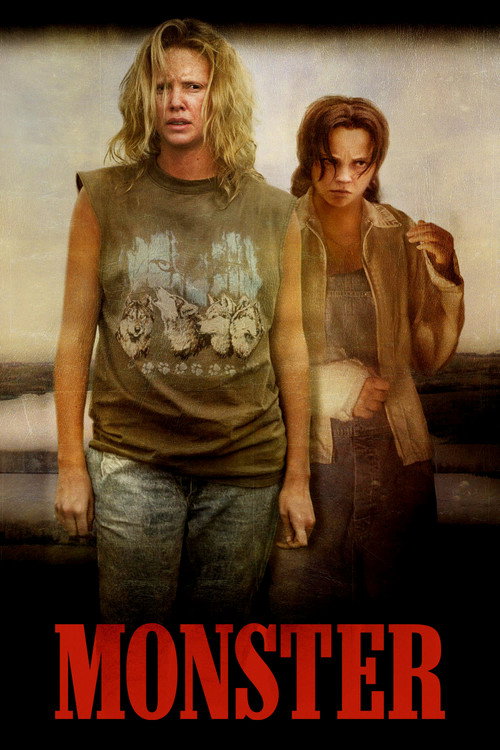
Monster
Patty Jenkins turns a true-crime headline into a bruised performance-pressure movie with no clean viewing distance.
Latest video signal
Trailer slot ready
A widescreen slot for the newest official trailer, interview, or scene signal when the page has a playable source.
Why it matters
Monster matters here because it expands the women-director lane with something thornier than representation math. Jenkins builds the film around a dangerous contradiction: the case is sensational, but the movie keeps dragging the viewer back to need, humiliation, tenderness, rage, and the damage underneath the violence. Charlize Theron’s transformation is famous for obvious reasons, but the Cinema One reason is sharper: the performance works because it is not vanity in reverse. It is a whole body reorganized around defense mechanisms, hunger, panic, and the tiny hope that being loved might still interrupt the doom.
Craft read
A true-crime biography shaped less like a police case than a doomed intimacy study
Money, homelessness, sexual violence, shame, desire, and fantasy keep narrowing Aileen’s choices until violence becomes the only language she trusts
Theron’s physical transformation matters because Jenkins frames it as behavior, not stunt makeup: posture, speech rhythm, eye contact, and defensive swagger do the damage
Themes
Cast and context
patty jenkins • charlize theron • aileen wuornos • christina ricci • true crime • performance transformation • women-directed
Coverage status
A strong case file with real editorial shape: enough craft, context, and connection to guide a serious watch.
Production notes
- • AFI records Monster as one of its top ten films of 2003 and notes the awards concentration around Charlize Theron’s performance and Patty Jenkins’s Independent Spirit Award for Best First Feature.
- • In a 2003 SplicedWire interview, Jenkins defended casting Theron because she saw heart, bravery, strength, and danger in the actor rather than a superficial physical match to Aileen Wuornos.
- • Theron later told The Hollywood Reporter that financiers resisted how far the transformation went, a useful production-pressure detail because the movie’s power depends on refusing to keep its star safely glamorous.
Watch-next pathway
What should you do after Monster?
Three intentional continuations: stay with the filmmaker, chase the dominant pressure signal, or jump into the shelf or argument that best explains why this movie belongs here.
Wonder Woman
The cleanest next move if Patty Jenkins's control, obsessions, or rhythm are what hooked you here.
More true crime
Use the taste map to find movies, arguments, and shelves that share this page's strongest signal.
Women-Directed Pressure Rooms
Women-directed films where genre, image, bodies, and self-invention become pressure systems instead of soft-focus sidebars.
Movie-page argument
Defend Monster.
If this movie has a scene, performance, ending, or idea people underrate, make the case. The best defenses can become future Cinema One argument material.
Scene challenge
Pick the scene that proves it.
Cinema One is built around scenes that unlock the movie. Tell us which moment carries the pressure, style, argument, or rewatch charge.
Production file
How the movie became this object
The casting argument is the movie's ethics in miniature
Jenkins' interviews keep circling the same point: Theron was not cast to imitate a mug shot, but to carry danger, need, and a buried capacity for tenderness in the same body. That matters because Monster is strongest when it rejects true-crime distance. The performance does not ask viewers to admire a transformation; it asks them to watch a person weaponize swagger because humiliation has become unbearable.
The de-glamorization had to fight the financing fantasy
Theron's later account of financiers resisting how harsh the image became is more than production gossip. It explains the pressure under the film: Monster only works if the camera refuses the safe star bargain. Jenkins and Theron make beauty unavailable as an exit ramp, so posture, voice, hunger, panic, and defensive charm have to become the whole performance language.
The true-crime frame is pushed back toward human consequence
Ebert's contemporary review is useful because he understood the movie as a refusal of cynical exploitation. Cinema One's read is not that the film absolves Aileen Wuornos; it is that Jenkins keeps explanation, revulsion, pity, and consequence in the frame at once, which is exactly what most headline versions of the case flatten.
Scene architecture
The moments that change the machine
Roadside work: the body as a survival system
The early scenes work because Aileen's body is already tactical. The walk, the squint, the laugh, the sudden aggression, and the practiced sales pitch all tell you this is not a movie about hidden evil waiting to appear. It is a movie about someone whose every gesture has been trained by exposure, danger, and the need to get through the next hour.
The motel romance: fantasy trying to outspend reality
Aileen and Selby's happiest stretches feel fragile because the movie keeps letting money, shame, and practical logistics back into the room. Their romance is not treated as an escape from the case; it is the fantasy that makes the case more desperate, because Aileen briefly believes love might let her stop performing survival.
Signature scene: the skating-rink fantasy curdles in real time
The roller-skating date is the unlock scene because it lets Aileen and Selby briefly live inside the movie they wish this could be: lights, music, touch, escape, a public room that almost feels safe. Jenkins lets the tenderness play, then the surrounding world starts pressing back in. That is the whole film in miniature — romance as temporary shelter, not rescue.
Line worth carrying forward
“I always wanted to be in the movies.” In Monster, that line is not cute cinephilia. It is a wound. Aileen has absorbed the promise that life should become glamorous if someone finally looks at you correctly, and the tragedy is how brutally the real world rejects that fantasy.
Why the ending refuses release
The ending hurts because it does not cleanse the violence or flatten Aileen into a monster label. By the time the machinery of consequence arrives, the film has already made the easy category feel inadequate. Jenkins is not asking for acquittal. She is asking whether explanation and condemnation can occupy the same frame without either one becoming cowardice.
Steelman the debate
The fair critique is that any dramatization of Aileen Wuornos risks aestheticizing real deaths and real damage. The defense is that Monster is unusually alert to that danger. Its best scenes do not sell murder as cool pathology; they keep returning to the grimy, humiliating pressures that true-crime summaries often strip away, while still letting consequence remain consequence.
More from this director
Related picks
Read next
Jordan Peele’s sky-horror epic works because it treats spectacle as labor, danger, and appetite all at once.
John Carpenter’s Antarctic horror masterpiece endures because every creature effect is attached to distrust, isolation, and the collapse of group logic.
Benjamin Button matters because Fincher treats the reverse-aging premise less like a trick than a way to make timing itself feel tragic.