Wonder Woman
Find the movies with rewatch gravity, live dossiers, and unfinished cases worth deepening.
Movie dossier
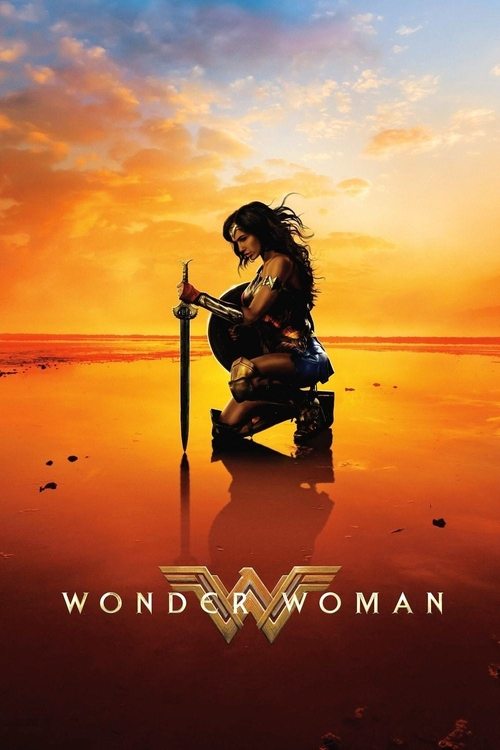
Wonder Woman
Patty Jenkins makes a superhero origin where the No Man’s Land charge is not a pose; it is the thesis finally standing up.
Latest video signal
Trailer slot ready
A widescreen slot for the newest official trailer, interview, or scene signal when the page has a playable source.
Why it matters
Wonder Woman matters here because it expands the Patty Jenkins lane beyond Monster without turning Cinema One into franchise bookkeeping. The movie’s best quality is not that it finally gives Diana a spotlight. It is that Jenkins makes old-fashioned heroic sincerity feel like a formal choice: myth colliding with World War I mud, compassion tested against cynicism, and an action star whose body language has to carry belief before the dialogue can. The page belongs because it gives the breadth mandate a mainstream anchor with actual craft pressure, not token coverage.
Craft read
A mythic outsider origin built around Diana learning that evil is not one removable villain but a human appetite she still has to oppose
The movie keeps grinding idealism against trenches, bureaucracy, gas, sacrifice, and Steve Trevor’s exhausted knowledge of how war actually behaves
The pleasure is watching iconography earn emotion: bracelets, shield, lasso, costume reveal, and battlefield movement all become choices, not merch poses
Themes
Cast and context
wonder woman • patty jenkins • gal gadot • themyscira • no mans land • superhero origin • world war i
Coverage status
A strong case file with real editorial shape: enough craft, context, and connection to guide a serious watch.
Production notes
- • Deadline’s Jenkins/Gadot interview is useful because Jenkins frames the action as character expression: “The story doesn’t stop because you’re fighting. The fighting is the story.”
- • Entertainment Weekly’s Jenkins interview notes her interest in making Diana fight differently — stopping violence rather than indulging cruelty — which explains why the battlefield style reads as moral behavior instead of generic power fantasy.
- • The No Man’s Land sequence works because Jenkins and Gadot build it from frustration and refusal before spectacle: Diana has been told no one can cross, no one can save the village, and no one can afford compassion, so the image lands as a decision rather than a trailer beat.
Watch-next pathway
What should you do after Wonder Woman?
Three intentional continuations: stay with the filmmaker, chase the dominant pressure signal, or jump into the shelf or argument that best explains why this movie belongs here.
Monster
The cleanest next move if Patty Jenkins's control, obsessions, or rhythm are what hooked you here.
More heroic sincerity
Use the taste map to find movies, arguments, and shelves that share this page's strongest signal.
Women-Directed Pressure Rooms
Women-directed films where genre, image, bodies, and self-invention become pressure systems instead of soft-focus sidebars.
Movie-page argument
Defend Wonder Woman.
If this movie has a scene, performance, ending, or idea people underrate, make the case. The best defenses can become future Cinema One argument material.
Scene challenge
Pick the scene that proves it.
Cinema One is built around scenes that unlock the movie. Tell us which moment carries the pressure, style, argument, or rewatch charge.
Signature scene: No Man’s Land turns iconography into a moral decision
The trench sequence is the unlock because the costume reveal is not vanity; it is refusal. Diana hears the tactical argument, understands the cost, and steps into machine-gun fire anyway because the movie has finally trapped myth inside history. The slow motion, shield impacts, mud, ladder, and soldier reactions work because the image is not asking for applause first. It is asking whether heroic clarity can still mean anything in a world trained to call compassion naive.
Line worth carrying forward
“It’s not about deserve. It’s about what you believe.” That line is the movie’s cleanest statement of purpose. Jenkins knows the risk of sincerity, then chooses it anyway: heroism as an act of belief after innocence has been damaged, not before.
Why the ending both strains and clarifies the movie
The Ares climax is the least elegant part because it turns a human war argument into more familiar superhero thunder. But Diana’s final choice still matters: killing one god does not fix mankind, so the real ending is her decision to keep acting after the easy explanation fails.
Steelman the debate
The fair knock is that Wonder Woman’s final act gets louder and more conventional than the movie around it. The defense is that the core survives because Jenkins has already banked the stronger idea: Diana’s power is not that she is untouched by human ugliness, but that she refuses to let ugliness become the only mature worldview.
More from this director
Related picks
Read next
Cameron’s sequel works because it does not simply supersize Ridley Scott’s terror. It rebuilds the xenomorph threat around group collapse, siege pressure, and Ripley’s protective ferocity.
Tarantino’s war fantasia works because the suspense is not built on firefights first. It is built on who can control the room, the accent, the cover story, and the next sentence.
James Cameron’s sequel gets larger, louder, and more advanced, but it stays alive because every escalation feeds the movie’s protector-child-parent triangle.