
Candyman
Find the movies with rewatch gravity, live dossiers, and unfinished cases worth deepening.
Movie dossier
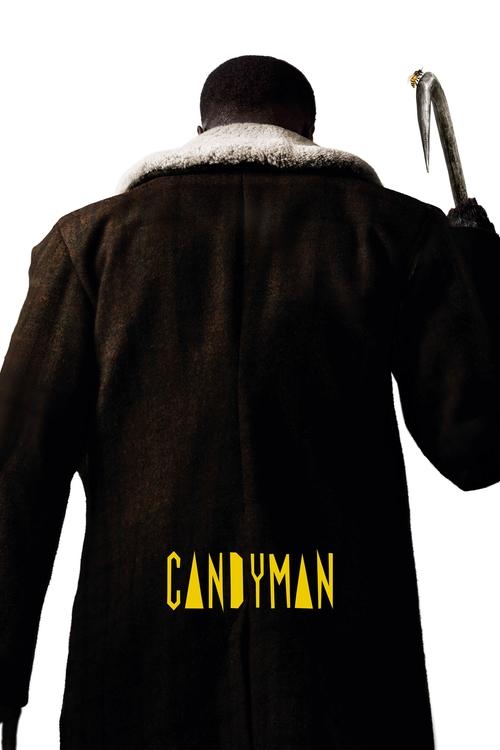
Candyman
Nia DaCosta turns the mirror dare into a Black horror case file about art, erasure, gentrification, and the violence hiding inside who gets remembered.
Latest video signal
Trailer slot ready
A widescreen slot for the newest official trailer, interview, or scene signal when the page has a playable source.
Why it matters
Candyman matters here because it expands the women-director breadth lane with a horror movie that has real argument gravity. DaCosta is not simply reviving a brand. She is asking what happens when an urban legend becomes art-world material, when Cabrini-Green becomes luxury texture, and when Black pain is repeatedly converted into a story someone else can own. The movie’s charge is uneven but sharp: every mirror, gallery wall, bee sting, and shadow-puppet interlude keeps turning spectatorship into a moral problem.
Craft read
A direct legacy sequel where an artist’s research into Cabrini-Green reopens the Candyman myth and makes his own body part of the story
The film keeps collapsing spaces: bathroom mirrors, white galleries, demolished towers, row houses, police scenes, and folk memory all become rooms where the same wound changes costume
The second watch is strongest as pattern recognition: Anthony is not discovering a legend so much as entering a cycle of image-making, erasure, commerce, and retaliation
Themes
Cast and context
nia dacosta • candyman • cabrini-green • gentrification • black horror • urban legend • shadow puppetry • body horror • art world
Coverage status
A strong case file with real editorial shape: enough craft, context, and connection to guide a serious watch.
Production notes
- • Universal’s home-entertainment release frames the 2021 film as a DaCosta/Peele expansion of the urban legend and specifically highlights featurettes on body horror, Anthony’s artwork, Robert Aiki Aubrey Lowe’s soundscapes, shadow puppetry, and Black horror context.
- • TIME’s Cabrini-Green reporting is the key source trail for the page’s case: DaCosta and the filmmakers researched local history, shot on location around remaining Cabrini-Green row houses, used CGI to restore demolished towers, and treated the Northside Stranger’s Home Missionary Baptist Church as an erased community image rather than generic spooky architecture.
- • Manual Cinema’s shadow-puppet work matters because it lets the film depict cycles of racial violence and myth-making without turning every historical wound into literalized spectacle; the art form becomes both style and ethical distance.
- • Production designer Cara Brower discussed DaCosta’s Rosemary’s Baby reference point and the desire for an elevated horror world, which helps explain why the movie’s clean glass, galleries, and luxury interiors feel infected rather than neutral.
Watch-next pathway
What should you do after Candyman?
Three intentional continuations: stay with the filmmaker, chase the dominant pressure signal, or jump into the shelf or argument that best explains why this movie belongs here.
More Nia DaCosta
Use the taste map to find movies, arguments, and shelves that share this page's strongest signal.
Women-Directed Pressure Rooms
Women-directed films where genre, image, bodies, and self-invention become pressure systems instead of soft-focus sidebars.
Movie-page argument
Defend Candyman.
If this movie has a scene, performance, ending, or idea people underrate, make the case. The best defenses can become future Cinema One argument material.
Scene challenge
Pick the scene that proves it.
Cinema One is built around scenes that unlock the movie. Tell us which moment carries the pressure, style, argument, or rewatch charge.
Signature scene: the art-gallery kill makes spectatorship the trap
The gallery sequence is the unlock because the movie turns a clean cultural space into a mirror room. Anthony’s work is being judged, consumed, flirted with, dismissed, and monetized, then the legend arrives as if the image has finally objected. The scene works best as a Cinema One pressure room: art people think they are observing the wound from a safe distance, and the movie removes the distance.
Line worth carrying forward
“Say his name” lands as both dare and indictment. In DaCosta’s film, repetition is not just superstition. It is authorship: who gets named, who gets flattened into monster story, and who keeps surviving because the culture refuses to stop needing the myth.
Why the ending leaves an argument instead of closure
The ending is satisfying in the blunt revenge-myth sense and troubling in the larger moral sense. Candyman becomes a tool against state violence, but the tool is still built from repeated Black death. That is why the final image does not feel clean. The movie gives the audience catharsis, then leaves the bill for why catharsis had to look like that.
Steelman the debate
The critique is that Candyman has more ideas than dramatic room, and its final stretch turns thesis into machinery too quickly. The defense is that the density is part of the page’s reason to exist: DaCosta is wrestling with an inherited horror icon whose original power, racial problem, art-world value, and neighborhood history cannot be separated without lying.
More from this director
Related picks
Read next
Fincher’s Dragon Tattoo remake endures because research, pattern recognition, and bruised trust become as gripping as any chase scene.
Panic Room works because Fincher turns walls, sightlines, and delays into the whole suspense engine instead of treating them as setup for louder thrills.
Fincher’s luxury paranoia machine still lands because every escalation turns wealth, control, and self-protection into liabilities instead of armor.