Tombstone
Find the movies with rewatch gravity, live dossiers, and unfinished cases worth deepening.
Movie dossier
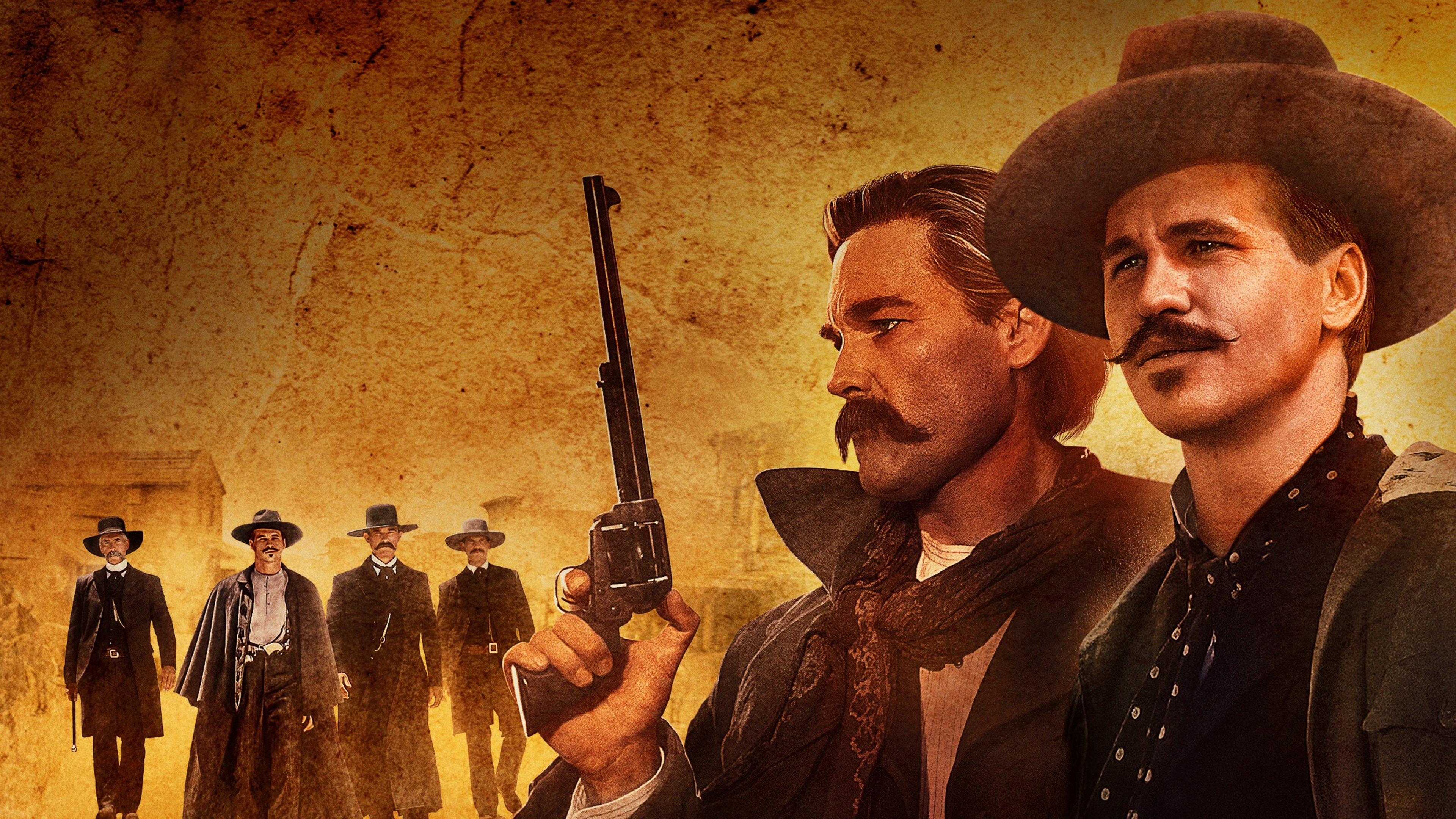
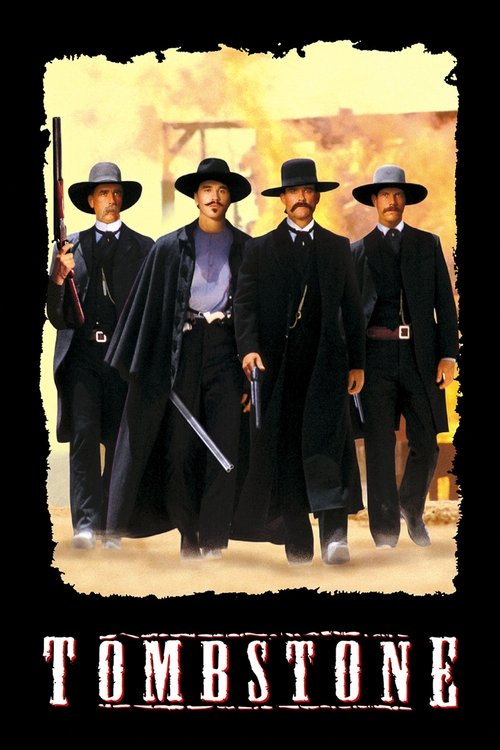
Tombstone
A star-powered western where swagger, loyalty, and terminal bravado fuse into one of the most rewatchable modern frontier myths.
Latest video signal
Trailer slot ready
A widescreen slot for the newest official trailer, interview, or scene signal when the page has a playable source.
Why it matters
Tombstone matters because it understands that western pleasure is not only about plot or historical cleanup. It is about code, presence, and the way a line reading or a walk into danger can become the whole movie’s emotional currency. The film turns Wyatt Earp legend into ensemble heat, and Val Kilmer’s Doc Holliday into one of the era’s most enduring supporting performances.
Craft read
Fast-moving frontier mythmaking driven by cast chemistry and confrontation scenes
Kurt Russell provides the spine while Kilmer steals gravity at every turn
A durable cable-era western favorite built on quotability and code-of-honor tension
Themes
Cast and context
wyatt earp • doc holliday • arizona • gunfight • old west • outlaws
Coverage status
A fully shaped Cinema One case: the movie has enough authored context, pathway links, and argument to feel like more than a catalog entry.
Production notes
- • Kilmer’s Doc Holliday is the movie’s immortal element, but the ensemble only works because Russell gives Wyatt Earp enough steadiness to carry mythic weight.
- • Val Kilmer’s own account of the role is a useful rewatch key: he saw Doc as a fallen aristocrat whose wit was more lethal than his pistol, which explains why the performance feels both theatrical and terminal instead of merely showy.
- • The film’s chaotic production history sharpens the authorship story. Kilmer later credited Kurt Russell with sacrificing his own energy to protect the movie after Kevin Jarre was replaced, including nightly shot-list work for George P. Cosmatos.
- • Tombstone moves more like a crowd-pleasing action western than a slow historical elegy, which is part of why it lives so well on rewatches.
- • A strong Cinema One page because it protects the site’s connection to star-charisma canon and western pleasure without pretending everything has to be revisionist to matter.
Watch-next pathway
What should you do after Tombstone?
Three intentional continuations: stay with the filmmaker, chase the dominant pressure signal, or jump into the shelf or argument that best explains why this movie belongs here.
More honor
Use the taste map to find movies, arguments, and shelves that share this page's strongest signal.
Rewatchables
Movies built for return visits, momentum, quotability, texture, and pure replay value.
Movie-page argument
Defend Tombstone.
If this movie has a scene, performance, ending, or idea people underrate, make the case. The best defenses can become future Cinema One argument material.
Scene challenge
Pick the scene that proves it.
Cinema One is built around scenes that unlock the movie. Tell us which moment carries the pressure, style, argument, or rewatch charge.
Production file
How the movie became this object
Doc Holliday as aristocratic decay
Kilmer’s memoir excerpt gives the page its best performance key: he describes Doc as a fallen aristocrat whose caustic wit becomes revenge against a body and life slipping away. That is why the performance is not just quote delivery. Every drawl, pause, cup movement, and half-smile makes elegance look like the last weapon death has not taken from him.
A troubled shoot that became part of the myth
Tombstone’s behind-the-scenes story matters because the finished movie is so confident that viewers can miss how much rescue work was happening. Kilmer and Russell both describe Russell carrying major storytelling weight after the director change, including shot-list work under brutal schedule pressure. The movie’s steadiness is not accidental swagger; it was fought into shape.
Western pleasure without apology
The film does not pretend to be a full demythologizing of the Earp legend. Its achievement is cleaner and more pleasurable: it understands that a modern western can run on entrances, friendships, threats, sickroom grace, and the kind of verbal rhythm audiences want to throw back at the screen.
Scene architecture
The moments that change the machine
Doc meets Ringo: wit as concealed violence
The Latin exchange and gun-hand flourish work because the scene is a duel before anyone draws. Tombstone lets intelligence, vanity, illness, and threat occupy the same pocket of air, so Doc’s danger arrives through rhythm before it arrives through a weapon.
The river walk: Wyatt becomes public myth
The river shootout is built around a blunt western pleasure: a man stepping forward when everyone else expects him to fall back. Russell sells the moment by making Wyatt look less fearless than emptied out, as if rage and grief have burned away ordinary self-preservation.
The sickbed goodbye: friendship outlasts performance
The final Wyatt/Doc scene is where the movie cashes in its swagger. After all the lines and gunfighter theater, the emotional point is quiet loyalty: two men who performed certainty for the world suddenly have to face the one thing no reputation can beat.
Signature scene: Wyatt walks into the river shootout like fate has already chosen him
The river confrontation is Tombstone at full power because it turns resolve into spectacle without losing legibility. Russell plays Earp like a man whose fear has already burned off, and the sequence becomes less about tactics than about the force of a legend stepping forward in public.
Line worth carrying forward
"I'm your huckleberry" survives because it is not only a good line, it is a whole performance philosophy. Holliday says it with enough ease and fatal wit to make danger feel like style, which is exactly why the movie lodged so deeply in pop memory.
Why the ending plays like myth instead of closure
Tombstone lands because it knows its emotional ending is not really about legal resolution. It is about loyalty paid off, illness catching up, and the strange nobility of men who understand that reputation may be the only immortality available to them.
Steelman the debate
A fair critique is that Tombstone smooths history into star-driven myth and treats western codes with more pleasure than skepticism. The strongest defense is that this is exactly the register the film masters. It is not trying to be a demythologizing corrective; it is trying to make frontier charisma, friendship, and doom feel operatic and alive.
More from this director
Related picks
Read next
Tombstone lasts because it understands that western mythology often lives or dies on presence, loyalty, and line delivery before it ever reaches historical argument.
Cameron’s sequel works because it does not simply supersize Ridley Scott’s terror. It rebuilds the xenomorph threat around group collapse, siege pressure, and Ripley’s protective ferocity.
Django Unchained keeps provoking real argument because Tarantino binds romance, atrocity, comedy, and blood-soaked fantasy into one intentionally unstable western object.