
The Hateful Eight
Find the movies with rewatch gravity, live dossiers, and unfinished cases worth deepening.
Movie dossier
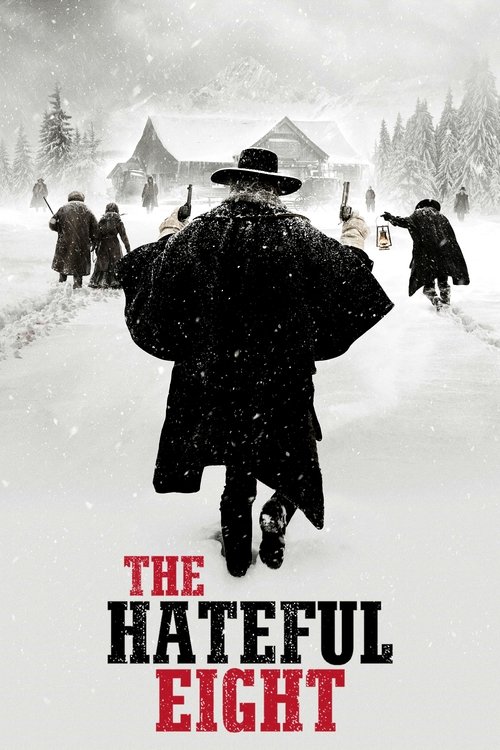
The Hateful Eight
A snowbound chamber-western where every line is bait, every alliance is temporary, and poison sits in the room before anyone names it.
Latest video signal
Trailer slot ready
A widescreen slot for the newest official trailer, interview, or scene signal when the page has a playable source.
Why it matters
The Hateful Eight matters because it distills Tarantino’s love of talk, suspicion, and delayed violence into one bitter pressure-cooker object. It is ugly on purpose, funny in hostile ways, and built to make confinement feel moral as well as physical.
Craft read
Stage-like confinement, chapter pivots, and revelation used to keep every relationship unstable
Blizzard isolation, 70mm grandeur, and a tone that keeps curdling from humor into menace
One of Tarantino’s strongest pure tension films, especially for viewers who love his scene construction
Themes
Cast and context
Coverage status
A fully shaped Cinema One case: the movie has enough authored context, pathway links, and argument to feel like more than a catalog entry.
Production notes
- • The 70mm format is part of the joke and the achievement, Tarantino uses huge image real estate for a story mostly about being trapped in one room with terrible people.
- • Ennio Morricone’s score gives the movie an ominous, almost horror-adjacent chill.
- • A crucial late-career Tarantino title for anyone who values his patience with scene escalation over his cooler surfaces.
Watch-next pathway
What should you do after The Hateful Eight?
Three intentional continuations: stay with the filmmaker, chase the dominant pressure signal, or jump into the shelf or argument that best explains why this movie belongs here.
Pulp Fiction
The cleanest next move if Quentin Tarantino's control, obsessions, or rhythm are what hooked you here.
More distrust
Use the taste map to find movies, arguments, and shelves that share this page's strongest signal.
Tension Machines
Command decisions, brinkmanship, pressure, and movies that tighten the screws scene by scene.
Movie-page argument
Defend The Hateful Eight.
If this movie has a scene, performance, ending, or idea people underrate, make the case. The best defenses can become future Cinema One argument material.
Scene challenge
Pick the scene that proves it.
Cinema One is built around scenes that unlock the movie. Tell us which moment carries the pressure, style, argument, or rewatch charge.
Signature scene: the coffee starts feeling like fate
The Hateful Eight is at its best when ordinary hospitality becomes unbearable. Once the coffee is charged with possibility, Tarantino makes every pause, glance, and sip feel strategic. It is a great example of his ability to turn information asymmetry into pure room-tone dread.
Line worth carrying forward
"When you get to hell, John, tell ’em Daisy sent ya." The line is savage, theatrical, and exactly right for a movie where everyone is performing toughness even as the room starts closing over them.
Why the ending feels filthy and weirdly fitting
The ending works because Tarantino refuses honorable catharsis. The surviving pair does not transcend the movie’s poison. They only find a temporary and ugly alignment inside it, which makes the final image feel less like moral resolution than exhausted recognition.
Steelman the debate
A strong critique is that The Hateful Eight can feel too pleased with its own rancor, stretching ugliness into endurance art rather than insight. The best defense is that the excess is diagnostic. Tarantino wants the room to become spiritually uninhabitable, because the whole movie is about systems and personalities so degraded that any cleaner tone would feel dishonest.
More from this director
Related picks
Read next
Tarantino’s snowbound chamber piece matters because it traps performance, prejudice, and national rot together until suspicion itself becomes the atmosphere.
Jackie Brown, Kill Bill: Vol. 2, The Hateful Eight, and Once Upon a Time in Hollywood all reveal a filmmaker getting more interested in aftermath, drift, and emotional residue than in pure pop detonation.
Django Unchained keeps provoking real argument because Tarantino binds romance, atrocity, comedy, and blood-soaked fantasy into one intentionally unstable western object.