
Strange Days
Find the movies with rewatch gravity, live dossiers, and unfinished cases worth deepening.
Movie dossier
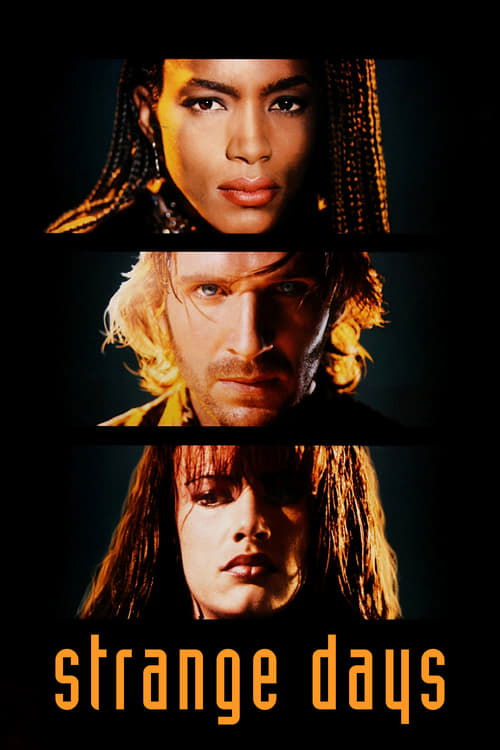
Strange Days
Kathryn Bigelow turns virtual memory into a dirty millennium-noir weapon: seductive, invasive, political, and hard to shake.
Latest video signal
Trailer slot ready
A widescreen slot for the newest official trailer, interview, or scene signal when the page has a playable source.
Why it matters
Strange Days matters here because it gives the Bigelow lane a missing bridge between Point Break adrenaline and Zero Dark Thirty procedure. The movie is overstuffed in the best dangerous way: cyberpunk technology, Los Angeles panic, corrupt police, romantic delusion, media voyeurism, and a heroine who sees the case more clearly than the man selling the fantasy. Its rewatch gravity comes from the discomfort of the SQUID idea: the device promises empathy, but the market immediately turns other people’s bodies into product.
Craft read
A murder tape noir driven by black-market memory clips, political violence, and millennium panic
Every recording asks whether seeing through someone else’s eyes creates understanding or just cleaner exploitation
The movie improves when you stop treating the technology as prediction and start watching how Bigelow stages spectatorship as a moral trap
Themes
Cast and context
kathryn bigelow • cyberpunk • virtual reality • millennium • angela bassett • voyeurism • neo noir
Coverage status
A strong case file with real editorial shape: enough craft, context, and connection to guide a serious watch.
Production notes
- • Cinephilia & Beyond traces the film back to James Cameron’s long-gestating idea, then notes how the Rodney King video and 1992 Los Angeles uprising shaped the finished film’s political atmosphere.
- • Letterboxd Journal’s 30th-anniversary essay foregrounds the opening robbery as Bigelow’s statement of intent: the audience is not safely watching action from outside; the SQUID point-of-view makes us feel uncomfortably implicated.
- • Britannica summarizes Bigelow’s premise as futuristic technology that transmits thoughts and memories from one person to another, which is the clean sci-fi hook the film keeps dirtying with noir appetite and street-level consequence.
Watch-next pathway
What should you do after Strange Days?
Three intentional continuations: stay with the filmmaker, chase the dominant pressure signal, or jump into the shelf or argument that best explains why this movie belongs here.
The Hurt Locker
The cleanest next move if Kathryn Bigelow's control, obsessions, or rhythm are what hooked you here.
More voyeurism
Use the taste map to find movies, arguments, and shelves that share this page's strongest signal.
Women-Directed Pressure Rooms
Women-directed films where genre, image, bodies, and self-invention become pressure systems instead of soft-focus sidebars.
Movie-page argument
Defend Strange Days.
If this movie has a scene, performance, ending, or idea people underrate, make the case. The best defenses can become future Cinema One argument material.
Scene challenge
Pick the scene that proves it.
Cinema One is built around scenes that unlock the movie. Tell us which moment carries the pressure, style, argument, or rewatch charge.
Signature scene: the opening SQUID robbery makes spectatorship unsafe
The first clip is not exposition; it is a dare. Bigelow puts the viewer inside the robber’s body — gun, breath, panic, roof jump, fall — then snaps us back into Lenny’s room, where someone else’s terror is just inventory. The scene teaches the movie’s whole grammar: point of view is power, but it can also be theft.
Line worth carrying forward
“This is not like TV, only better. This is life.” Lenny sells the SQUID with carnival confidence, but the line is also the movie’s warning label. If recorded experience can be bought, edited, replayed, and abused, life itself becomes contraband.
Why Mace gives the movie its spine
Lenny is the noir addict chasing yesterday; Mace is the person still capable of making tomorrow matter. Angela Bassett gives the film its moral command because she refuses the romance of self-destruction. The case, the city, and the ending only work when the movie stops orbiting Lenny’s longing and lets Mace force reality back into the room.
Steelman the debate
The fair knock is that Strange Days is messy, long, and often feverish enough to bruise its own plot. The defense is that the mess is part of the charge: Bigelow is making a movie about a culture drowning in recorded sensation, and the overload feels less like a flaw than the environment everyone is trying to survive.
More from this director
Related picks
Read next
Fincher’s Dragon Tattoo remake endures because research, pattern recognition, and bruised trust become as gripping as any chase scene.
Panic Room works because Fincher turns walls, sightlines, and delays into the whole suspense engine instead of treating them as setup for louder thrills.
Fincher’s luxury paranoia machine still lands because every escalation turns wealth, control, and self-protection into liabilities instead of armor.