
Requiem for a Dream
Find the movies with rewatch gravity, live dossiers, and unfinished cases worth deepening.
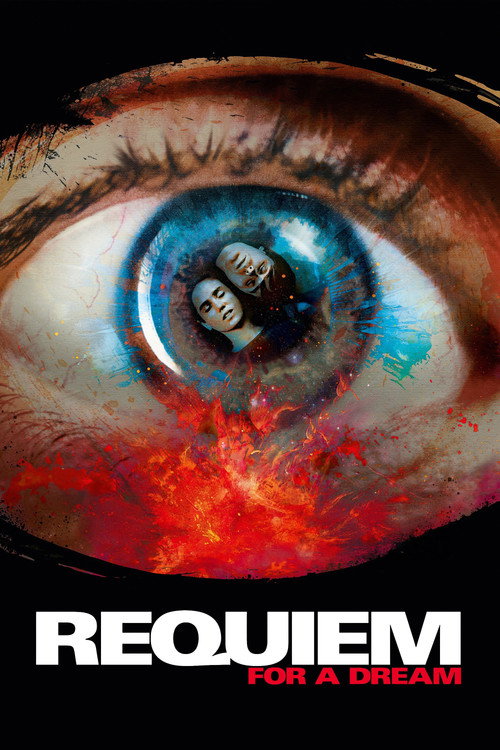
Movie dossier
Requiem for a Dream
Darren Aronofsky turns addiction into editing language: craving as rhythm, fantasy as trap, and every body trapped inside its own bad dream.
Latest video signal
Trailer slot ready
A widescreen slot for the newest official trailer, interview, or scene signal when the page has a playable source.
Why it matters
Requiem for a Dream matters here because it is not a polite issue movie about drugs. It is a formal attack: four private fantasies are cut, scored, framed, and repeated until the viewer can feel appetite becoming architecture. The movie is punishing, but not in the lazy misery-tour way. Its Cinema One value is how specifically the craft behaves — hip-hop montages make use feel mechanical, split screens make intimacy feel unreachable, SnorriCam shots bolt panic to the body, and Clint Mansell’s strings give the whole collapse the force of a ritual nobody knows how to stop.
Craft read
Four dreams of escape — love, money, television, thinness, respect — collapsing into one addiction machine
The more each character edits reality toward relief, the more the movie tightens the body, frame, and sound around them
The first watch is impact; the second reveals how early the repetitions, seasonal chapters, and musical escalation start laying track for the crash
Themes
Cast and context
addiction • obsession • hip-hop montage • split screen • clint mansell • ellen burstyn • hubert selby jr • darren aronofsky
Coverage status
A strong case file with real editorial shape: enough craft, context, and connection to guide a serious watch.
Production notes
- • Aronofsky has described film as a way to put the audience inside a character’s mind; Requiem expands that idea across four points of view, making split screen and repetition part of the characters’ mental weather.
- • No Film School’s editing breakdown notes the film’s unusually dense cutting pattern and connects it to Aronofsky’s “hip-hop montage” approach: quick sensory fragments that turn use, craving, and routine into rhythm.
- • In Red Bull Music Academy’s Clint Mansell interview, Mansell explains that he and Aronofsky shared an interest in hip-hop, electronic music, John Carpenter-style thematic force, and finding a film’s voice from the script stage rather than leaning on temp-score habits. That matters because “Lux Aeterna” feels less like accompaniment than a doom engine.
Watch-next pathway
What should you do after Requiem for a Dream?
Three intentional continuations: stay with the filmmaker, chase the dominant pressure signal, or jump into the shelf or argument that best explains why this movie belongs here.
More addiction
Use the taste map to find movies, arguments, and shelves that share this page's strongest signal.
Purple Rain
A nearby Cinema One pick when you want a different angle on psychological drama energy.
Movie-page argument
Defend Requiem for a Dream.
If this movie has a scene, performance, ending, or idea people underrate, make the case. The best defenses can become future Cinema One argument material.
Scene challenge
Pick the scene that proves it.
Cinema One is built around scenes that unlock the movie. Tell us which moment carries the pressure, style, argument, or rewatch charge.
Production file
How the movie became this object
Selby is not just source material; he is the wound under the style
The production history matters because Aronofsky did not treat Hubert Selby Jr. as a detachable rights package. Contemporary production notes trace Aronofsky’s attachment to discovering Selby at Harvard, adapting Selby before his features, and then co-writing Requiem with him. That keeps the movie from reading as only a young director showing off: the visual assault is tied to Selby’s lifelong subject of people chasing tenderness through systems that grind them down.
Hip-hop montage turns habit into machinery
The quick sensory bursts are not flourish pasted onto addiction. Aronofsky’s production notes frame the approach as sampling, recombining, and collage, while No Film School’s editing analysis follows how Jay Rabinowitz turns repeated insert chains into story grammar. The effect is cruelly simple: every use begins to look efficient, practiced, almost industrial, until relief itself feels like a factory line.
The score behaves like fate arriving early
Mansell’s collaboration with Aronofsky gives the page its sound key. The Red Bull Music Academy interview explains their shared interest in hip-hop, electronic music, and strong Carpenter-like themes; that is why “Lux Aeterna” does not sit behind the film as mood. It advances like a sentence already passed, making the final montage feel less like surprise than a machine that has been warming up since summer.
Scene architecture
The moments that change the machine
Summer: the dream still has rhythm
The first movement is dangerous because the fantasies still feel organized. Harry and Marion can imagine a shop, Tyrone can imagine escape, and Sara can imagine recognition. The editing has speed, but the speed still sells hope. That is the trap: the movie lets desire look functional before it shows the bill.
Fall: repetition starts replacing choice
By the middle stretch, the same visual devices feel different. The refrigerator, the pills, the split screens, the phone calls, the money plans, and the empty apartment no longer register as style signatures. They become proof that each character is losing options while mistaking repetition for control.
Winter: the bodies become the final edit
The ending is structured like a closing argument made out of bodies. Sara, Harry, Marion, and Tyrone are separated by geography and consequence, but the crosscutting makes them one system. The fetal curls matter because the movie has stripped every fantasy back to the same physical fact: appetite promised expansion and delivered confinement.
Signature scene: Sara’s red-dress dream becomes a horror cut from inside her own hope
Sara Goldfarb’s television fantasy is the unlock scene because it starts as something almost sweet: a lonely woman wanting to be seen, applauded, and made whole by a red dress and a studio audience. Aronofsky makes the fantasy degrade through speed, lighting, sound, pills, refrigerator dread, and Burstyn’s terrified openness until the dream is no longer escape. It is the trap wearing makeup.
Line worth carrying forward
“I’m somebody now, Harry.” The line lands because Sara is not asking for glamour. She is asking for proof that her life still has shape. The tragedy is that the proof arrives through the same machine that starts consuming her.
Why the ending curls everyone inward
The final movement is brutal because each character ends in a fetal curl of private consequence. The movie does not offer one big moral speech; it cuts between bodies that have run out of negotiation room. By then the style has done its job. The addiction system is not an idea outside them. It is the room, the soundtrack, the cut, the bed, the wound.
Steelman the debate
The fair critique is that Requiem for a Dream can feel like a sledgehammer. The defense is that Aronofsky’s extremity has purpose: addiction does not politely illustrate itself, and the movie’s audiovisual assault is the argument. It is not asking you to admire damage from a safe distance. It is making distance fail.
Shows up in
Collection pathway still being shaped.
More from this director
Related picks
Read next
Benjamin Button matters because Fincher treats the reverse-aging premise less like a trick than a way to make timing itself feel tragic.
Scorsese’s landmark stays unnerving because it never treats Travis Bickle as a puzzle to solve. It traps us inside a worldview rotting in real time.
The real reason to track Dune: Messiah early is that it could force blockbuster franchise culture to sit inside consequence instead of momentum.