
Raging Bull
Find the movies with rewatch gravity, live dossiers, and unfinished cases worth deepening.
Movie dossier
Raging Bull
Scorsese turns a boxing biography into one of cinema’s harshest self-destruction portraits.
Latest video signal
Trailer slot ready
A widescreen slot for the newest official trailer, interview, or scene signal when the page has a playable source.
Why it matters
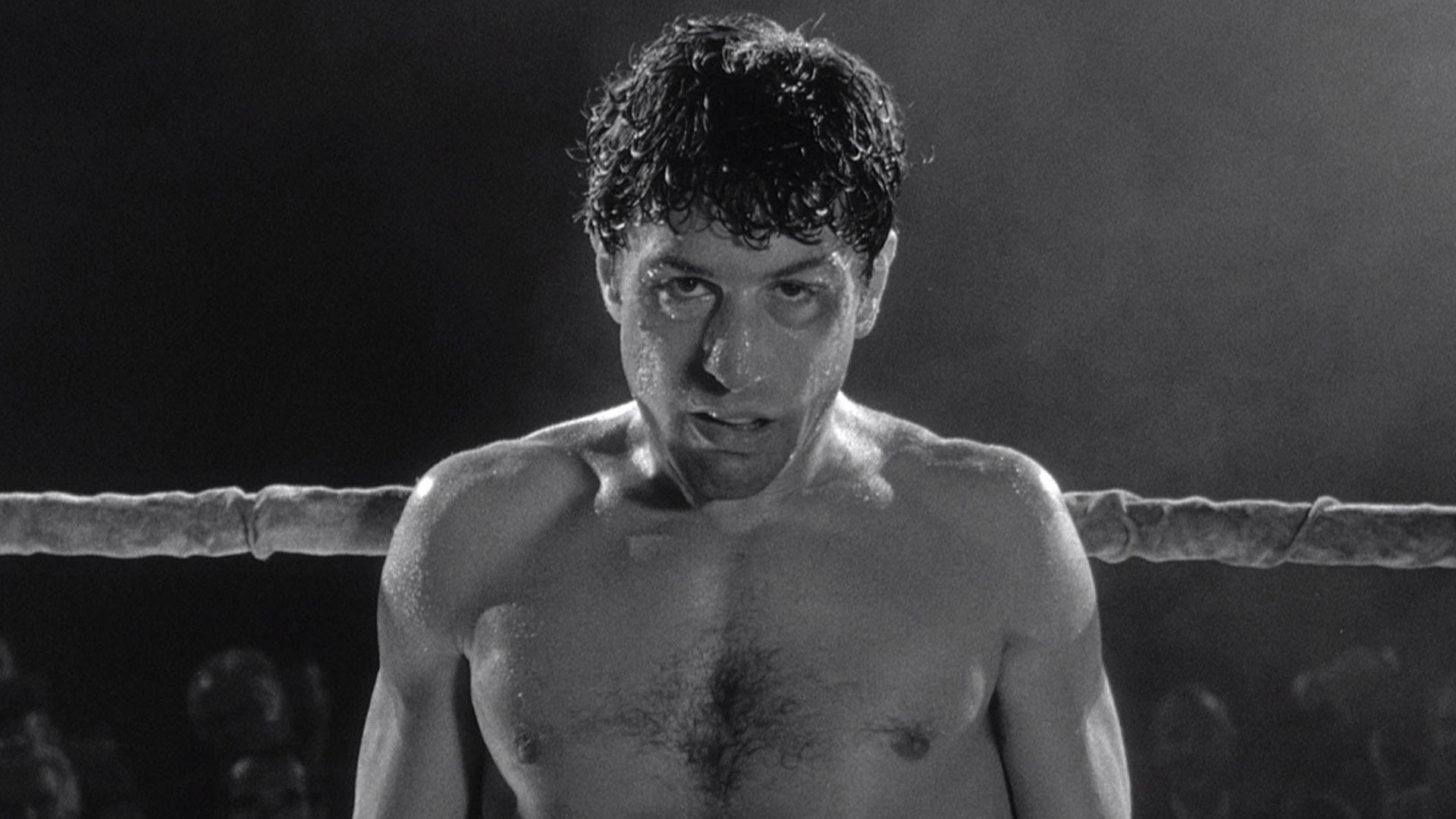
Raging Bull matters because it refuses the usual sports-movie contract. Jake LaMotta does not become admirable through discipline or triumph. He becomes more legible as a man who can turn appetite, insecurity, and violence against every relationship that might have saved him. The ring is only one of the places where he loses.
Craft read
Boxing rendered as punishment, spectacle, and private psychology rather than clean athletic uplift
De Niro plays LaMotta as charisma collapsing into self-devouring insecurity
A benchmark for biographical filmmaking that gets crueler the deeper it goes
Themes
Cast and context
boxing • jealousy • self-destruction • masculinity • fame • violence
Coverage status
A fully shaped Cinema One case: the movie has enough authored context, pathway links, and argument to feel like more than a catalog entry.
Production notes
- • The black-and-white photography gives the film both tabloid brutality and tragic distance, keeping the violence from becoming purely sports spectacle.
- • Joe Pesci and Cathy Moriarty matter because the movie’s emotional damage registers most clearly in how Jake treats the people closest to him.
- • A vital Scorsese title because it makes masculine self-mythology feel bodily, ugly, and impossible to romanticize for long.
Watch-next pathway
What should you do after Raging Bull?
Three intentional continuations: stay with the filmmaker, chase the dominant pressure signal, or jump into the shelf or argument that best explains why this movie belongs here.
Goodfellas
The cleanest next move if Martin Scorsese's control, obsessions, or rhythm are what hooked you here.
More jealousy
Use the taste map to find movies, arguments, and shelves that share this page's strongest signal.
Obsession Engines
Movies where ambition, rivalry, guilt, or control become the whole machine.

Movie-page argument
Defend Raging Bull.
If this movie has a scene, performance, ending, or idea people underrate, make the case. The best defenses can become future Cinema One argument material.

Scene challenge
Pick the scene that proves it.
Cinema One is built around scenes that unlock the movie. Tell us which moment carries the pressure, style, argument, or rewatch charge.
Signature scene: the later fights stop looking like competition and start looking like punishment rituals
Raging Bull’s boxing scenes become unforgettable because Scorsese stops treating them as clean contests. The ring turns into a chamber where Jake can act out pride, fury, and self-hatred all at once, which is why the violence feels both ecstatic and miserable.
Line worth carrying forward
“You never got me down, Ray.” The line lands because it is not victory talk. It is Jake trying to preserve identity through sheer refusal, even after the film has already shown how much of his life he has destroyed by confusing endurance with worth.
Why the ending feels so bleak
The ending works because Scorsese does not offer redemption just because Jake survives long enough to look back. The older LaMotta is still performing, still narrating himself, still chasing a version of meaning after the damage is done. The sadness comes from how partial that self-recognition is.
Steelman the debate
A reasonable pushback is that Raging Bull can feel punishingly enclosed within Jake’s ugliness, asking admiration for formal mastery while offering little relief from the man at its center. The best defense is that the enclosure is the achievement. Scorsese refuses the inspirational contour so that the cost of Jake’s worldview stays impossible to prettify.
More from this director
Related picks
Read next
Scorsese’s boxing masterpiece hits so hard because it uses virtuosity to study a person who keeps turning love, work, and ambition into damage.
Scorsese’s Boston pressure cooker works because it turns identity, class hostility, and institutional rot into one loud, filthy propulsion system.
What makes Goodfellas immortal is that Scorsese never separates the rush from the critique. The thrill is the delivery system for the emptiness.