
Wall Street
Find the movies with rewatch gravity, live dossiers, and unfinished cases worth deepening.
Movie dossier
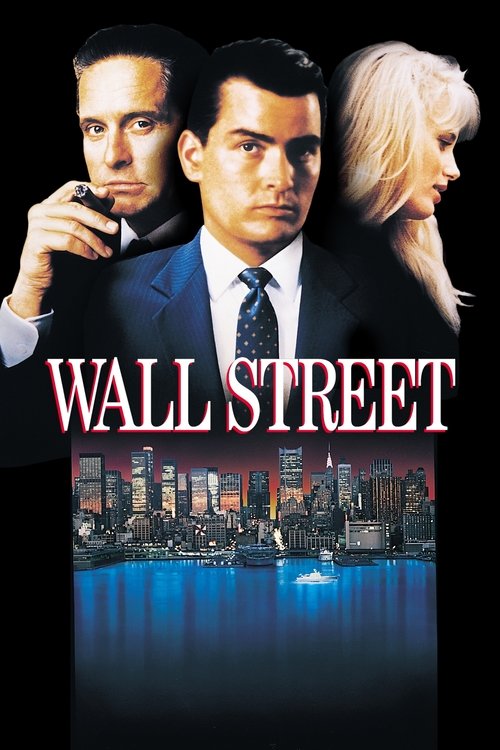
Wall Street
Oliver Stone turns 1980s greed into a high-gloss moral fever dream where ambition feels indistinguishable from infection.
Latest video signal
Trailer slot ready
A widescreen slot for the newest official trailer, interview, or scene signal when the page has a playable source.
Why it matters
Wall Street matters because it caught a whole era’s fantasy of power, appetite, and financial self-justification in language people still quote when they want to talk about corruption sounding seductive. Stone builds the movie as both cautionary tale and temptation object, which is why it remains useful for thinking about business mythology rather than merely denouncing it.
Craft read
Moral outrage and seductive surface locked together in unstable balance
Michael Douglas makes Gordon Gekko charismatic enough to prove the warning difficult
A defining finance-era movie whose iconography outlived the specifics of its plot
Themes
Cast and context
wall street • greed • insider trading • 1980s • finance • corporate greed
Coverage status
A fully shaped Cinema One case: the movie has enough authored context, pathway links, and argument to feel like more than a catalog entry.
Production notes
- • Douglas gives the movie its paradox by making Gekko revolting and magnetic at the same time.
- • Stone keeps Bud Fox close enough to ordinary striving that the seduction of excess never feels abstract.
- • A strong Cinema One page because the film belongs in the site’s lane for American power fantasies that reveal their own poison.
Watch-next pathway
What should you do after Wall Street?
Three intentional continuations: stay with the filmmaker, chase the dominant pressure signal, or jump into the shelf or argument that best explains why this movie belongs here.
More greed
Use the taste map to find movies, arguments, and shelves that share this page's strongest signal.
Status Traps
Ambition, reputation management, and movies where climbing the ladder quietly poisons the people doing it.

Movie-page argument
Defend Wall Street.
If this movie has a scene, performance, ending, or idea people underrate, make the case. The best defenses can become future Cinema One argument material.

Scene challenge
Pick the scene that proves it.
Cinema One is built around scenes that unlock the movie. Tell us which moment carries the pressure, style, argument, or rewatch charge.
Signature scene: Gekko’s shareholder speech turns predation into doctrine
The famous speech matters because the movie lets greed sound coherent before it sounds monstrous. Stone understands that ideology becomes durable when it can pass as clarity, and Douglas delivers the line with the ease of a man who believes appetite itself is intelligence.
Line worth carrying forward
"Greed, for lack of a better word, is good" lasts because it is brazen enough to function as confession and slogan simultaneously. The movie’s whole staying power lives in that sentence’s ability to sound triumphant and diseased at once.
Why the ending matters more as deflation than punishment
Wall Street works at the finish because it finally strips glamour down to exposure, family damage, and the smallness of a man who thought proximity to power could become identity. The ending is less satisfying as moral arithmetic than as an image of ambition finding out it was always disposable.
Steelman the debate
The smartest critique is that Wall Street became too good at selling the style of greed to fully police it, helping produce admirers of Gekko rather than only readers of the warning. The strongest defense is that this misreading is partly evidence of the film’s accuracy. Stone captures how corruption markets itself, which means the movie had to let the seduction feel real.
More from this director
Related picks
Read next
American Psycho survives because Mary Harron turns 80s status obsession into a performance nightmare where identity is just another item to curate.
Benjamin Button matters because Fincher treats the reverse-aging premise less like a trick than a way to make timing itself feel tragic.
Scorsese’s landmark stays unnerving because it never treats Travis Bickle as a puzzle to solve. It traps us inside a worldview rotting in real time.