

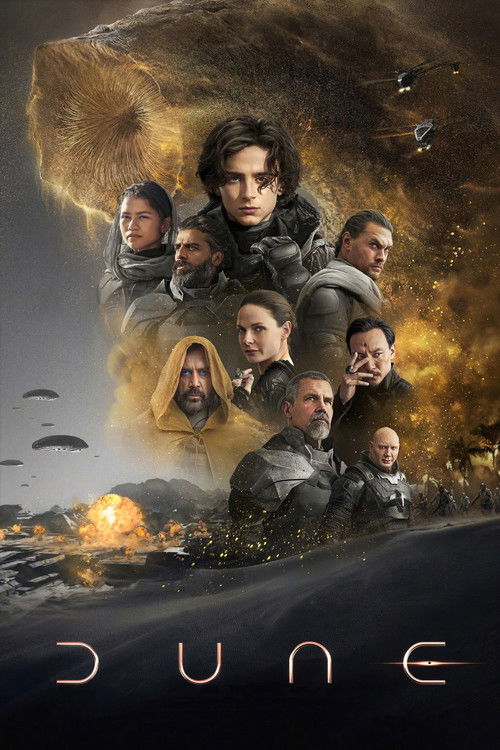
Dune backdrop file.

Movie dossier

Dune

Villeneuve turns Frank Herbert’s empire of prophecy, ecology, and power into austere blockbuster ritual.

Directed by Denis VilleneuvePG-13

Latest video signal

Trailer slot ready

A widescreen slot for the newest official trailer, interview, or scene signal when the page has a playable source.

Why it matters

Dune matters because it proves modern franchise scale can still feel strange, severe, and politically weighted. Rather than chasing constant release, Villeneuve builds awe through architecture, sound, desert space, and the dread of a hero story that may already be curdling into something more dangerous.

Rating
8.0
Year
2021
Runtime
155 min
Genre
Sci-Fi Epic

Craft read

Scale

Monumental images and soundscapes that make institutions feel ancient and crushing

Adaptation

Clear enough for mainstream access while preserving prophecy, ecology, and imperial unease

Lane value

A foundation for modern epic sci-fi, power-myth, and franchise-auteur programming

Themes

prophecyempireecologydestinypolitical inheritance

Cast and context

Cast
Timothée ChalametRebecca FergusonOscar IsaacZendaya
Keywords

prophecy • desert planet • house atreides • empire • destiny • worldbuilding

Director lane

Denis Villeneuve currently has 7 live movie pages in Cinema One.

View director page

Coverage status

Tier
strong
Coverage
12/13

A strong case file with real editorial shape: enough craft, context, and connection to guide a serious watch.

Signature scene filedQuote read filedEnding read filedCollection pathway live

Production notes

  • The Hollywood Reporter’s production history gives the page its cleanest rewatch key: Villeneuve had carried Wadi Rum in his head since scouting Incendies, and the desert’s light, rock scale, and humbling vastness became the anti-soundstage spine of Arrakis.
  • Villeneuve described Herbert’s book as colonialism, capitalism, ecology-as-religion, court drama, love story, coming-of-age tale, and a warning about the savior complex; the film’s restraint matters because it refuses to flatten that mix into a simple hero launch.
  • Timothée Chalamet’s stillness helps Paul feel less like a conquering hero than a young person being shaped by systems older than he is.
  • Hans Zimmer told Variety there is “no orchestra anywhere” in the score, which is why the movie’s soundscape feels less like standard epic uplift than an invented culture: voices, electronics, duduk, bagpipes, manipulated instruments, and ritual pressure.
  • A core Villeneuve page because it bridges his controlled severity with genuine blockbuster reach.
Dune watch-next background

Watch-next pathway

What should you do after Dune?

Three intentional continuations: stay with the filmmaker, chase the dominant pressure signal, or jump into the shelf or argument that best explains why this movie belongs here.

Suggest a better next pick
A dark editorial argument room lit by a film projector.

Movie-page argument

Defend Dune.

If this movie has a scene, performance, ending, or idea people underrate, make the case. The best defenses can become future Cinema One argument material.

Small prompts go into the Cinema One review queue.

A dark screening room with a red seat, projector beam, scene cards, and a glowing abstract film frame.

Scene challenge

Pick the scene that proves it.

Cinema One is built around scenes that unlock the movie. Tell us which moment carries the pressure, style, argument, or rewatch charge.

Small prompts go into the Cinema One review queue.

Cinema One case file

The argument this page is making

4 lenses
Core tension

Destiny is seductive, but Villeneuve keeps framing prophecy as machinery other people built before Paul could consent.

Best lens

A political-spiritual pressure system disguised as epic science fiction.

Villeneuve lane

Scale, silence, architecture, ritual, and dread organized into blockbuster patience.

Page job

Keep Dune from becoming lore recap; make it about power, ecology, inheritance, and fear.

Behind the movie

Production photos worth studying

A reviewed set of behind-the-scenes images: not celebrity filler, but evidence of how performance, camera placement, room pressure, and Denis Villeneuve's authorship shaped the finished movie.

4 reviewed photos
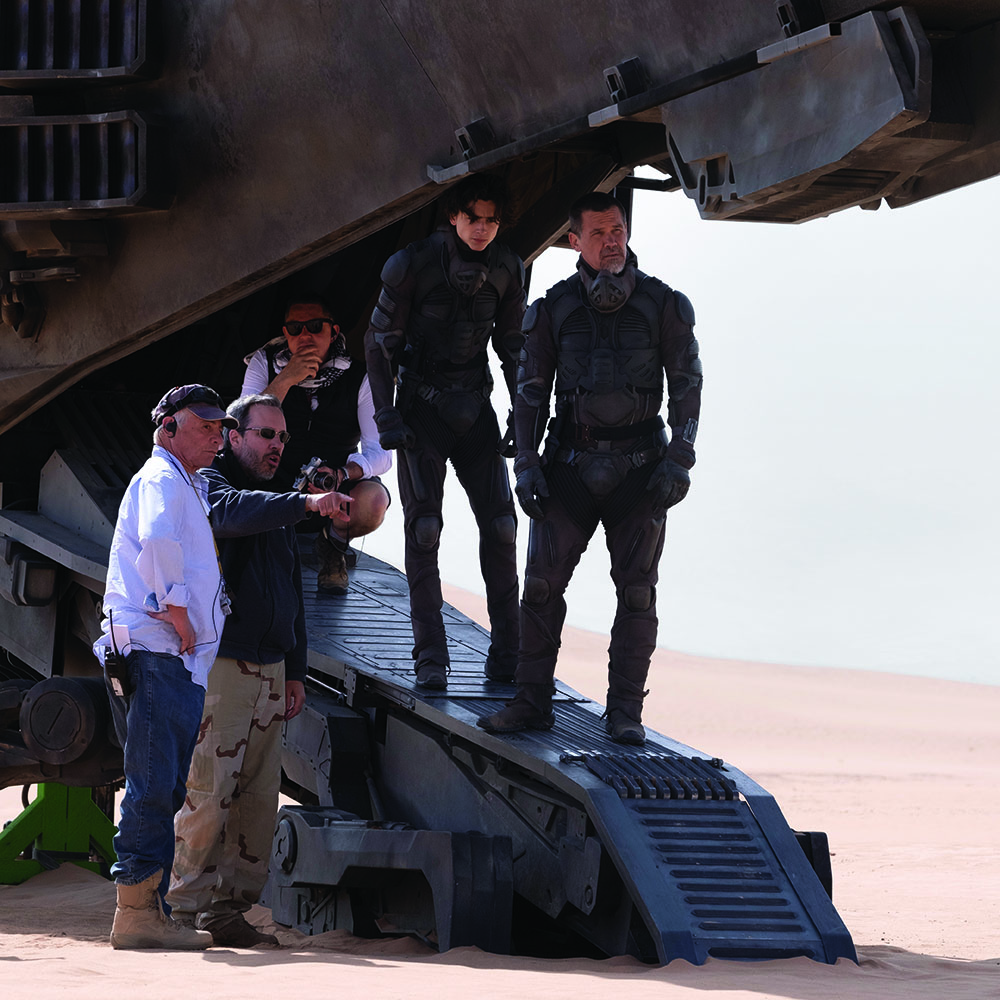
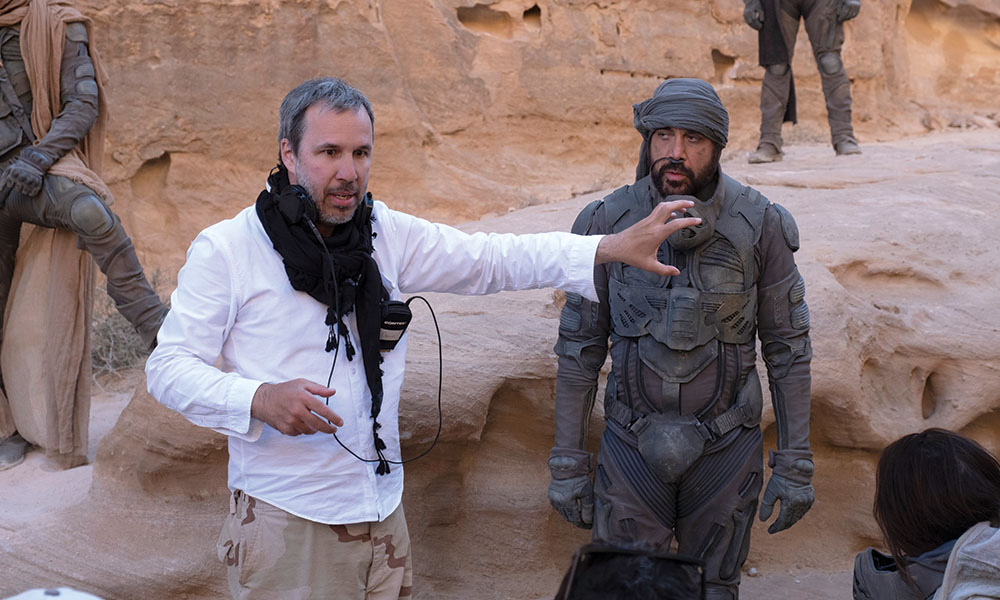
Behind-the-scenes image of Denis Villeneuve, cast, and crew working on the desert location for Dune.
BTS file #1

Desert unit as epic labor

The photo shows the epic as labor: people, heat, sand, costume, camera, and coordination behind the mythic surface.

The wide view lets you see the production process around the fantasy, not just the finished illusion.

Source · The Hollywood Reporter / Warner Bros.
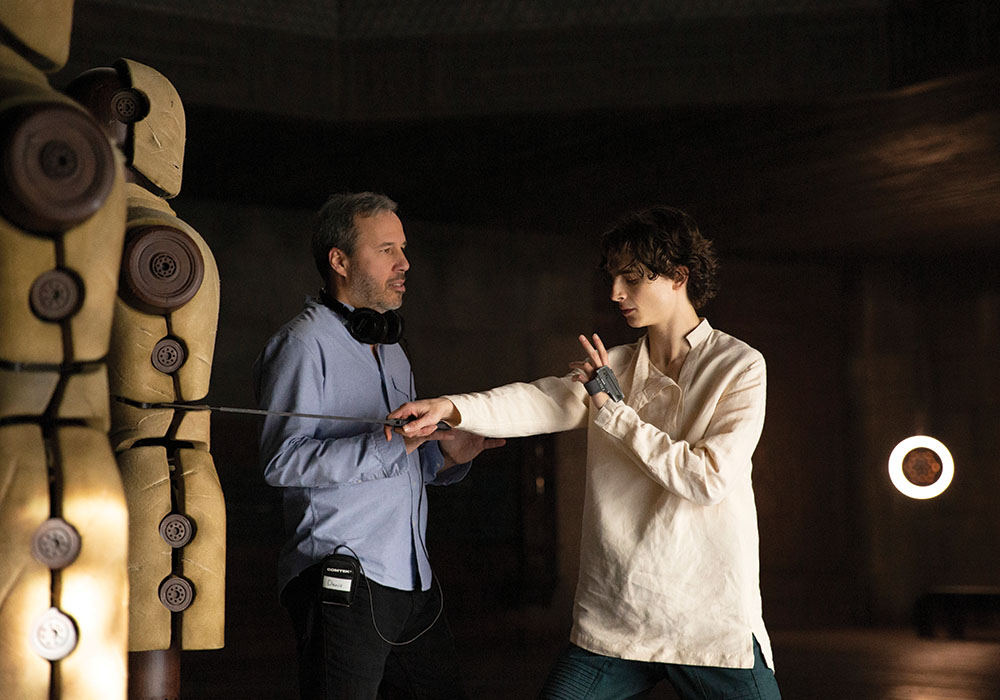
Behind-the-scenes image of Denis Villeneuve working with Javier Bardem on Dune.
BTS file #2

Villeneuve and Bardem in the desert

A strong actor/director process image that keeps the Fremen world from becoming lore alone; performance and location are being shaped together.

The detail to watch is how character and world are being fused into one visual system.

Source · The Hollywood Reporter / Warner Bros.
Behind-the-scenes image of Denis Villeneuve working with Timothée Chalamet during Dune production.
BTS file #3

Villeneuve and Chalamet process

Paul’s destiny can look abstract in summary; this image restores the human process of shaping that burden with the actor on location.

This is the lead-performance clue: the character is being shaped as much by posture and environment as dialogue.

Source · The Hollywood Reporter / Warner Bros.
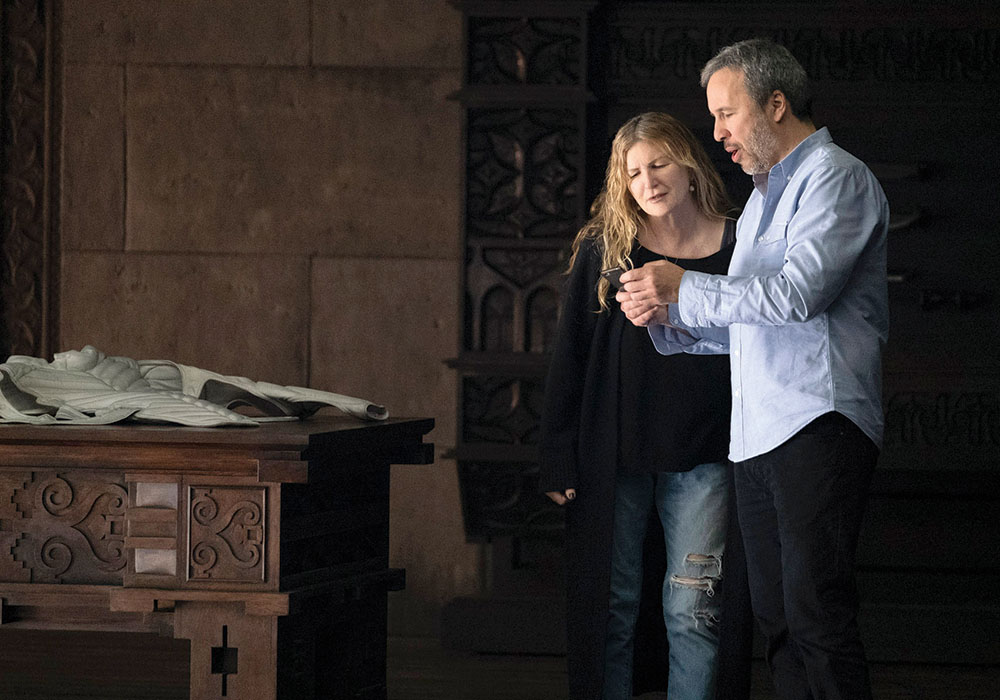
Behind-the-scenes image of Villeneuve and costume craft work on Dune.
BTS file #4

Costume craft in the desert

Dune’s worldbuilding lives in materials: stillsuits, robes, desert color, and survival design. This image makes that craft visible.

Production design is doing argument work here: ecology, power, and survival are all built into the frame.

Source · The Hollywood Reporter / Warner Bros.

Production file

How the movie became this object

Worldbuilding through pressure, not trivia

Dune works because the details feel lived and consequential without becoming a glossary. Ships, rooms, stillsuits, shields, and rituals all carry hierarchy.

The desert is not scenery; it is authorship

Villeneuve’s Arrakis gains force from real desert scale. Wadi Rum and Liwa do not merely “look epic”; they make the human figures feel temporary, exposed, and late to a planet with its own chain of command.

Zimmer removes the usual epic safety net

The score matters because it dodges familiar orchestral nobility. Voices without stable language, electronics, altered instruments, and bagpipe ritual make House Atreides sound ancient, foreign, and already doomed.

Paul as instrument and person

The adaptation becomes interesting when Paul feels both chosen and trapped: a pressure point inside systems, not only a hero-in-waiting.

Scene architecture

The moments that change the machine

Gom Jabbar: destiny begins as pain management

The test strips the epic down to body control. Before armies and sandworms, power is measured by what Paul can endure while being watched.

The harvester: ecology interrupts empire

The spice operation shows the central hierarchy of Arrakis: empire wants extraction, but the planet sets the terms.

The desert vision: myth starts recruiting the future

The visions matter because they are not simple spoilers. They are fragments of identity, violence, and belief pulling Paul toward a role that may consume him.

Arrival on Arrakis: ceremony with a funeral pulse

The bagpipes are not a quirky flourish. They make the Atreides landing feel like an old martial ritual being performed on hostile ground, so the triumphal image already carries the sound of doomed inheritance.

Cultural afterlife

What people did with it afterward

The rare modern epic that rewarded patience

Dune’s afterlife is partly relief: a huge studio object that trusted silence, scale, and seriousness without turning into noise.

A gateway into the new myth cycle

Dune routes naturally into Part Two and Messiah because the first movie is less a closed adventure than the opening movement of a larger argument about power.

Editorial module

Signature scene: the Gom Jabbar test turns destiny into bodily fear

The scene works because it reduces the entire epic to pain, control, and observation. Before the sandworms and armies arrive, Dune announces that power will be measured by what a person can endure while being told the test is for their own revelation.

Editorial module

Line worth carrying forward

“Fear is the mind-killer.” The line survives because Villeneuve treats it less as slogan than discipline. In this version, the words feel like training for a world where panic can be politically fatal.

Editorial module

Why the ending feels like a threshold instead of a cliffhanger

The ending works because it closes the movie on initiation, not interruption. Paul has not solved the story; he has entered the desert, the myth, and the consequences. That makes the unresolved shape feel deliberate rather than incomplete.

Editorial module

Steelman the debate

A fair critique is that Dune can feel emotionally distant, so controlled that some relationships register more as design than pulse. The strongest defense is that the distance is part of the adaptation’s theory. This is a movie about people being dwarfed by empire, prophecy, and landscape.

Scene shelf

The clips that prove the movie

A swipeable set of scene-level evidence: the moments worth replaying because they carry the movie’s rhythm, style, argument, or rewatch gravity.

5 scenesSwipe or scroll sideways
Scene 1Warner Bros. EntertainmentPolitical setup

The Emperor Has Spoken

The scene matters because Villeneuve makes imperial politics feel ceremonial and predatory before the desert myth takes over.

Scene 2MovieclipsCharacter trial

Gom Jabbar & Pain Box

The Gom Jabbar test reduces the epic to pain, control, and observation. Paul’s destiny begins as a body being measured under pressure.

Scene 3Warner Bros. EntertainmentEcology / economy

Spice

This is the cleanest clip for the movie’s systems: spice as resource, religion, empire, addiction, weather, and violence all in one landscape.

Scene 4MovieclipsScale reveal

Sandworm Attack

The sandworm sequence proves Villeneuve’s patience. The monster is not just a creature; it is the planet announcing the real chain of command.

Scene 5Warner Bros. EntertainmentAssassination tension

Hunter Seeker

A small-room suspense scene that makes Dune feel tactile. Threat arrives quietly, precisely, and politically.