
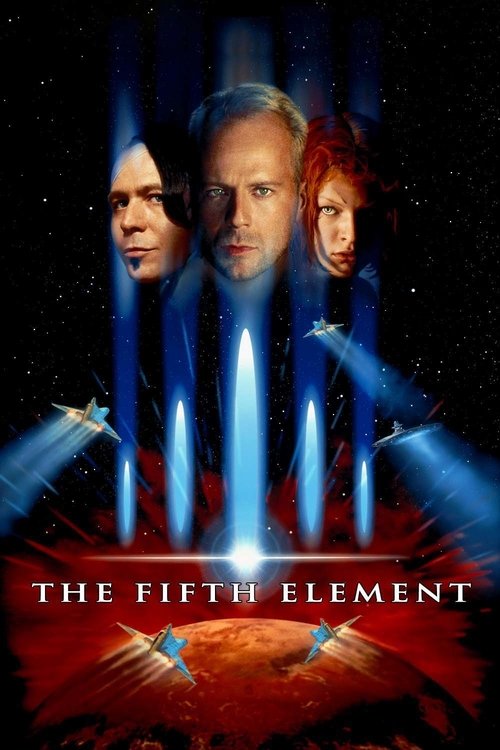
Scene 1•YouTube clip•Opera as action engine
The Diva Dance
The movie’s purest flex: high-art performance, intercut violence, alien glamour, and blockbuster rhythm all collapsing into one impossible set piece.
Find the movies with rewatch gravity, live dossiers, and unfinished cases worth deepening.
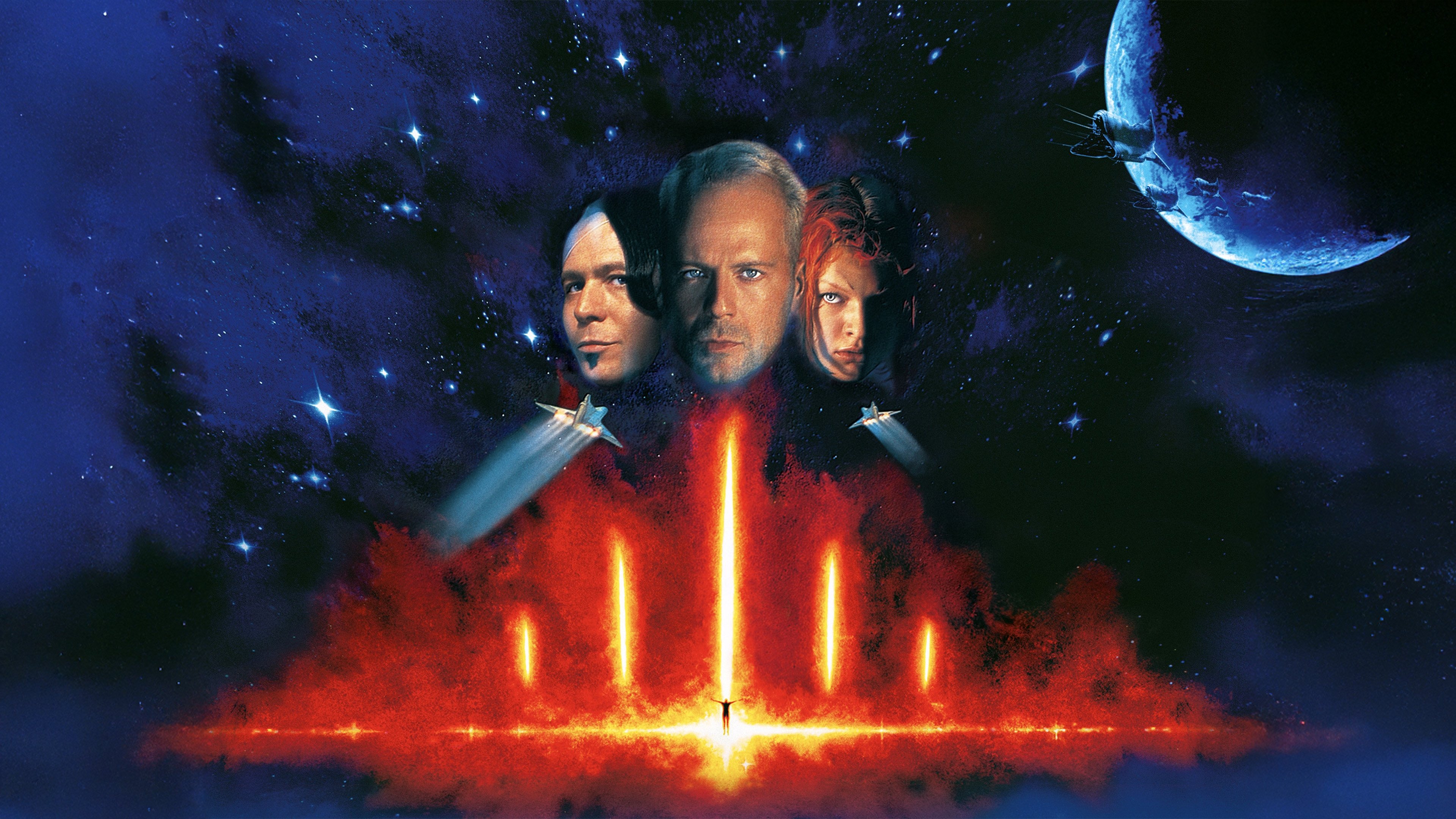
Movie dossier
Luc Besson’s candy-colored sci-fi pulp opera, where cosmic stakes and future-trash style collide with total conviction.
Latest video signal
A widescreen slot for the newest official trailer, interview, or scene signal when the page has a playable source.
The Fifth Element matters because it is one of the few big 1990s studio sci-fi movies willing to look this strange, this playful, and this committed to its own design nonsense. Besson treats worldbuilding as theatrical overload, then trusts Bruce Willis, Milla Jovovich, and Gary Oldman to keep the chaos lively enough to become personality rather than clutter.
Maximal production imagination turning future cityscapes, costumes, and props into comic-cosmic spectacle
Operatic apocalypse filtered through screwball energy and pulp goofiness
A high-budget oddball that endured because no one bothered making many things like it
A fully shaped Cinema One case: the movie has enough authored context, pathway links, and argument to feel like more than a catalog entry.
Watch-next pathway
Three intentional continuations: stay with the filmmaker, chase the dominant pressure signal, or jump into the shelf or argument that best explains why this movie belongs here.
Use the taste map to find movies, arguments, and shelves that share this page's strongest signal.
Big visual identity, mythic energy, and movies that know exactly how they want to look and feel.
Movie-page argument
If this movie has a scene, performance, ending, or idea people underrate, make the case. The best defenses can become future Cinema One argument material.
Scene challenge
Cinema One is built around scenes that unlock the movie. Tell us which moment carries the pressure, style, argument, or rewatch charge.
Cinema One case file
The movie risks incoherence because its real subject is overload: color, bodies, voices, costumes, weapons, prophecy, and love all turned up at once.
A candy-colored sci-fi opera where design excess becomes personality rather than decoration.
The rare expensive oddball that survived because it looks and sounds like nothing else in its lane.
Defend the weirdness without pretending it is tidy; the mess is part of the charm.
Production file
The Fifth Element does not build its future through sober plausibility. It builds through fashion, comic timing, strange surfaces, noise, and pure pulp confidence.
The film works because Jovovich keeps Leeloo from being only design. She is vulnerable, alien, funny, and dangerous enough to anchor the chaos.
The movie keeps throwing opera, slapstick, apocalypse, cab comedy, action, and romance into one blender. Its success depends on refusing embarrassment.
Scene architecture
Elegant, absurd, violent, sincere, and overdesigned, the opera sequence proves the film’s tonal collision can become rhythm.
Chris Tucker turns the volume into character. The scene matters because media noise becomes part of the future’s nervous system.
The line survives because it condenses the movie’s whole appeal: childish, futuristic, sincere, and instantly sticky.
Cultural afterlife
The Fifth Element endured because its oddness is not small or hidden. It is a full-budget commitment to being flamboyant.
People return for costumes, colors, lines, and set pieces, but the ending works because the movie is more emotionally direct than its surfaces suggest.
The Diva Plavalaguna sequence is The Fifth Element in perfect miniature. It is elegant and ridiculous, emotionally sincere and shamelessly overdesigned, and it proves Besson can make tonal collision feel like the movie’s defining pleasure instead of a liability.
"Multipass" endures because it condenses the movie’s whole comic-cosmic texture into one tiny verbal object. The word sounds futuristic, childish, and instantly mythic in the way only this movie can make plausible.
The Fifth Element lands because after all the noise, costumes, and villainy, it chooses an almost embarrassingly direct solution: human connection as literal world-saving force. That simplicity should be silly, but the movie has spent so much time making emotion and spectacle equally broad that the payoff feels strangely right.
A fair critique is that The Fifth Element can play like an exhausting pileup of broad comedy, sketchy characterization, and design excess mistaken for depth. The strongest defense is that Besson’s excess is the depth. The film’s achievement is turning flamboyant artifice into a full entertainment logic with its own kind of innocence and propulsion.
A swipeable set of scene-level evidence: the moments worth replaying because they carry the movie’s rhythm, style, argument, or rewatch gravity.
The movie’s purest flex: high-art performance, intercut violence, alien glamour, and blockbuster rhythm all collapsing into one impossible set piece.
Her first real burst of motion tells you exactly what the film is: vulnerable, absurd, kinetic, designed to leap before it explains.
Gary Oldman turns a weapons presentation into comic theology, selling destruction with the cheer of a deranged product launch.
Chris Tucker changes the temperature of the whole film: noise, fame, nerves, flirtation, and media circus all firing at once.
The comedy and costume spectacle sharpen into action, letting Leeloo’s fragility and lethal design occupy the same body.
Luc Besson’s sci-fi oddity still works because it refuses to apologize for tonal collision, costume overload, and pop-opera futurism.
The real reason to track Dune: Messiah early is that it could force blockbuster franchise culture to sit inside consequence instead of momentum.
Cameron’s sequel works because it does not simply supersize Ridley Scott’s terror. It rebuilds the xenomorph threat around group collapse, siege pressure, and Ripley’s protective ferocity.