
North by Northwest
Find the movies with rewatch gravity, live dossiers, and unfinished cases worth deepening.
Movie dossier
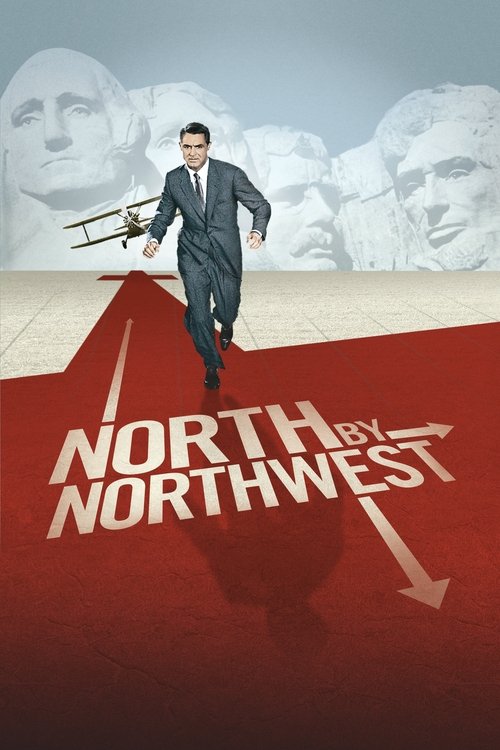
North by Northwest
The definitive wrong-man chase movie, light on its feet even while engineering near-perfect suspense.
Latest video signal
Trailer slot ready
A widescreen slot for the newest official trailer, interview, or scene signal when the page has a playable source.
Why it matters
North by Northwest matters because Hitchcock turns mistaken identity into pure cinematic propulsion. The movie is glamorous, funny, and ruthlessly efficient, a reminder that elegance and velocity do not have to fight each other.
Craft read
Mistaken identity escalated into cross-country pursuit, espionage, and romantic friction
Star power, wit, widescreen movement, and set-piece clarity working in total sync
A blueprint for chase thrillers and modern blockbuster suspense grammar
Themes
Cast and context
mistaken identity • crop duster • mount rushmore • espionage • chase • hitchcock
Coverage status
A fully shaped Cinema One case: the movie has enough authored context, pathway links, and argument to feel like more than a catalog entry.
Production notes
- • Cary Grant gives the film its amused, improvisational snap even when the danger turns real.
- • The crop-duster and Mount Rushmore sequences became canonical because Hitchcock treats geography like suspense machinery.
- • A crucial bridge between classical studio polish and the adventure-thriller template later films would inherit.
Watch-next pathway
What should you do after North by Northwest?
Three intentional continuations: stay with the filmmaker, chase the dominant pressure signal, or jump into the shelf or argument that best explains why this movie belongs here.
Psycho
The cleanest next move if Alfred Hitchcock's control, obsessions, or rhythm are what hooked you here.
More mistaken identity
Use the taste map to find movies, arguments, and shelves that share this page's strongest signal.
Master of Suspense
Voyeurism, pursuit, wit, and movies that make point of view feel dangerous.
Movie-page argument
Defend North by Northwest.
If this movie has a scene, performance, ending, or idea people underrate, make the case. The best defenses can become future Cinema One argument material.
Scene challenge
Pick the scene that proves it.
Cinema One is built around scenes that unlock the movie. Tell us which moment carries the pressure, style, argument, or rewatch charge.
Signature scene: the crop-duster attack in the middle of nowhere
The crop-duster scene is a master class because Hitchcock strips away every obvious thriller aid. No shadows, no alleyways, no crowd, just open space and a man who slowly realizes emptiness can be deadlier than confinement. It is suspense by subtraction.
Line worth carrying forward
"In the world of advertising, there's no such thing as a lie. There's only expedient exaggeration." The line immediately defines Roger Thornhill as someone who lives by performance, which makes it delicious when the movie drops him into a conspiracy where performance stops being a game.
Why the ending feels like release instead of mere wrap-up
North by Northwest earns its famous snap-ending because the movie has spent two hours balancing flirtation, panic, and momentum with almost impossible smoothness. When Hitchcock finally lets the tension convert into comic-romantic release, it lands as the completion of the movie's whole rhythm, not a cheap button.
Steelman the debate
The smartest pushback is that North by Northwest can feel so pleasurable and expertly oiled that it risks seeming minor next to Hitchcock's darker masterpieces. The best answer is that lightness here is not lesser ambition, it is the achievement. Hitchcock makes supreme control feel effortless, which is one of the hardest things movies can do.
More from this director
Related picks
Read next
North by Northwest still feels fresh because Hitchcock treats mistaken identity as an excuse to build one of the great motion machines in studio-era cinema.
Hitchcock’s masterpiece grows more unsettling when you stop treating it as a mystery and start seeing it as a movie about desire trying to rewrite reality.
The Birds remains uncanny because Hitchcock refuses to turn catastrophe into a puzzle with a satisfying answer.